You want to add consistent cardio to your home, but then the dilemma hits: should you step onto a cross trainer or a rowing machine? Both promise results, but in very different ways.
Let's make it simple: a rowing machine engages the whole body to increase muscle strength and endurance over time, benefiting your back, shoulders, arms, and legs. Whereas the cross trainer, without putting stress on joints and knees, helps to improve cardiovascular disease.
Both of these exercise equipment options contribute to cardiovascular health, but the final decision depends heavily on your goals, body, lifestyle, and preferences.
But how to choose the right equipment? This guide will escort you through a cross-trainer vs rowing machine comparison and help you to find the best fit for your fitness goal.
1. Cross Trainer vs. Rowing Machine: Quick Overview
A cross trainer, commonly known as an elliptical machine, is designed to offer a natural walking or running experience indoors that creates a gliding motion for your legs and arms to move. A cross trainer is available in multiple variations:
- Front-drive: They are designed with a flywheel at the front, allowing a slight forward lean for a jogging feel.
- Rear-drive: These trainers offer a more upright posture and a smoother glide.
- Center-drive: These cross-trainers have a flywheel on the sides, a compact design, and are preferred for a home gym.
- Incline & stride-adjustable version: They are designed to target different muscles and personalized workout intensity.
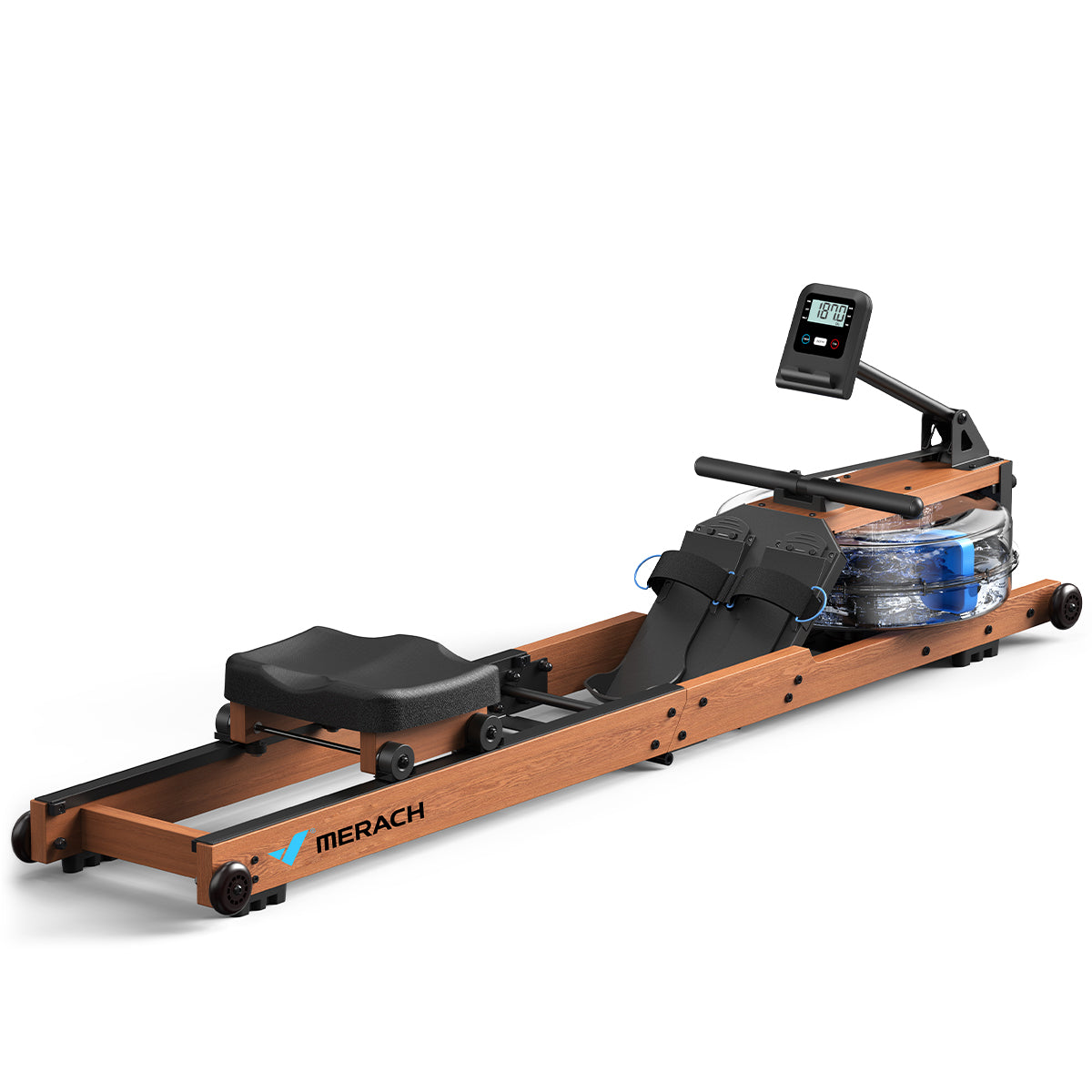
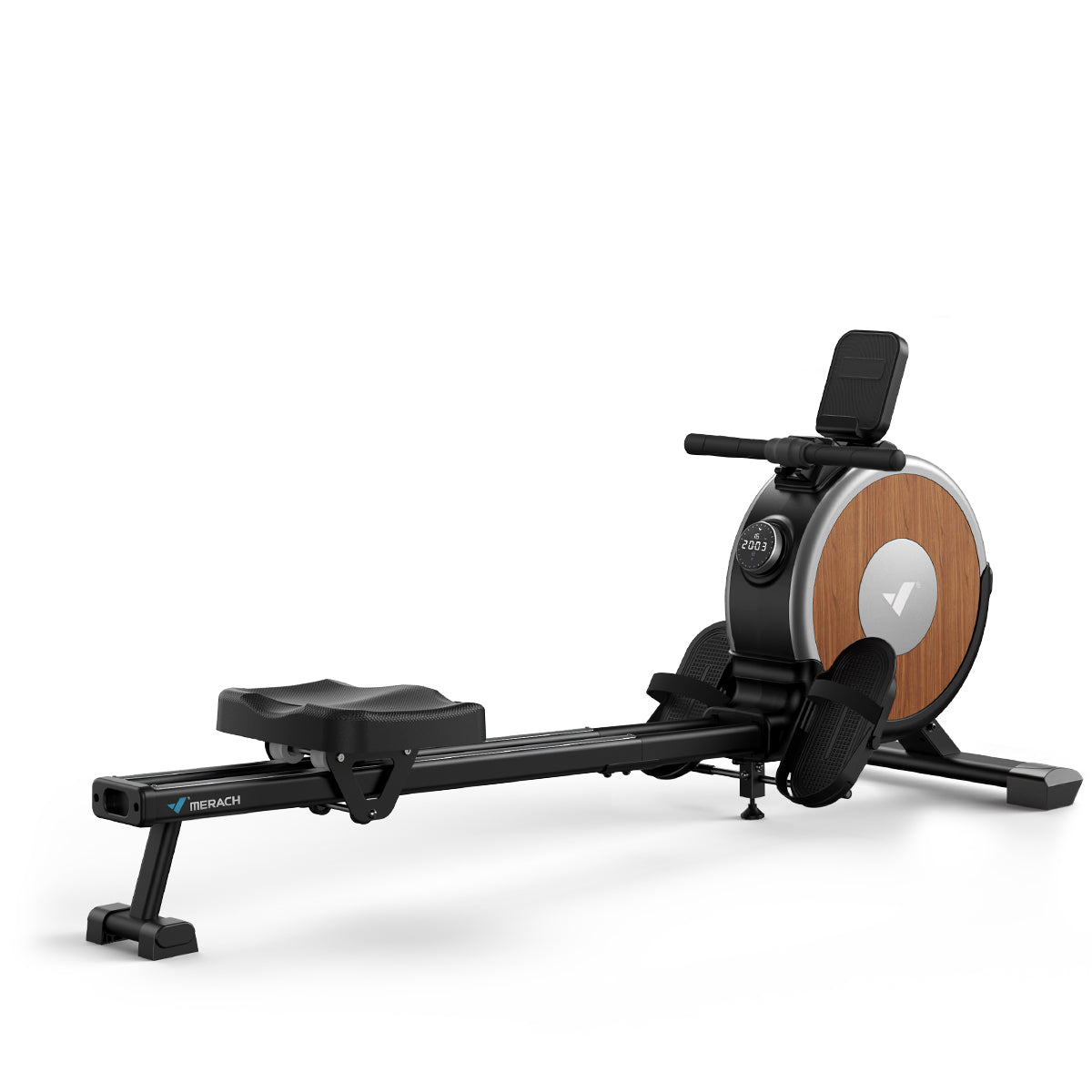
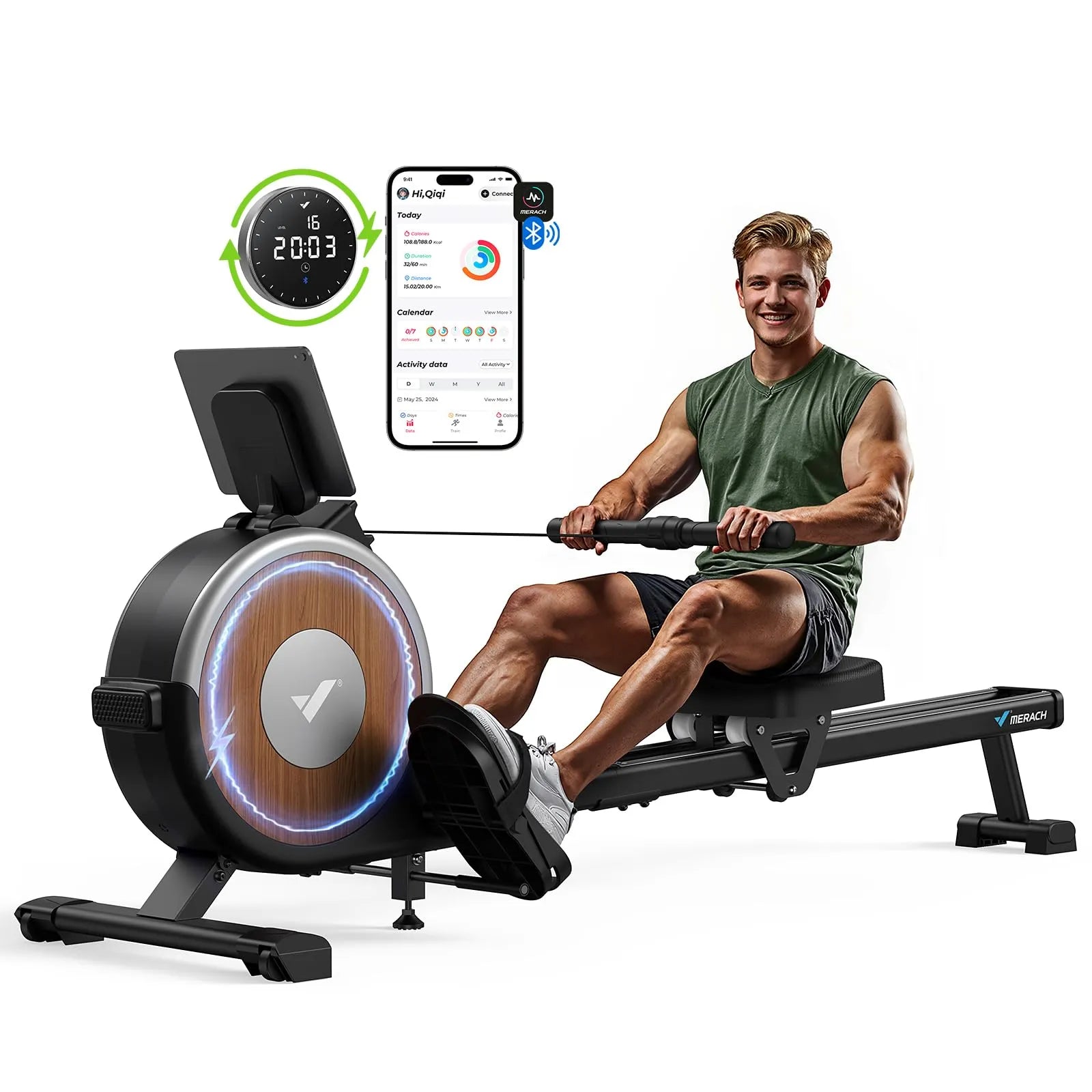
Unlike a cross trainer, a rowing machine engages the legs, core, and upper body through a coordinated pulling motion, challenging multiple muscle groups at once. A rowing machine is available in different resistance types from which you can choose the one that matches your training preference.
- Air resistance: These rowing machines adjust naturally with user effort and are popular for home use due to their silent operation.
- Magnetic resistance: This works with magnetic resistance, offering a more controlled rowing experience. They are suitable for controlled rowing, ideal for a small space, and early morning
- Water resistance: It offers a closer sensation to outdoor rowing, but it costs more compared to other variants.
- Hydraulic resistance: It uses a piston to create resistance, is compact, and budget-friendly.
Here is a quick comparison of a cross trainer and a rowing machine and then let's dig in deep.
| Feature | Cross trainer | Rowing machine |
|---|---|---|
| Muscle engagement | Mostly lower body with light upper-body motion | Full-body: legs, core, back, arms |
| Learning curve | Very easy | Moderate, requires form practice |
| Impact level | Low-impact | Low-impact |
| Calorie burn | Moderate | High |
| Workout intensity | Steady and comfortable | Adjustable and dynamic |
| Best for | Beginners, seniors, general cardio | Weight loss, full-body conditioning, strength + cardio |
| Space needed | Moderate | Compact or foldable options available |
| Fat-burning efficiency | Good | Excellent |
| Strength benefits | Light | High |
| Overall difficulty | Beginner-friendly | Moderate but rewarding |
| Advantages |
|
|
| Disadvantages |
|
|
If your goal is maximum calorie burn, full-body engagement, and efficient workouts at home, a rowing machine is usually the more practical option. In particular, a well-designed air resistance rower like the NovaRow R50 checks many of the boxes mentioned above — full-body muscle activation, adjustable resistance, and a compact, foldable design that works well in home spaces.

If you're leaning toward a cross trainer for steady, low-impact cardio, a compact and convenient option like the Merach Under Desk Elliptical Machine deserves a look. This mini elliptical is designed for flexibility in home or office settings, letting you stay active while you work, watch TV, or perform light cardio without needing a full-size machine, ideal for beginners and steady-state workouts.

But if you want more results in less time, rowing tends to deliver more overall value.
2. Which Burns More Calories?
Comparing the equipment for both exercises, the rowing machine typically burns more calories than a cross trainer because it engages more muscle groups. When your legs, core, back, and arms work together, your body requires more energy, which leads to higher calorie expenditure, even during shorter workouts.
On the other hand, a cross trainer still burns a respectable number of calories, especially if you increase the resistance and push your pace. However, the motion usually stabilizes after a few minutes, so you mainly maintain a moderate burn rather than experience high-intensity spikes.
Estimated Calorie Burn (per 30 minutes)
| Exercise machine | Moderate pace | Vigorous pace |
|---|---|---|
| Cross trainer | 210–280 kcal | 310–400 kcal |
| Rowing machine | 250–350 kcal | 400–500 kcal |
Notes: Values are approximate for a person around 70 kg.
If your priority is time-efficient workouts where every minute counts, rowing burns calories faster even during 15- to 20-minute sessions.
Which is Better for Weight Loss?
According to the calories burned data, a rowing machine is better for weight loss because it lets you combine cardio and strength in a single movement. This activates your core muscles in one movement, quickly increases your heart rate, and keeps it elevated. You also build lean muscle during the pulling motion, which boosts your metabolism even after your workout ends.
All of this does not mean a cross trainer can't help with weight loss. Many people use elliptical machines successfully to drop fat because they can work out longer without fatigue. The motion is comfortable enough for extended sessions, which helps create a consistent calorie deficit.
However, if you compare both machines under the same time and effort levels, rowing usually wins in overall fat-burning efficiency.
3. Which is Better for Muscle & Strength?
A cross trainer focuses more on and tones your lower body muscles. It targets your glutes, thighs, and calves, keeping them active throughout the workout; however, your arms receive mild toning from pushing and pulling the handles.
On the other hand, a rowing machine tones both your upper and lower body at the same time. Your legs drive the movement, your core stabilizes you, and your back and arms complete the pull. If your fitness goal is to target whole body muscle and definition. It also improves posture; rowing offers a more comprehensive approach.
If your fitness goal is strength-building, a rowing machine is a good choice because the pulling motion requires your muscles to work against resistance. Every stroke activates your back, shoulders, arms, and legs in a controlled yet powerful way, and over time, this builds lean muscle mass.
On the other hand, a cross trainer can improve muscular endurance, but its resistance and movement patterns do not challenge your upper body enough to develop noticeable strength.
4. Which is More Suitable for Beginners?
If you are a beginner with no workout experience, the cross trainer offers a simple place to start. You can simply step onto the pedal and begin moving; it will guide your motion so there will be no wrong form or posture.
However, rowingrequires some technique, where you need to coordinate your legs, core, and arms in the correct sequence. Many beginners learn the form within 10 to 20 minutes, and once they do, rowing becomes just as enjoyable and comfortable as a cross trainer. Still, the initial learning phase is what makes some beginners lean toward ellipticals.
Here, the right choice depends on whether you want something effortless (a cross trainer) or something more engaging and rewarding, such as rowing.
5. Which to Choose for Home Use?
A rowing machine and a cross trainer are both suitable for a home gym, but the rowing machinehas an edge due to its compact design, which allows it to fit in tight spaces. Many models fold vertically or store upright, making them a convenient fit for small apartments. At the same time, a cross trainer is bulky and requires more floor space.
The noise level is another important factor for home gym equipment. The magnetic cross trainers are usually silent, while the air rower produces a gentle whooshing sound that is bearable to some extent.
For limited space and compact design, a rowing machine is the best option.
6. What is the Best Situation to Choose a Cross Trainer or a Rowing Machine?
Choosing between a cross trainer or arowing machinecan be tricky, especially for beginners who are unsure about their fitness goals but skeptical of gym equipment.
Before you jump into a workout, it will help you get a clear image of what you want to achieve. Set your primary goal, and this quick guide will help you figure out which option is the best fit.
Choose a Rowing Machine If
- A rowing machine is a good option when You want full-body conditioning, i.e., legs, back, core, and arms, as it offers all in one workout.
- Your aim is cardio and building balanced strength, because it builds muscle, core stability, and endurance.
- You want something less stressful on your joints because rowing offers a low-impact.
- You have limited workout time,but you want to get maximum results. The rowers are time-efficient and full-body workout exercise equipment.
- You enjoy steady-state cardio or endurance training, or want to increase stroke count, distance, etc., gradually.
Choose a Cross Trainer If
- You are a beginner or prefer simple, easy workoutswith minimal setup or technique.
- Your main goal is to target lower-body or leg-endurance, not necessarily full-body strength.
- You are looking for long or moderate cardio sessions. You can work out on an exercise bike or elliptical while reading, watching TV, or just stepping/pedaling by connecting your machine to your smartphone.
- You are a beginner or returning after a long break. This is also good for warmups before indulging in intense activities, when you want to get started and are looking for a lower learning curve and less form risk.
- You value convenience, comfort, and consistencyover maximal muscle engagement.
7. FAQs about Cross Trainer vs. Rowing Machine
Here are a few questions about the crossing and rowing machines to help you gain more clarity before you make the final decision.
Q1: Which is more effective for weight loss, a cross trainer or a rowing machine?
A cross trainer and a rowing machine are both good additions to a strength-training routine that offer multiple benefits for the body, including weight loss and belly fat reduction. Choosing between the two is entirely a matter of personal preference and the intensity of your workout. However, a rowing machine engages the entire body, so it can help shed extra calories when used vigorously.
Q2: Is a rowing machine harder than a cross trainer?
Yes, a workout session on a rowing machine feels more challenging than on a cross trainer, as it engages more muscle groups. Once you learn the proper form, the movement on a rowing machine becomes easy.
Q3: Does rowing replace a cross-trainer workout?
Yes, a rowing machine can effectively replace a cross trainer because it helps in cardio, endurance, strength, and full-body movement. At the same time, a cross trainer offers a limited workout targeting only the lower body.
Q4: Which Machine is better for the belly fat?
To lose belly fat, a rowing machine is a better choice than a cross trainer because it raises the heart rate faster and engages the core muscles with every stroke.
8. Conclusion
As for now, the difference becomes clear. A rowing machine delivers higher calorie burn and total-body activation in less time, making it ideal for users focused on weight loss, strength, and efficiency. In contrast, a cross trainer offers a smoother, more relaxed cardio experience that’s easier to sustain day after day, especially for beginners or anyone prioritizing joint comfort.
Choosing between a cross trainer and a rowing machine isn’t about which one is “better,” but which one fits your body, goals, and daily routine. Aligning the equipment with your lifestyle is what leads to long-term results.