What if getting in shape didn't have to be complicated and could even be enjoyable? Today, we're discussing two at-home tools that can support our physical health: a rebounder and a vibration plate. If you've been wondering which one is right for you, keep reading because we're going to compare and contrast them, and hopefully by the end, it will be clear which one is right for you.
1. Rebounder vs. Vibration Plate: How Do They Work?
Both a rebounder and a vibration plate are often used for low-impact fitness, circulation support, and recovery. However, they work in completely different ways.
How Does a Rebounder Work?
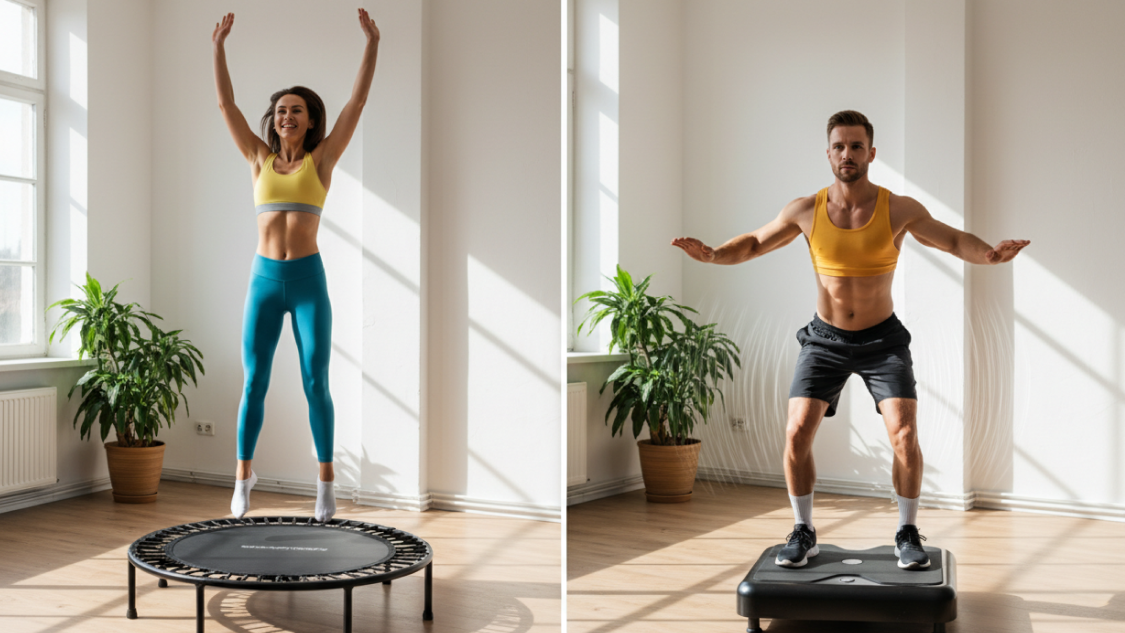
First off, what is rebounding? Rebounding is using a mini-trampoline for exercise. You bounce, jump, or even do strength exercises on it. It can typically get us to about 70% of our max heart rate while keeping joint impact low, so it's a really solid cardio workout.
One of the standout benefits of rebounding is how it stimulates the lymphatic system, helping with detoxification and immune health. It also helps improve endurance, balance, and coordination. In the market, you can find different types such as spring, bungee, and foldable rebounders.
How Does a Vibration Plate Work?
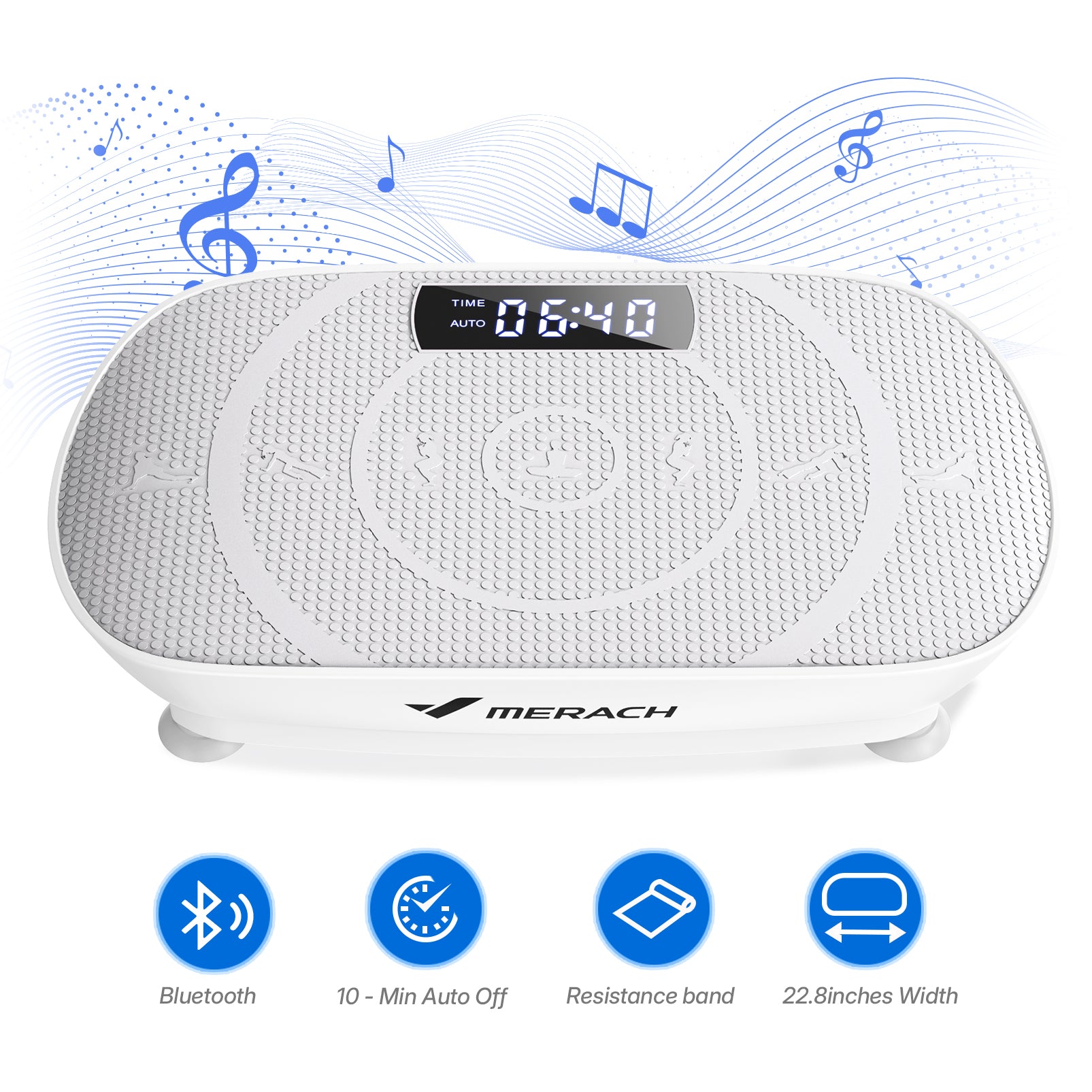
Whole body vibration plates are plates that literally vibrate, usually in three different directions: up and down, side to side, and an oscillating back-and-forth vibration. These machines typically do all three at once. Sometimes, you can program them for one or two types. It works by sending small vibrations through your body, which stimulates your muscles to contract and relax rapidly. It gives your muscles a workout without you having to move too much. So it's a much more relaxed experience. You can also stand, sit, and perform light exercises on the platform.
One of the greatest benefits of vibration plates is improving circulation, enhancing muscle recovery, and building strength, especially in your core and stabilizing muscles. It's perfect for short, low-effort sessions. If you're recovering from an injury or looking to boost your flexibility, this is an amazing tool. Plus, it's compact and fits into small spaces.

2. Which Is Better for Weight Loss?
Let's talk metabolic health and weight management. Undoubtedly, rebounding burns more calories and builds more muscle, making it a more direct weight loss tool. Notably, a mini trampoline program for overweight women led to significant reductions in fat mass and waist size, while increasing muscle mass and improving body composition. Regular rebounding also helps improve endurance and stamina.
| Activity | 10 Minutes | 30 Minutes |
|---|---|---|
| Vibration Plate | 20–50 calories | 60–150 calories |
| Rebounder | 60–100 calories | 180–300 calories |
However, that doesn't mean vibration plates have no role in a fat-loss plan. Many people who see weight loss effects are also benefiting from the blood sugar regulation vibration plates offer. Rebounding after a meal may be too strenuous. Using the vibration plate is calming and blunts that spike. Indirectly, it supports fat loss by improving muscle activation and circulation. Thus, vibration training is more supportive and recovery-focused.
3. Which Supports Bone Health Better?
Both machines can improve muscle and bone health. Jumping on a trampoline involves a quick deceleration-acceleration cycle, engaging leg and core muscles, leading to strength gains while being gentler on joints than running. This creates natural movement that engages the entire body. Therefore, it requires active participation and coordination.
Whole body vibration also stimulates muscle contractions. Standing on a vibration plate causes rapid reflex muscle contractions. Over time, this can increase muscle strength, particularly in the body parts on the plate. Lower extremities if standing, arms if doing push-ups.
If you're older, sedentary, or have mobility issues, it's great for maintaining muscle mass. But if you're in good health, you may prefer rebounding for strength and muscle mass because rebounding is much more intense. Vibration plates are more like a rehab and recovery tool.
4. Which Is Better for Lymphatic Drainage?
While neither device directly "drains" the lymphatic system, both can help stimulate lymph movement through different mechanisms. A rebounder works by creating a repeated up-and-down bouncing motion. During each bounce, your body experiences brief changes in gravitational force as you move upward and downward. This alternating increase and decrease in force acts like a natural pump throughout the body. As your muscles contract and relax during bouncing, they help move lymph fluid through the lymphatic vessels and support natural detox processes in the body.
While the vibration plate creates muscle contractions and mechanical pressure changes. This also stimulates the lymphatic system. Even when standing still, your muscles continuously respond to the vibrations to maintain balance and stability. These repeated muscle contractions may help promote circulation and encourage lymph movement, similar to how regular muscle activity supports lymphatic function. Many people use vibration plates as part of recovery, mobility, or wellness routines because they require less physical effort than traditional exercise.
5. Noise & Practical Use for Home Workouts
All the fitness focus plates use different technologies to reduce noise production during workouts. The rebounder uses a spring or bungee quality. So, this produces noticeable sound during intense workouts. This plate requires more physical space for safe movement.
In contrast, the vibration plate operates more quietly and compactly. This makes them suitable for apartments or small rooms. But these plates require minimal setup. You can be used while standing or performing simple exercises.
6. Which One Should You Choose?
The selection of a rebounder or vibration plate depends on multiple factors. Here is the detailed overview that helps to choose the best plate for your workout.
Best Option for Beginners

If you are a complete beginner and want to dedicate some time to fitness, then vibration plates are ideal for you. The Merach CV30 whole body vibration plate needs minimal coordination and effort. You can stand and perform your light exercise. This reduces the learning curve and lowers physical strain in your knee.
Best for Calorie Expenditure
If you want to focus on more impactful exercise, then rebounders are ideal for you. This plate involves continuous movement and an increased heart rate. Your body stays active throughout the workout. This makes it closer to cardio exercise. So, the rebounder provides a full-body motion and a higher intensity level.
Best Option for Daily Use
As you already know, daily exercise requires low effort and a short session. So, you need to invest in a machine that easily fits and meets your requirements. In this case, vibrating plates are ideal. You can do a short session without fatigue. Furthermore, the vibration plates are flexible and do not require more space.
7. FAQs about Rebounders vs. Vibration Plates
Both rebounders and vibration plates can be valuable additions to a home fitness routine. Before making a final decision, here are some frequently asked questions that may help clear up any remaining concerns.
Q1: Can I combine a rebounder and a vibration plate?
Yes. Many home fitness users combine both tools for different purposes. You can use a rebounder for cardio workouts and calorie burning. Use a vibration plate for recovery, stretching, and low-impact muscle activation.
Q2: Which option provides better value for most home users?
If your primary goal is cardio exercise and calorie burning, a rebounder often delivers more workout variety for the price. If you want a low-impact machine that is easy to use, compact, and suitable for quick daily sessions, a vibration plate may offer better overall convenience.
Q3: What are the negatives of rebounding?
Some individuals experience certain issues while working out on rebounding plates. It includes joint pain, falls, and soft tissue injuries. This happens mostly when you are in improper form or have poor equipment. Therefore, patients with severe osteoporosis should avoid the use of rebounders.
8. Conclusion
To sum up, rebounder and vibration plate, which plate makes your investment valuable? Well, the decision is based on your personal fitness goal and medical condition. If you have a heart history or osteoporosis, it's best to choose a vibration plate.
Whatever plate you choose, always make sure to choose a brand that provides a quality plate and vibration control. Merach provides vibration plates that are quiet and provide adjustable vibration settings. Their machine provides an easy-to-use interface. So, you can save your time to invest in the session.