If you’re shopping for a new treadmill for your home gym, this guide covers the few things that truly matter. Whether you’re a beginner starting your first fitness routine or one of many serious runners logging more miles each week, choosing the right home treadmill comes down to matching the machine to your fitness goals, space, and training style.
Below, we break down the four most important factors—based on real-world treadmill testing, personal trainer input, and long-term home use—so you can confidently select from today’s best treadmills without overpaying for features you don’t need. We’ll also share two Merach picks that fit very different use cases.
Factor 1: Intelligent Treadmill Features That Actually Matter
Modern treadmills are no longer just moving belts. Today’s integrated features directly affect motivation, consistency, and calorie burn—especially for home workouts.
When evaluating treadmill features, focus on function, not hype.
1) Incline Capability & Incline Range
Incline capability is one of the most important features for both beginners and distance runners. Adjustable incline allows you to train uphill without running outdoors, increasing intensity while reducing joint impact from excessive speed.
According to personal trainers with over a decade of experience in treadmill coaching, incline walking or running can significantly increase calorie burn, improve cardiovascular efficiency, and help users break plateaus.
Benefits of incline training include:
- Higher calorie burn compared to flat treadmill running
- Improved leg strength and endurance
- Better preparation for running outdoors
- More efficient workouts at lower speeds
For beginners, incline walking offers a joint-friendly way to increase effort. For experienced users, a wider incline range and higher maximum incline support interval training and hill simulations.
2) Folding Treadmill & Space Efficiency
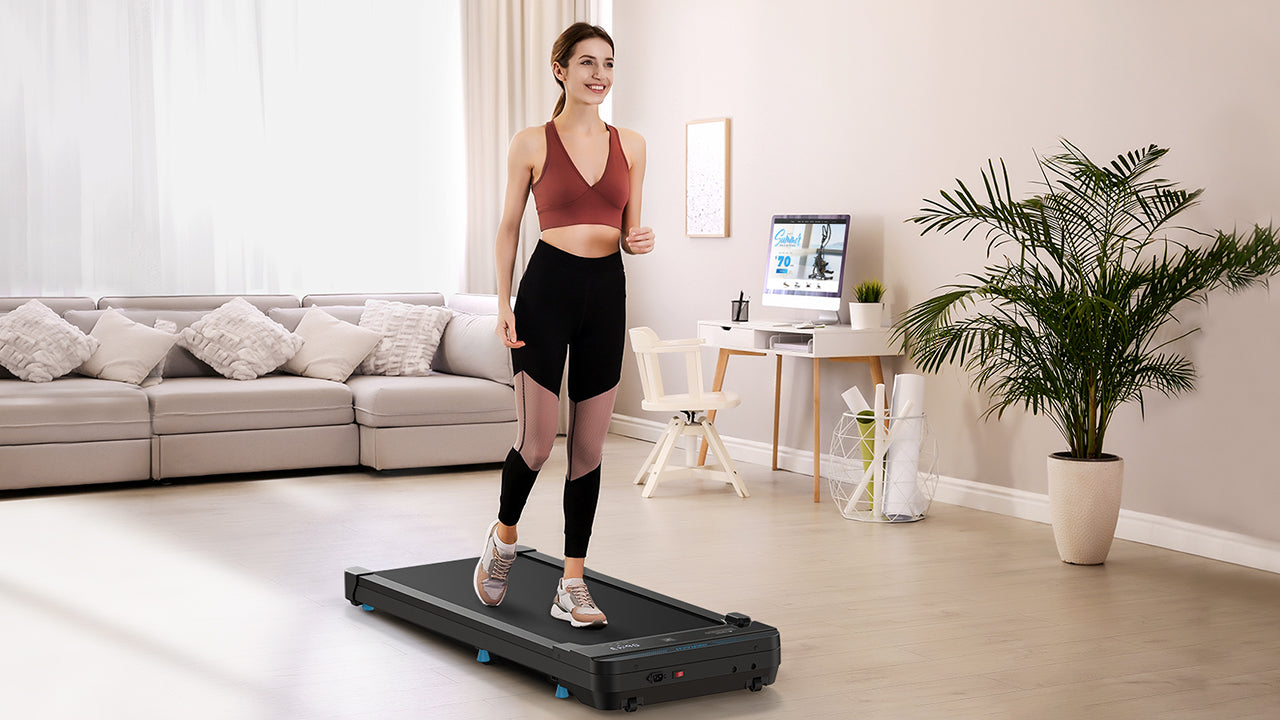
A folding treadmill or foldable treadmill is essential for most home gyms. Many users discover that non-folding machines quickly become heavy machines that collect dust.
A space-efficient treadmill makes it easier to:
- Store the unit after workouts
- Clean under and around the running surface
- Maintain long-term consistency
This is especially important for apartments, shared living spaces, or multi-purpose rooms where space efficiency matters.
3) Bluetooth, Fitness Apps & Interactive Workouts
Bluetooth connectivity unlocks interactive workouts, syncing your treadmill with fitness apps, trainer-led workouts, or music and entertainment.
Some treadmills offer:
- App-based training programs
- Map-based virtual runs
- Trainer-led workouts or on-demand classes
- Accurate data syncing with devices like Apple Watch
These features help maintain motivation—especially for users who struggle with consistency on manual treadmills.
4) Display Type & Control Simplicity
A clear LCD screen or touchscreen improves usability. Look for displays that show:
- Speed and incline
- Distance and time
- Heart rate (via heart rate monitor)
- Calories burned
Complex interfaces can distract users mid-run. The best treadmills balance visibility with ease of control, including a manual mode for users who prefer distraction-free sessions.
Factor 2: Speed Range, Max Speed & Training Style
Choosing the right speed range depends on how you plan to train.
Typical guidelines:
- Walking: 2–4 mph
- Jogging: 4–6 mph
- Treadmill running: 6–8 mph
- Interval training or faster efforts: 8–12 mph
A treadmill with a higher max speed gives you room to grow, even if you don’t need higher speeds today. For many home users, a top speed around 7.5 mph is sufficient for comfortable running and long-term fitness progress.
Speed and incline together matter more than speed alone—especially for users focused on fitness goals rather than racing.
Factor 3: Running Surface, Size & Taller Runners
Before buying, measure your available space and evaluate the running surface carefully.
Running Belt Size
For comfort and safety:
- Minimum width: 20 inches
- Length: 55–60 inches (longer for taller runners or long strides)
A larger running surface reduces missteps and improves confidence at higher speeds.
Clearance Space
Plan for:
- ~8 feet behind the treadmill
- ~2 feet on each side
This improves safety and airflow and simplifies treadmill installation.
Factor 4: Weight Capacity, Stability & Long Life
Weight capacity affects durability, stability, and noise. Even lighter users benefit from a higher-capacity treadmill because it:
- Supports consistent performance
- Reduces motor strain
- Extends the machine’s long life
Budget models often cap at lower limits, while heavy-duty treadmill designs and commercial treadmills support heavier runners and higher-intensity use.
Our Top Merach Treadmill Picks
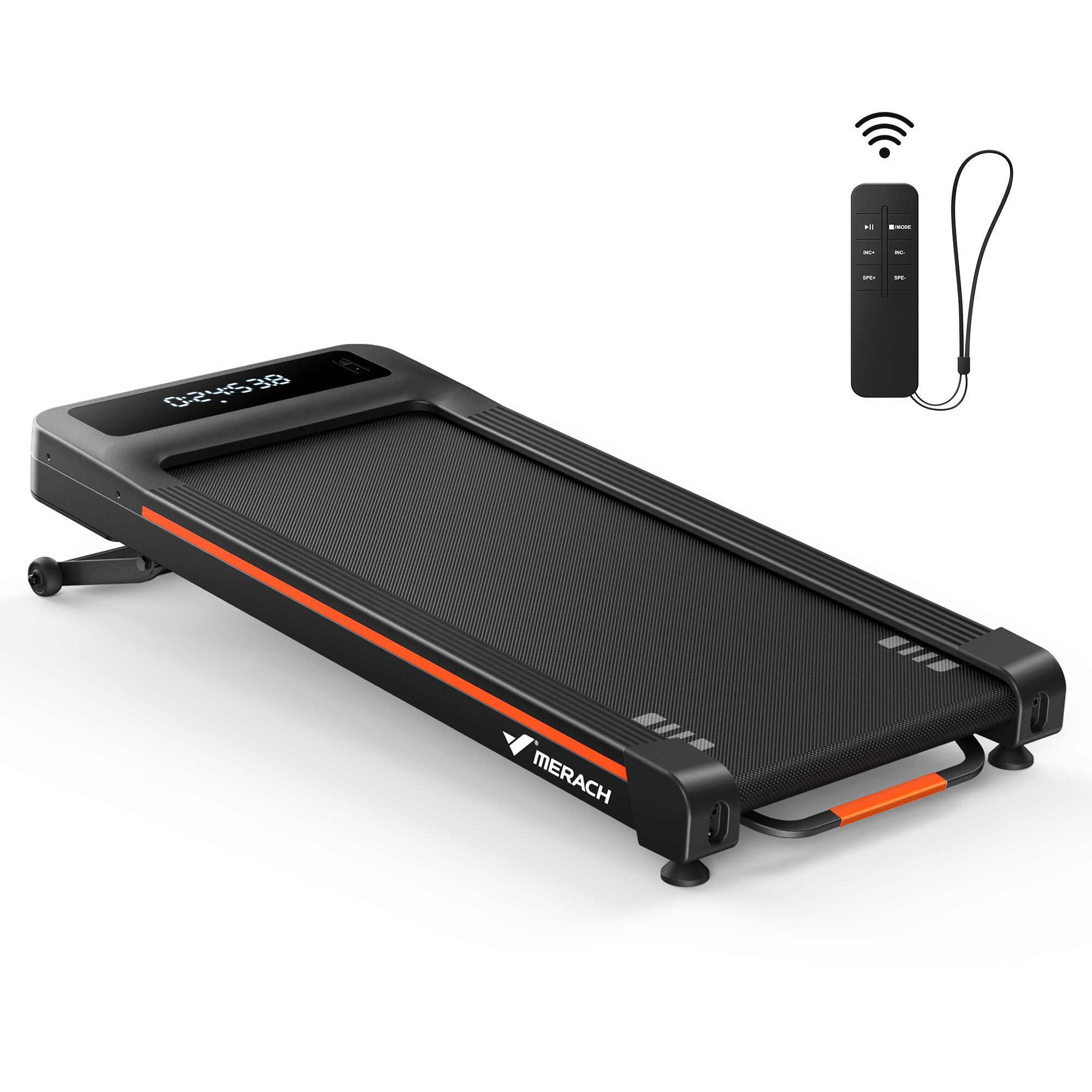
1) Merach NovaWalk W50 TrekPad — Compact Size, Treadmill-Level Strength

If you want treadmill-level performance without a bulky frame, the Merach NovaWalk W50 TrekPad is a strong upgrade. It combines the strength of a treadmill with the compactness of a walking pad, making it ideal for home workouts where space efficiency matters.
Powered by a 3.5 HP peak brushless motor, the W50 delivers steady performance for up to 10 hours of continuous use, far exceeding typical walking pads. Its automatic 0–12% incline increases workout intensity and supports more effective fat-burning without high impact.
Built for stability, it supports up to 400 lbs with a wider running surface and reinforced deck, while operating quietly under 40 dB. Bluetooth connectivity and a magnetic remote make speed and workout tracking simple through the Merach app.
Key Specs
- Speed range: 0.6–4.0 mph
- Incline: 0–12% automatic
- Weight capacity: 400 lbs
- Noise level: <40 dB
- Assembly: None required
This makes the NovaWalk W50 a great option for users who want serious walking workouts, incline training, and long-term durability—without committing to a full-size treadmill.
2) Merach T12 Incline Treadmill — Best Home Treadmill for Running

The Merach T12 is designed for users who want a running treadmill with incline capability, stability, and quiet operation.
- Foldable treadmill design
- Smooth speed and incline transitions
- App-connected interactive workouts
- Stable running surface with shock absorption
Key Specs
- Speed range: 0.5–7.5 mph
- Maximum incline: Up to 15% Auto Incline
- Weight capacity: 300 lbs
It’s an excellent balance between performance and practicality for most home gyms.
How This Compares to Other Treadmills
Many shoppers also compare popular models like Horizon Fitness, NordicTrack, Bowflex, Peloton, Aviron, or Echelon.
Higher-end models (like the NordicTrack Commercial series or Peloton Tread) offer premium features such as swivel touchscreens, decline feature, or subscription-based iFit programming, but they also come with higher costs, heavier frames, and ongoing fees.
For many home users, a well-built Merach treadmill delivers the right mix of solid performance, essential features, and value.
Final Thoughts: Choosing the Right Treadmill
Choosing the right treadmill isn’t about buying the most expensive model—it’s about matching the machine to your fitness levels, space, and long-term goals.
Focus on:
- Treadmill features you’ll actually use
- Speed range and incline capability
- Running surface size and stability
- Weight capacity and durability
Whether you’re training seriously, recovering, or simply staying active at home, the right treadmill makes consistency easier—and that’s what delivers results.