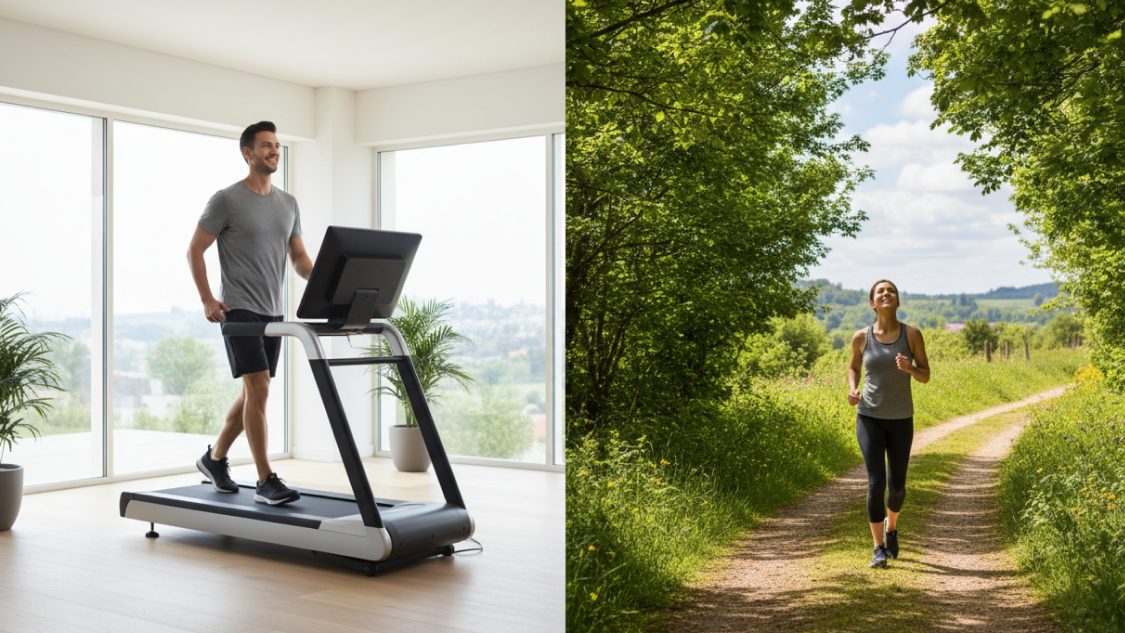
Walking is one of the easiest and most effective ways to exercise, and practically anyone can do it, no matter how old or fit they are. But the path to get there suddenly feels complicated. Do you lace up and head outside? Or do you step onto the treadmill? Walking regularly can significantly impact your health over time, whether you want to lose weight, improve your heart health, clear your mind, or simply stay active.
In this guide, we'll discuss the pros and cons of treadmill vs. outdoor walking. We'll also discuss which option is best for your health and fitness goals.
1. Treadmill vs Outdoor Walking: What Are The Specific Benefits?
Both walking on a treadmill and outdoor walking offer strong health benefits, but they have distinct workout styles.
Walking on treadmills lets you control the speed and incline and can be performed indoors. Compared to outdoor walking, it provides a smooth, predictable surface and lets you control the intensity of your workout. Depending on what you want to accomplish with your workout, you can either adjust the slope so it feels like you are moving uphill or maintain a constant flat speed throughout the session. It also allows you to track key metrics like distance, pace, and calories, making it ideal for structured training, weight loss programs, and progressive workouts.
Outdoor walking is different from using a treadmill because it involves wind resistance, uneven ground, and small elevation changes. These changes can make the workout more interesting and help you train more muscles. In addition, natural surroundings can significantly improve mental health, mood, and stress levels, which is something indoor workouts may not fully replicate.
Pros of Treadmill
- Controlled intensity: Easily adjust speed and incline to match your fitness level or training plan.
- Consistent & Predictable: No terrain or weather changes, making workouts easier to manage.
- Joint-friendly surface: Shock absorption helps reduce impact on knees and ankles.
- Convenient & Weatherproof: Exercise anytime, regardless of outdoor conditions.
- Progress tracking: Monitor distance, pace, calories, and heart rate for better results.

Pros of Outdoor Walking
- More natural resistance: Wind and uneven terrain can increase effort and calorie burn.
- Greater muscle engagement: Activates stabilizer muscles due to varied surfaces
- Better mental health benefits: Fresh air, sunlight, and nature help reduce stress and improve mood.
- More engaging experience: Changing scenery makes it easier to stay motivated.
- Free & Accessible: No equipment required, making it easy to get started.
In simple terms, treadmills are best for control, convenience, and consistency, while outdoor walking stands out for variety, natural intensity, and mental well-being.

2. Which Is More Effective for Burning Calories?
One of the most common questions when comparing treadmill vs outdoor walking is, which one burns more calories? The truth is, calorie burn depends less on where you walk and more on how you walk. The amount of calories you burn depends on how hard you work out, how much you weigh, how fast you go, and how steep the hill is
You can make the incline on treadmills steeper, which burns more calories and feels like walking uphill. Walking outside on different types of ground, such as hills or trails, may burn a few more calories. To better compare both options, here’s an estimate of calorie burn for a 155 lb person walking at 3.5 mph:
| Walking Condition | Intensity | Calories Burned (30 min) | Calories Burned (1 hour) |
|---|---|---|---|
| Treadmill | 0% incline | 110–130 kcal | 220–260 kcal |
| 3% incline | 140–160 kcal | 280–320 kcal | |
| 5% incline | 160–190 kcal | 320–380 kcal | |
| Outdoor | Flat terrain | 120–140 kcal | 240–280 kcal |
| Hilly terrain | 180–240 kcal | 360–480 kcal |
As shown above, both treadmill and outdoor walking can help you burn a significant number of calories when intensity is matched. However, outdoor walking may feel more challenging and burn more calories due to natural resistance. Increasing incline, speed, or terrain difficulty is the key to maximizing calorie burn.
3. Do Treadmills & Outdoor Walking Engage the Same Muscles?
A common concern for many users is whether treadmill walking and outdoor walking train the same muscles. And which is better for toning the legs or improving overall strength? The two activate muscles in slightly different ways depending on the environment.
When you walk on treadmills, the surface is stable, and movement is more controlled, which allows for consistent muscle engagement with every step. This makes it easier to focus on form and progressively increase intensity with incline. It is often more effective for targeting specific muscles like the glutes and hamstrings in a structured way.

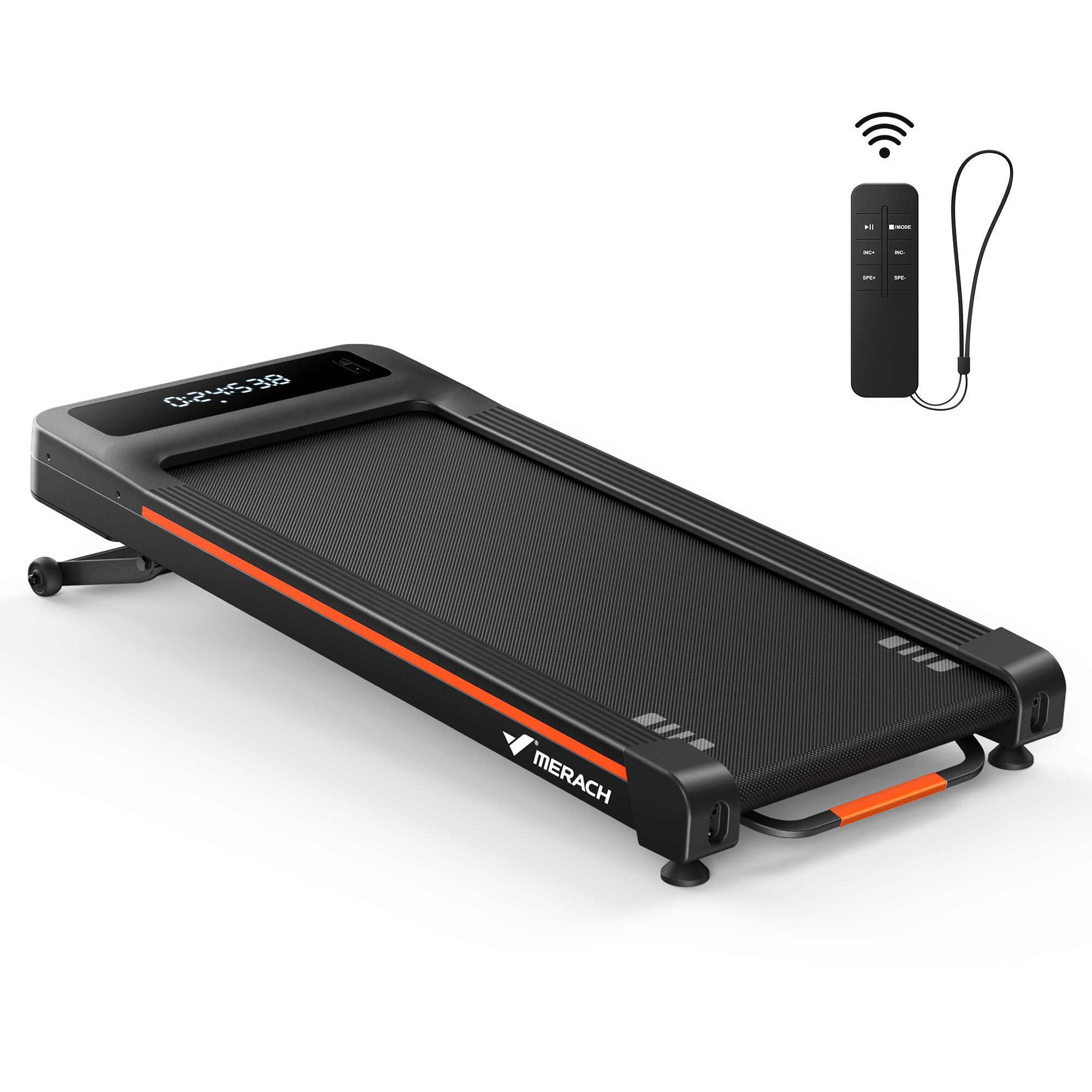
If you want to enjoy progressive incline training and more effective muscle toning at home, having the Merach Foldable Treadmill Series is worth it. With a 15% auto incline, it allows you to easily increase intensity and activate more lower-body muscles without needing outdoor terrain.

The T12 Pro Foldable Treadmill with 15% Auto Incline features a wider 17.3" running belt, a reinforced steel frame supporting up to 320 lbs, and a 3.0HP brushless motor that delivers smooth, quiet performance up to 7.5 mph. It remains compact with a foldable design that fits easily into home spaces. If you're looking for a more space-saving option, you can also consider the walking pads. These are more compact yet still offer a treadmill-like experience.
With outdoor walking, the body has to constantly adapt to uneven terrain, slight slopes, and surface changes. This activates additional stabilizer muscles in the ankles, hips, and core, helping improve balance and coordination. It is often more dynamic and functional. But the muscle engagement may feel less targeted.
In simple terms, a treadmill is better for controlled muscle activation and progressive training, while outdoor walking engages more stabilizing muscles and supports overall functional strength. If your goal is muscle toning and efficiency, a treadmill has a slight advantage, while outdoor walking is better for building balance.
4. Impact on Joints & Convenience for Long-Term Exercise
The health of people's joints is a common source of concern. People with knee problems or sensitive joints often wonder whether walking on a treadmill vs outside.
In terms of joint health, treadmill walking is often the safer option, especially for people with knee pain or sensitive joints. On treadmills, shock-absorbing surfaces are often used to reduce impact compared to hard outdoor surfaces like concrete. While walking outdoors on softer terrain, such as grass or dirt, can provide similar cushioning, not everyone has access to these surfaces, and walking on pavement can increase stress on the joints over time.
When it comes to convenience, treadmills clearly have an advantage. They allow you to exercise regardless of weather, time of day, or location, making it easier to stay consistent with your routine. Outdoor walking depends heavily on factors like weather conditions and access to suitable walking routes, which can make regular workouts less predictable.
However, walking outdoors may give you more motivation. Walking on a treadmill can be boring for some people because it is repetitive. Many people enjoy watching television or listening to music indoors. Each time you venture outside, you are likely to come upon something novel and peculiar. In the long run, it might make things more exciting and easier for you to stay with it.
5. Which One Is Better for Your Fitness Goals?
Based on the above discussion, we can conclude a comprehensive comparison of treadmills vs outdoor walking:
| Feature | Treadmill Walking | Outdoor Walking |
|---|---|---|
| Calorie Burn | Moderate to High | High |
| Muscle Engagement | Primarily legs and core | Legs, core, arms |
| Impact on Joints | Lower | Variable |
| Convenience | Indoor, weather-proof | Requires a suitable environment |
| Mental Health | Controlled environment | Sunlight and fresh air boost mood |
| Motivation | Can feel repetitive | Scenic and dynamic |
| Ideal Users |
|
People who enjoy fresh air, varied scenery, and a more relaxed, less structured workout |
A treadmill is best suited for structured, goal-oriented workouts like incline walking, interval training, steady-state cardio, and rehabilitation exercises. Because you can control speed, incline, and duration, it works especially well for weight loss, endurance building, and progressive training.
On the other hand, outdoor walking is better suited for natural, flexible, and experience-driven activity. It works well for casual walking, long-distance walking, hiking, and active recovery. The changing terrain and environment make it more engaging, which can help improve motivation and long-term adherence.
In general, if your goal is efficiency, structure, and measurable progress, a treadmill is the better choice. If you value enjoyment, variety, and mental well-being, outdoor walking may be more suitable. You can also combine both for the best overall results.
6. FAQs about Treadmill vs. Outdoor Walking
By now, you likely have a clearer sense of which exercise better aligns with your lifestyle and fitness philosophy. Below, we address the most common queries to help you build a sustainable, effective walking habit.
Q1: How often should I walk on a treadmill or outdoors?
According to the WHO and CDC, at least 150 minutes of moderate-intensity walking per week is good for general health. This translates to about 30 minutes, 5 days a week, whether indoors or out. The key is consistency. Some movement every day is better than occasional long sessions.
Q2: Is 30 minutes of walking on a treadmill enough?
Absolutely. 30 minutes of brisk walking on a treadmill is an excellent and sufficient workout to improve cardiovascular health and manage weight. To maximize benefits, incorporate intervals.
Q3: Can I use a treadmill if I have knee problems?
Yes, and in many cases, a treadmill can be a joint-friendly choice. Modern treadmills with cushioned decks absorb impact better than concrete or asphalt, reducing stress on the knees, hips, and back. For those with knee issues, it is crucial to:
- Start with a flat, slow pace and avoid high inclines initially.
- Stand tall, avoid leaning on the handrails, and take natural strides.
Q4: How long do I need to walk on the treadmill to reach 10,000 steps?
The time for the treadmill to reach 10,000 steps required varies based on your walking speed. On average, at a moderate pace of 3 mph, it takes about 100 minutes to accumulate 10,000 steps. Most people do not achieve this in one continuous session. A practical approach is to break it up: use the treadmill for a focused 30-45 minute walk, and accumulate the remaining steps through daily activities.
7. Conclusion
There isn't a single answer to whether to walk on a treadmill vs outdoor walking. When done regularly, both ways are very good for your heart, muscles, and mind. A treadmill can be perfect for you if you want something easy to use, lets you choose the intensity, and is easy on your joints. If you want fresh air, beautiful scenery, and a break for your mind, strolling outside can be perfect for you.
In the end, the best pick is the one you will remain with for a long time. For many people, walking on both a treadmill and outdoors is the best way to stay fit and healthy, as it provides structure, variety, and motivation.