Rowing is a vital part of any excellent back workout, whether you want to build muscle, get stronger, or improve your posture. There are many styles of rowing, but the debate between cable row vs. machine row is getting stronger in the gym. Beginners often feel like they have too many options, and even experienced lifters still wonder which form is better in the long run. If you know how each exercise works, which muscles it works, and how it fits into your fitness goals, you can train smarter instead of harder.
We'll go over everything you need to know about machine rows vs. cable rows in this detailed tutorial. We'll talk about the benefits and downsides of each, how they work your muscles, how to stay safe, and how to program them.
1. What Is a Cable Row?
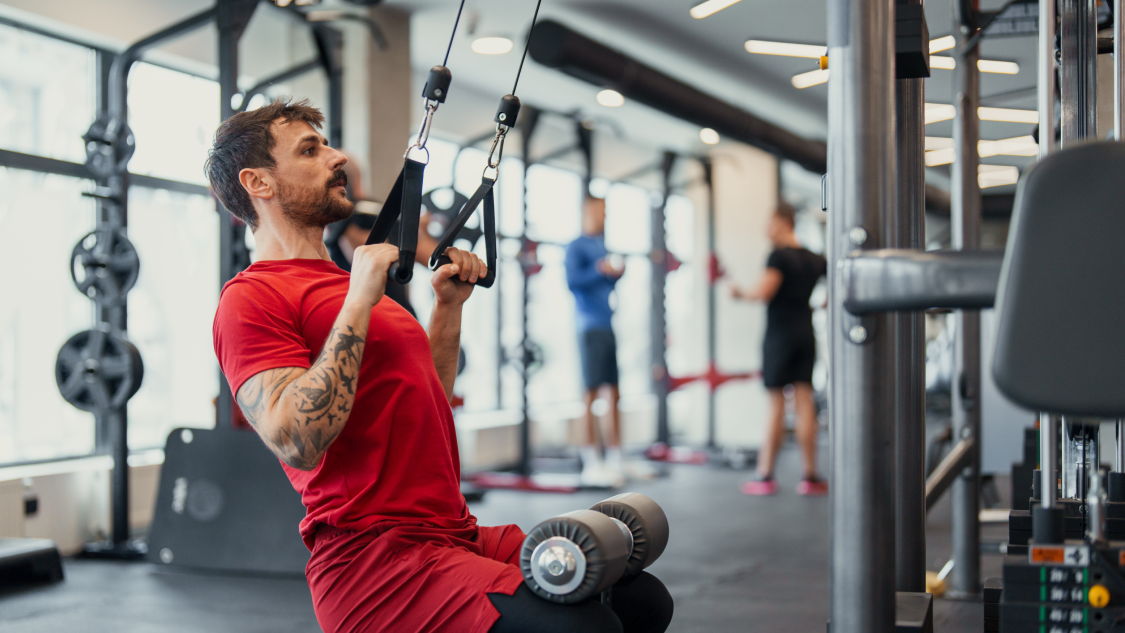
A cable row is usually performed while sitting, and it uses a pulley-and-weight-stack system to provide resistance throughout the full range of motion. Cables keep the load steady throughout operation, unlike many machines that release tension at certain points. When you pull the grip toward your body, your back muscles tighten concentrically. The same muscles operate eccentrically when you gently return the weight, keeping them under stress the whole time. Because the cable moves freely, the stabilizer muscles need to work to keep your torso steady and your movement in check.
This exercise is a key part of bodybuilding and functional training programs. You can choose the grip type, handle attachment, torso angle, and speed. It makes them good for both beginners who want to learn how to do things correctly and expert lifters who want to gain muscle.

Muscles Worked in the Cable Row
The cable row primarily targets the muscles in the upper and middle back, while also working the arms and shoulders as secondary movers.
| Muscle Group | Muscles Worked |
|---|---|
| Primary muscles |
|
| Secondary muscles |
|
Benefits of Cable Rows
Because they offer a variety of benefits, cable rows are a popular choice among weightlifters looking to build muscle while maintaining control of their bodies. But they aren't perfect. Cable rows usually need more skill and awareness than machine rows. For people who don't lift weights often, bad posture or carrying too much weight can shift tension from the back to the lower spine, increasing the risk of injury.
Key Benefits:
|
Possible Problems:
|


2. What Is a Machine Row?
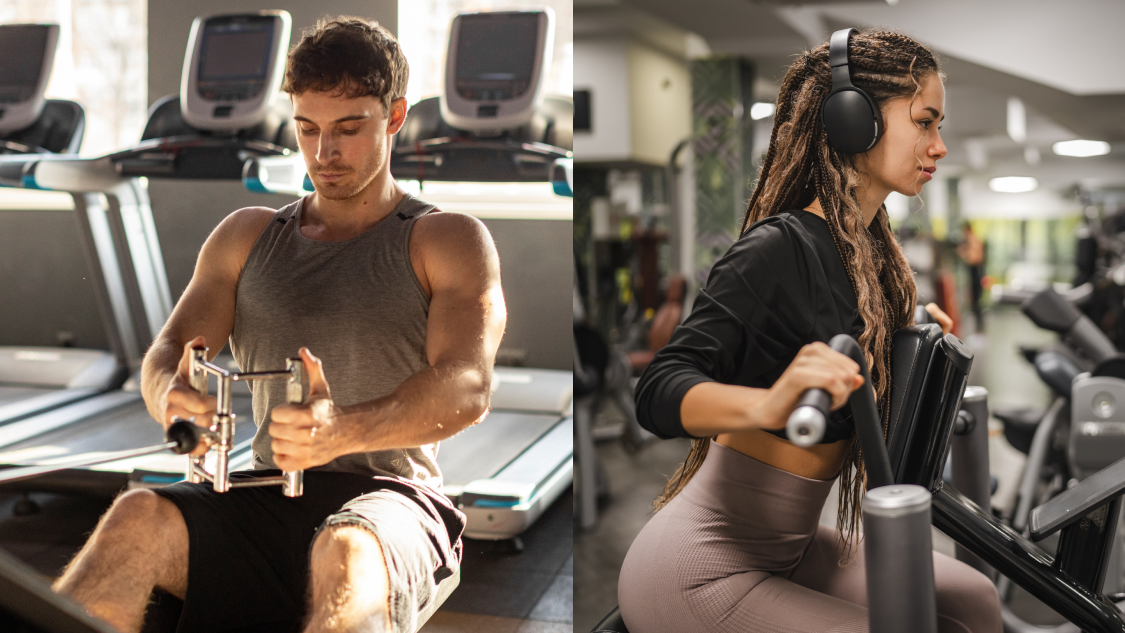
A machine row is done on a special rowing machine that keeps the action on a set course. It's an exercise is very popular in commercial gyms and is often called a sitting row machine. When comparing the seated cable row, it is often preferred because it is easier and safer.
The machine has fixed grips, back support, and a set pattern of movement. It makes it easier for the lifter to pull weight using the right muscles without worrying about balance or coordination. Machine rows are often used in programs for beginners, rehab settings, and strength-focused training blocks.
Muscles Worked in the Machine Row
Machine rows target the big pulling muscles in the back, making them great for building strength.
| Muscle Group | Muscles Worked |
|---|---|
| Primary muscles |
|
| Secondary muscles |
|
Benefits of Machine Rows
There are many benefits to machine rows that make them attractive to people of all levels. They are often easier to use. But they also have some problems that need to be thought about. People often say that machines are less versatile than cables.
Key Benefits:
|
Possible Problems:
|
3. Cable Row vs Machine Row: Key Differences
Knowing how these workouts work and how they differ mechanically might help clear up any confusion. The distinctions between the machine row vs. cable row go beyond the movement; they also affect the results of your training.
- Cable rows let you change the course of your movement and require better control. It works the stabilizers and core muscles.
- Machine rows follow a set path, provide more stability, and are easier to perform. It only works on the back.
The table below gives you a clear side-by-side comparison to help you quickly decide which option fits your training style.
Cable Row vs Machine Row Comparison Table
| Feature | Cable Row | Machine Row |
|---|---|---|
| Resistance | Constant cable tension | Fixed machine resistance |
| Range of Motion | Adjustable | Guided |
| Muscle Activation | Higher stabilizer involvement | Greater isolation |
| Ease of Use | Moderate | Beginner-friendly |
| Injury Risk | Higher with poor form | Lower |
| Best for | Hypertrophy | Strenght |
| Common Setup | Seated cable row | Seated row machine |
| Comparison Use | Care Row machine vs cable row | Seated row machine vs cable |
4. Which Is Better for Back Strength?
When done well, both activities can help muscles grow. But generally speaking, machine rows are the most advantageous for pure strength. Machine rows allow you to lift greater weights with less need for balance or coordination. It allows you to focus entirely on producing force with your back muscles, which is a significant advantage.
Research in resistance training consistently shows that higher mechanical load (heavier weight) is a key driver of strength gains, which is why machine-based exercises are often used in low-rep, high-load programs.
On the other hand, cable rows contribute to functional strength. They keep your muscles under constant tension throughout the entire movement and require more control from stabilizing muscles. This can improve coordination, muscle engagement, and overall pulling mechanics.
However, in practice, combining both typically gives the best results. Start with machine rows for heavy, strength-focused sets. Follow with cable rows for controlled reps and better muscle activation.
What If You Want to Train Back at Home?
One limitation of both cable rows and machine rows is that they usually require gym equipment. If you’re training at home, it can be difficult to replicate the same combination of load, movement pattern, and consistency.

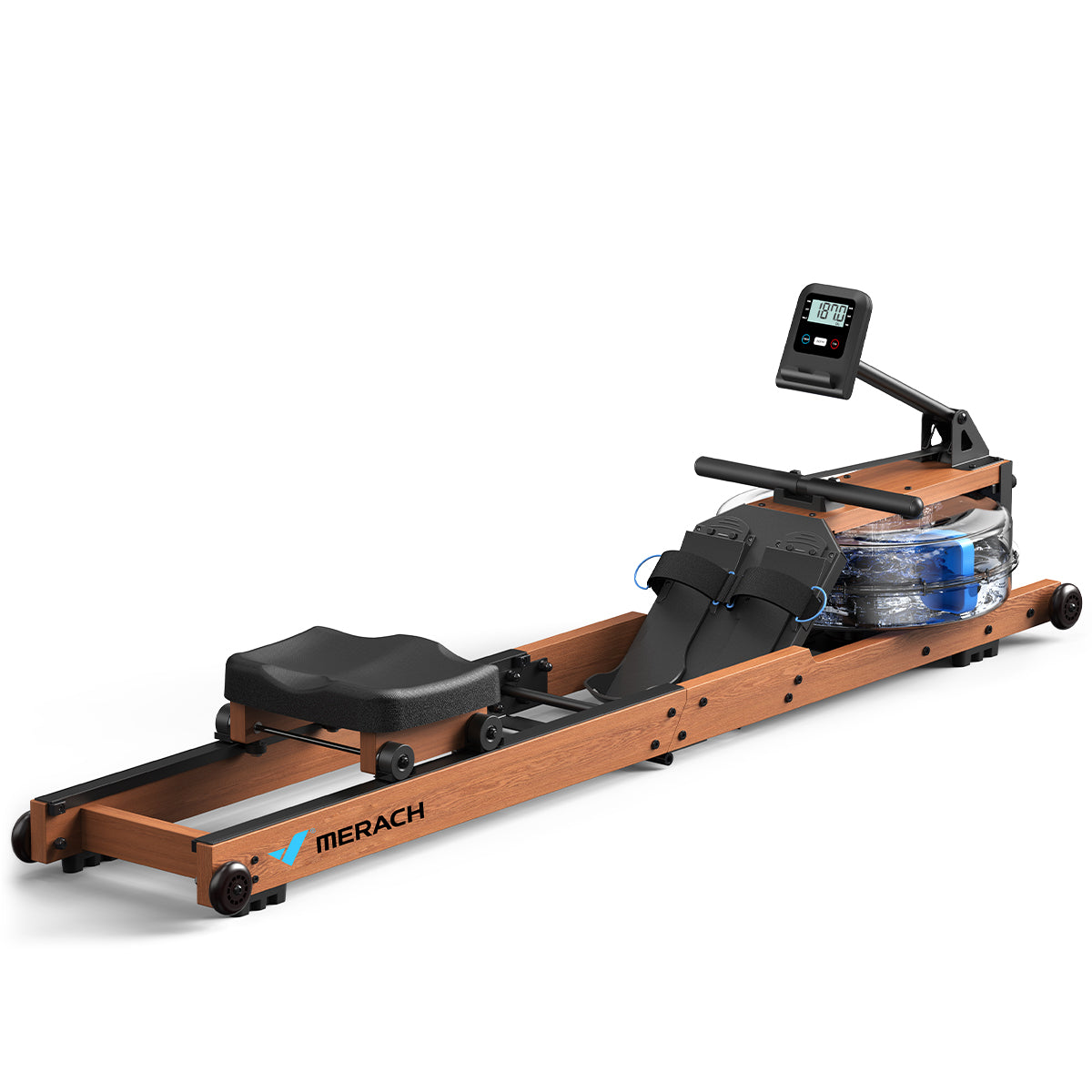
If you’re looking for a reliable option for home training, the Merach NovaRow R50 Air Resistance Rower stands out as a well-balanced choice. Its air resistance system naturally adjusts to your effort, which means the harder you pull, the more resistance you generate—similar to how strength training scales in the gym. More importantly, rowing allows longer sessions than short gym sets while reducing joint stress, making it ideal for beginners. Combined with real-time performance tracking and app connectivity, it makes it easier to stay consistent and progressively improve over time.
5. Which Should You Choose?
Ultimately, the decision is yours to make based on your training goals. If your goal is better muscle control and more variety in your workouts, cable rows are a great option. They allow you to adjust angles, grips, and movement paths, making them ideal for building balanced muscle development over time. If you prefer lifting heavier weights with more stability and less risk of form breakdown, machine rows are the better choice.
For beginners, machine rows are usually the best starting point. They help you learn proper pulling mechanics, maintain a stable posture, and build a solid strength foundation without needing advanced technique. Once you feel more confident, adding cable rows can improve control and overall back engagement.
6. FAQs about Cable Rows vs. Machine Rows
Are you ready to build a stronger, thicker back? Below, we’ve compiled the most common questions lifters have when deciding between cable rows and machine rows.
Q1: What is the home alternative to cable rows and machine rows without a gym?
If your goal is to build back strength and improve posture at home, a rowing machine is one of the best alternatives. The cable rows and machine rows focus mainly on isolated pulling, while rowing machines train back muscles through repeated, controlled pulling movements combined with leg drive and core stability, making it much closer to real rowing mechanics. In addition, rowing machines are low-impact and easy to use consistently, which makes them ideal for long-term training at home.
Q2: Which is safer for beginners: the row machine or the cable row?
Machine rows are generally safer for beginners because the movement path is fixed and requires less coordination. This makes it easier to maintain proper posture and reduce the risk of injury.
Cable rows, on the other hand, require more control and awareness. Beginners may rely too much on momentum or round their lower back if they are not careful. A good approach is to start with machine rows to learn the basic pulling pattern, then gradually introduce cable rows as the technique improves.
Q3: Can cable rows replace machine rows completely?
Cable rows can replace machine rows in some workouts, but they are not a perfect substitute. While cable rows offer more freedom of movement and better muscle engagement, they are not as effective for lifting very heavy loads safely. If your goal is balanced back development, it's better to include both.
Q4: Why don’t I feel my back working during rows?
This is a very common issue, especially for beginners. Most people tend to pull with their arms instead of engaging their back muscles. To fix this, focus on pulling your elbows back rather than just moving the handle. Squeeze your shoulder blades together at the end of each rep.
7. Conclusion
The decision between cable rows and machine rows can be influenced by several factors, including your level of experience, your goals, and how you prefer to exercise. Cable rows are more flexible, maintain a consistent tension, and train more muscles than machine rows, which are safer, easier, and can help you become stronger. Cable rows are also more effective. The wisest course of action would be to mix the two into a comprehensive curriculum rather than committing to one for the rest of one's life.
It makes no difference whether you prefer machines or cables; what matters is that you use the correct form, remain consistent, and gradually increase the weight.