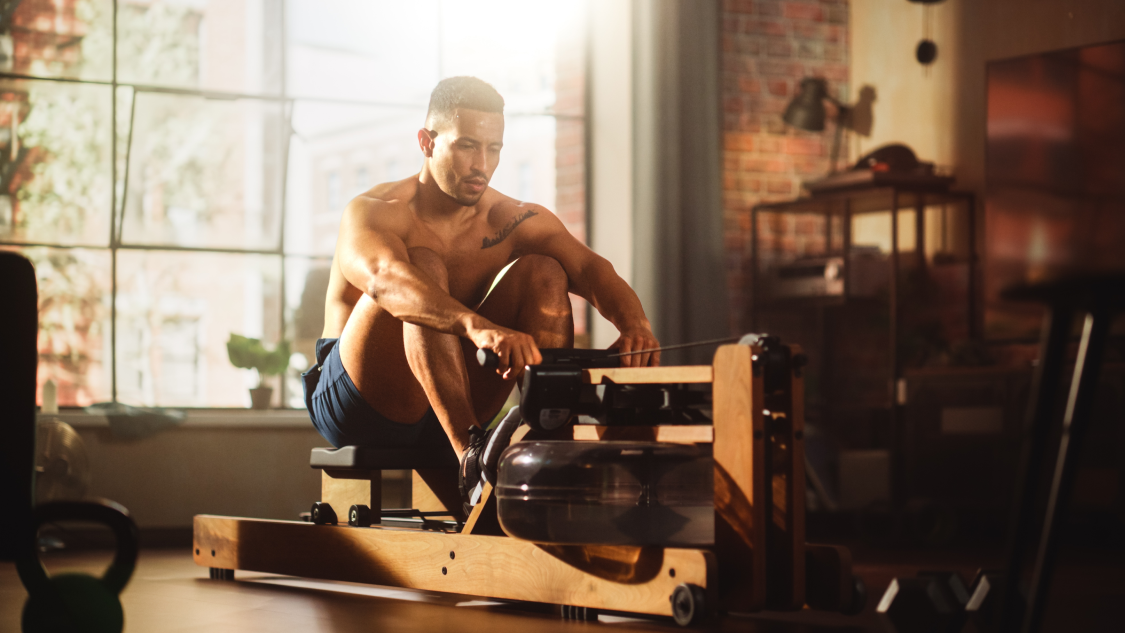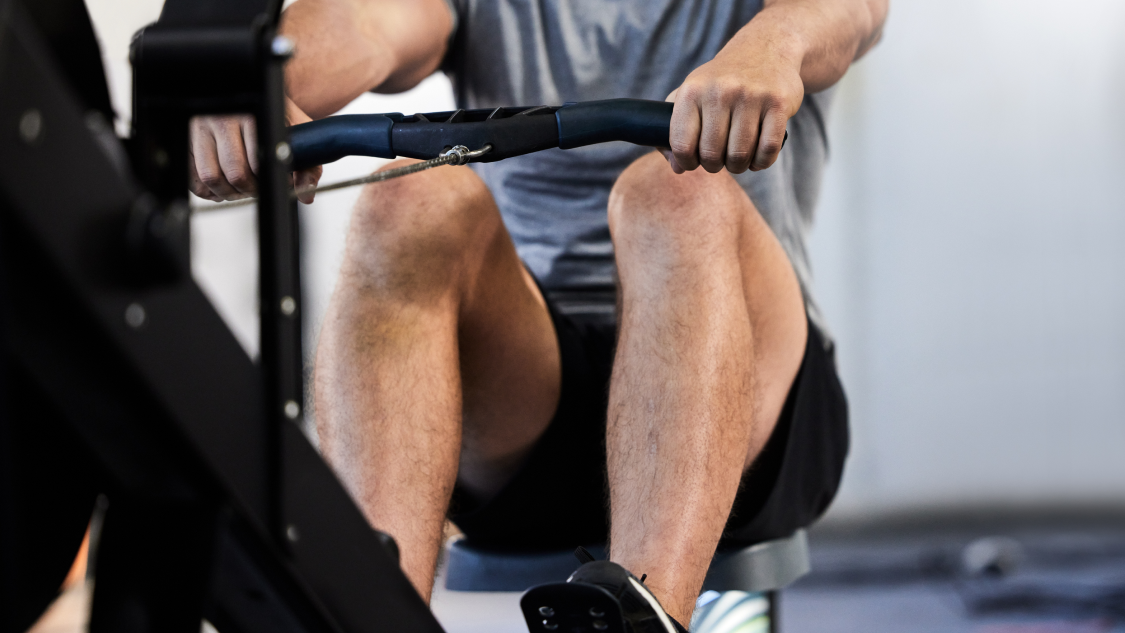
Rowing machines look like endurance equipment, so many people assume they only improve cardio fitness and calorie burn. But once you start using them, your legs, back, and core are all working at the same time, and the resistance can actually feel like strength training. That’s why rowing is often used in two very different ways. Some people treat it as cardio, while others use it as a hybrid strength-training tool for lean muscle and athletic conditioning.
In this guide, we’ll break down how to use a rowing machine for muscle building. You will learn about the workouts that build strength, mistakes that kill results, and workouts that build strength fast. This is your blueprint if you want a more athletic, stronger, and fitter body.
1. What Muscles Does a Rowing Machine Work?
Rowing machines can really build muscle but not in the same way as traditional weight training. Every stroke creates resistance that forces your muscles to work against the load. When you row with proper form and enough resistance, your body is repeatedly producing force through your legs, back, and core.
- Legs: Provide most of the power during the drive phase
- Back: Responsible for the pulling motion and posture support
- Core: Stabilizes the body and transfers force between upper and lower body
- Arms & Shoulders: Finish the stroke and add control at the end of each pull.
Light, steady rowing mainly improves cardio fitness, while higher resistance, slower controlled strokes, and interval training are what actually stimulate muscle growth. That’s why some people see noticeable body changes with rowing, while others mainly improve stamina.

2. Rowing Machine vs. Other Exercises for Muscle Building
How does rowing compare with running, cycling, or traditional weight training for muscle building? The biggest difference is that a rowing machine combines strength + cardio + full-body training in one workout. This mixture helps you develop the natural strength that athletes depend on, stay more toned, and build character faster.
Rowing vs. Running
Running is excellent for cardiovascular fitness, but it mainly targets the lower body and creates more impact on the knees and ankles. Rowing, on the other hand, is low-impact training for joint-friendly workouts that permits you to train tough. This shows you can train more often, push heavy resistance, and row longer.
Rowing vs. Cycling
Cycling focuses mostly on the legs and offers limited upper-body involvement. Over 85% of your muscles activate with one stroke. Rowing machines work the legs, back, core, shoulders, and arms together, which makes them better for balanced muscle development.
Rowing vs. Weight Training
Traditional weight training is still the best option for maximum muscle size and heavy hypertrophy. However, rowing is better for people who want lean muscle, athletic conditioning, and strength without needing multiple machines or high joint stress.
Rowing delivers you more for every second you train if your target is whole-body strength. It powers your whole chain of action instead of secluding one area. This is the reason many fitness pros, rowers, and athletes swear by this rowing machine. Rowing is unbeatable for anyone seeking toned muscles without spending extra time switching machines.
3. Best Rowing Workouts for Muscle Building
The best routines blend explosive intervals, controlled pacing, and heavy resistance to hit every major muscle group. Each workout pushes your muscles to work harder, build definition fast, and grow stronger, from low-stroke sessions to high-intensity power intervals. These routines turn your arms, core, legs, and back into powerful, lean engines. It boosts athletic performance and endurance. These rowing workouts offer results that feel as incredible as they look, whether you are aiming for a more toned physique, overall strength, or muscle growth.
Power Strokes for Upper Body Strength
Maximum power, slow rate, and more resistance. These high-power strokes turn each pull into a muscle-developing boom. You ignite your arms, shoulders, upper, and back with every rep. You do all by working at a controlled speed and with heavy resistance. The slower rhythm compels deeper engagement and produces that powerful, and shaped look. Aim for 20-24 strong per-minute strokes. Construct serious pull strength and unlock a more athletic upper body. Feels like weight lifting – only rewarding and smoother.
Low-Stroke, High-Resistance Workouts
This approach copies weight training – only with a fluid, smooth motion. Heavy resistance, deep muscle burn with slow strokes. The low stroke rate allows you to focus on controlled strength, build solid, dense muscle, and maximize power. This style of rowing for muscle building is one of the fastest ways to improve on rowing machines and enhance raw strength at the same time. Each stroke feels like it's hitting deep.
Interval Training for Muscle Endurance
Push hard, recover, and repeat. Intervals are the silent frequency that endures in the development of muscle endurance. Your body learns to struggle by getting tired and working under pressure in bursts of intense effort. These interval sessions in rowing workouts are for muscle gain, improving endurance, and increasing power output to keep your muscles strong when you are fatigued. Repeat 30 seconds of all-out rowing (followed by a 30-second rest), repeat 10-15 rounds.

If your goal is muscle building instead of light cardio, the rowing machine itself matters. Many basic magnetic rowers are too light for real strength progression, while the Merach NovaRow R50 Air Resistance Rower is built for stronger resistance, better full-body engagement, and long-term home training.
Its biggest advantage is the adaptive air resistance system. The harder you pull, the more resistance you create, which makes every stroke feel more natural and powerful—much closer to real rowing than fixed resistance machines. With 10 adjustable damper levels and up to 110 lbs of resistance, it works well for both beginners and advanced users, focusing on muscle growth. The extended steel rail and 350 lbs weight capacity also make it far more stable than many compact home rowers.
4. How to Maximize Muscle Growth on a Rowing Machine?
Most people row for resistance or time, but to build strength and size effectively, you need to train with a different intention.
Correct Technique for Full Engagement
Rowing for muscle building is truly a muscle builder when your whole body works in an ideal sequence. Begin driving powerfully using your legs. Transfer energy by righting your core. End up with a strong pull with your arms. This smooth movement chain stops early fatigue, enhances strength, and activates more muscle fibers. Expert technique and the results are more than your expectations.

Progressive Overload Using Resistance
Muscles won't build by accident. They develop when you move beyond your comfort zone. Extend your workout duration week by week, produce more power, and gradually increase resistance as it shows progressive overload on a rowing machine. Each progression amplifies your gains, whether you stretch your distance, row harder, or turn the damper. These consistent and small targets force your muscles to expand, strengthen, and adapt.
Combining Rowing With Strength Exercises
Pair rowing with classic strength exercises like push-ups and deadlifts for explosive muscle development. Rowing for muscle building builds foundational power, increases blood flow, and warms your muscles. Strength exercises deepen muscle definition, giving targeted resistance. This blend makes a strengthening hybrid of strength training and endurance. Together, they give a training impact that is far more complete, harder, and stronger.
5. Common Mistakes to Avoid
Several people limit their success by pulling too much with their never-changing resistance levels, slouching, or using their arms. These mistakes stall growth, lower muscle engagement, and weaken your stroke.
Overuse Arms Instead of Full Body
When you depend on your arms, your results stall, fatigue increases, and power drops. Rowing workouts to build muscle are meant to be worked by your legs — the strongest muscles you have. Move your focus to a finishing pull from the arms, solid core engagement, and strong leg drive. This balanced motion builds strength and enhances efficiency anywhere, not only in your biceps. Mastering this will promptly make rowing feel far more effective, stronger, and smoother.
Poor Posture & Inefficient Strokes
Keep your shoulders relaxed, core tight, and spine tall to keep a safe and powerful rowing position. Efficient strokes assist you in developing more muscle with less struggle. Keep your performance constant by preventing back pain. Right posture maximizes your pull strength and ensures each stroke flows smoothly through your arms, core, and legs. It is not just about form; it is the base for long-term progress and serious strength.
Lack of Resistance Variation
The quickest way to stop seeing results is to do every workout at the same resistance level. Light resistance amplifies endurance and speed, heavy levels develop muscle density and strength, and medium refines power. Variety is not elective; it is your hidden growth weapon. Variation maintains your workout's excitement and keeps your muscles challenged. It ensures noticeable gains and constant progress.
6. FAQs about Using Rowing Machines for Muscle Building
Below, we’ve tackled the most common questions from lifters and rowers who use the machine for strength, with clear answers to help you train effectively and avoid common plateaus.
Q1: How much time should I row in order to gain muscle?
The best sessions take between 20 and 40 minutes. More important is intensity. To achieve observable progress, aim for 3-5 sessions a week. Alternate high-resistance exercises with the mix interval training to focus on other muscles.
Q2: Can I build muscle using only a rowing machine?
Yes, especially if your goal is lean muscle, strength endurance, and full-body conditioning. However, for maximum muscle size and heavy hypertrophy, combining rowing with strength training usually delivers better results.
Q3: What resistance level is best for building muscle on a rowing machine?
Moderate to high resistance is usually best for muscle building. If the resistance is too light, the workout becomes mostly cardio. Slower strokes with stronger leg drive and controlled pulling help create more muscular tension.
Q4: Can beginners use a rowing machine for muscle building?
Yes, and it is actually one of the best beginner-friendly machines. Rowing is low-impact, full-body, and easier on the joints than running or jumping workouts. Beginners should focus first on learning proper rowing form, then gradually increase resistance and training intensity instead of trying to row too hard too soon.
Q5: Are air rowers or water rowers better for muscle building?
Both air rowers and water rowers can support muscle building, but they feel different during training. Air rowers create resistance based on how hard you pull. This makes them excellent for explosive power, interval training, and higher-intensity strength work.
Water rowers also increase resistance with effort, but the pull feels smoother and more natural, closer to real rowing on water. They are often preferred for steady full-body training and longer sessions.
If your main goal is maximum power output and aggressive strength training, an air rower is usually the better choice. If you prefer smoother resistance, quieter workouts, and a more natural rowing feel, a water rower can be better.
7. Conclusion
A rowing machine for muscle building is one of the most low-stress, high-impact, effective tools you can utilize to turn your body. It increases endurance, boosts power, and builds muscle. The rowing for muscle building machines do this while staying gentle on your joints. Rowing workout for muscle growth offers quick and noticeable results, whether your target is an athletic physique, sculpted legs, or a stronger back. It is a powerhouse that changes effort into progress. It makes an unbeatable option for total-body transformation, conditioning, and strength. Every stroke offers a whole-body workout that hits your core, back, legs, and arms efficiently.