Have you ever noticed that one arm always takes over during pressing exercises, or one leg feels more stable during squats and lunges? This is a common sign of a muscle imbalance. While small differences between both sides are normal, larger imbalances can affect your movement, exercise form, and overall strength development.
In this article, you will explore the process of how to fix muscle imbalance with home-based exercises. Keep reading.
1. How Do You Know If You Have a Muscle Imbalance?
Not every difference between both sides means you have a muscle imbalance. It is normal for most people to have a dominant side. However, noticeable differences in strength, stability, or movement control may indicate an imbalance. A simple way to check is to perform unilateral exercises, where each side works independently. Compare how both sides feel in terms of strength, control, and stability. If you notice:
- One side feels stronger than the other: You may notice one arm can lift more weight or one leg feels more powerful during exercises.
- One side gets tired faster: A weaker side may fatigue earlier during movements like rows, presses, or squats.
- Uneven movement patterns: One shoulder, hip, or knee may move differently when performing exercises.
- Different flexibility or mobility: One side may feel tighter or have a limited range of motion.
- Poor balance or stability: You may find it harder to control movements on one side.
Once you identify the signs of muscle imbalance, the next step is to understand why it happens. So, what causes muscle imbalances in the first place?
2. What Causes Muscle Imbalances?
In most cases, they develop gradually due to repeated movement patterns, improper exercise techniques, training habits, previous injuries, and daily activities.
Poor Exercise Technique
In every exercise session, poor exercise technique causes muscle imbalances. It can make one side of your body take more load than the other. This can happen during presses, rows, lunges, and other exercises. If this pattern continues, your body can become more comfortable using the stronger side.
Repeating the Same Exercises
If you practice the same workout repeatedly for the next 4 to 6 months, it can reinforce the same movement pattern. Your one side already contributes during an exercise. So, the repeated movement can strengthen the existing difference. Your stronger side gains better strength and continues to handle more work.
Previous Injuries
A person with past injuries is more prone to the risk of muscle imbalance. Injuries such as joint, tendon, ligament sprains, and fractures can reduce body movement. Once you recover from an injury, your body naturally limits the muscle activation around the affected part. Therefore, the stronger side may start taking more load.
3. How to Fix Muscle Imbalances?
Some people confuse fixing muscle imbalances with doing more exercise. However, you need to understand where the differences exist. Then, follow the process to fix it properly without further complications. Here is the step-by-step of how to correct imbalances in muscles.
Step 1: Find the Weaker or Less-Controlled Side
Before taking action, figure out which side is actually weaker. You may notice that one side may have similar strength but less stability. For confirmation, use a unilateral movement to compare both sides.
You have to notice:
- Which side feels less stable?
- Which side becomes tired first during a workout?
- Difference in range of motion.
Start with light resistance and focus on how each side moves. Once you identify the weaker side, you have a clearer idea of which side needs more attention.
Step 2: Identify What Causes the Imbalance
Once you identify the weaker side, you need to analyze the possible cause that leads to muscle imbalance. Evaluate the exercise type, its proper techniques, and training habits.
Furthermore, note the muscle group mobility, stability, and previous injuries. These factors can change how your body distributes force during movement. In most cases, poor exercise technique and instability shift a workload toward the stronger side.
Step 3: Start With Unilateral Exercises
One of the simplest solutions for how you fix muscle imbalance is by using unilateral movement. You can start with a manageable resistance and focus on controlled movement. Make sure your posture, tempo, and range of motion are as consistent on both sides. Basically, unilateral training helps you to:
- Improve strength on the weaker side.
- Develop better movement control.
- Minimize compensation from the stronger side.
- Get an idea of how each side performs.
Step 4: Let the Weaker Side Set Your Workload
When you start unilateral training, always enable your weaker side to determine your repetition resistance and overall workload. Train your weaker side first and spend enough energy to maintain proper technique.
Then, match the stronger side to the same workload. If your weaker side performs 8 controlled repetitions, don't perform 12 repetitions with the stronger side. Over time, it gives the weaker side a chance to improve.
Step 5: Prioritize Technique Over Heavier Weight
The next step of how to fix unbalanced muscles is to pay attention to proper technique. An uncontrolled heavy resistance movement makes the correction of imbalance harder. Remember, a weight increases the ability of your body to depend on the stronger side. You can use weight only to maintain the following:
- Proper body alignment.
- Stable positioning.
- Control movement.
- Consistent range of motion.
Once you follow this step of how to correct imbalances in muscles, it increases your body's resistance gradually.
Step 6: Improve Mobility and Stability
Always remember, not every muscle imbalance is treated in the same way. Your ability to move and control a joint can also affect how your muscles work. Generally, mobility enables your joints to move through the range needed for exercises.
Furthermore, stability controls the movement and maintains the correct position. It's best to focus on the areas that actually need improvement. In the end, your goal is to improve the movement. So, both sides contribute equally to the workout.
Step 7: Progress Gradually and Track Your Results
Keep in mind, muscle imbalances take time to develop. So correcting them also needs time and consistency. Never make a large change to your training volume all at once. Always track changes to see if both sides are becoming more balanced.
You have to review your progress regularly. If you notice the weaker side becoming stronger, it means your approach is in the right direction. However, if the difference remains the same, you need to seek professional guidance.
4. Exercises for Fixing Muscle Imbalances at Home
The right exercise with the right technique helps each side of the body work more independently. Here are details of a few specific exercises for how to even out muscle imbalances.
Single-Arm Dumbbell Rows
Single-arm dumbbell rows are one of the best upper-body exercises for fixing muscle imbalances because each arm works independently. Furthermore, it controls the weaker leg's movement without depending on the stronger leg. Regular practice of this exercise balances the movement and enhances muscle coordination.

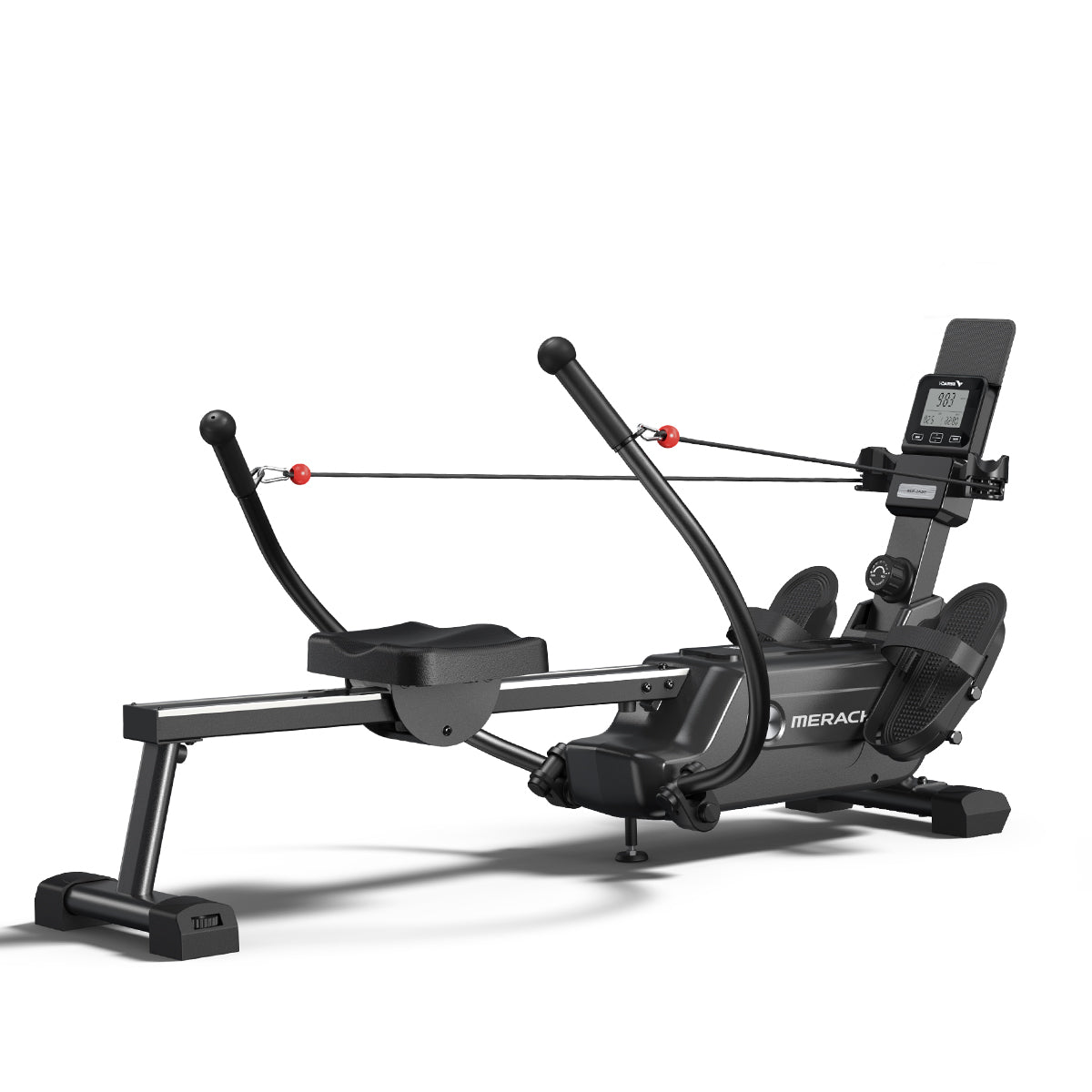
You can perform this exercise on a Merach NovaRow RS3 Double-Scull Rowing Machine. Unlike traditional rowing machines with a connected handle, its double-scull design features independently moving handles, allowing each arm to pull separately. This helps you notice strength differences between both sides and encourages more balanced muscle engagement during rowing. The smooth magnetic resistance system and stable rail provide a controlled rowing experience for improving upper-body strength, posture, and coordination.
Single-Leg Romanian Deadlifts
This is a unilateral lower-body exercise. Basically, it works the hamstrings, glutes, and hip-stabilizing muscles. During this workout, it provides balance and control from the standing leg. In each session, you can experience your legwork independently. So, the stronger leg cannot contribute more to the movement.
This makes the exercise useful for improving lower-body strength and stability. Over time, it also enables you to improve hip control and lower-body movement. You can improve balance and coordination. With consistency, you develop the muscles of both legs evenly.
Bulgarian Split Squats
In split squats, you can target the quadriceps, glutes, hamstrings, and supporting stabilizer muscles. Around 80% of the work is performed by the front leg. So, this exercise trains your legs separately. This is useful to address differences in leg strength and stability. In the entire workout, your weaker leg has to produce force and control the movement.
Therefore, it provides glute development and ensures single-leg strength. You can feel better balance and coordination after each session. The hip and knee become more stable. Overall, this training ensures an equal workload and improves lower body balance.
5. FAQs about Improving Muscle Imbalance
Fixing muscle imbalances is a gradual process, and many people have questions along the way. Below are answers to some of the most common questions about fixing muscle imbalances at home.
Q1: Can muscle imbalances be fixed naturally?
Yes, a mild muscle imbalance can improve naturally with regular exercise. However, a severe imbalance needs proper care and regular unilateral exercises. It can help the weaker side build strength and control. During this exercise, your body doesn't need to depend on the stronger side.
Q2: Can stretching fix muscle imbalances?
No, stretching alone usually cannot fix a muscle imbalance. Generally, the imbalance is not always caused by tight muscles. So, it may also involve differences in strength, stability, and coordination. Therefore, stretching can help with limited flexibility. You need to practice strength and mobility exercises along with stretching.
Q3: Can muscle imbalances cause back or shoulder pain?
Yes, severe muscle imbalances can lead to back or shoulder pain. When one side produces more force, other muscles may have to compensate. This can place uneven stress on surrounding muscles and joints. But the pain does not automatically mean a muscle imbalance is the cause. If your pain is persistent, make sure to consult with a doctor.
6. Conclusion
To sum up, the process of how to fix muscle imbalances is straightforward. However, you need to avoid certain things or movements. Make sure your end goal is to improve how both sides work together and are coordinated.
While working on an imbalance, never use heavier weight than you can control. Poor exercise techniques during this period can make the stronger side compensate again. You should avoid training the weaker side excessively. Remember, heavy exercise does not mean a faster recovery.
Furthermore, you should never ignore mobility and stability. Forceful training may not correct the way your body moves. So, never try to repeat poor movement patterns. It is best to focus on controlled technique before increasing resistance. Overall, give your muscles time to adapt and track gradual changes.