Weight loss is one of the most common reasons for starting an exercise program. But if your primary goal is weight loss, which exercise is best for you: swimming or running? Today, we're going to help you choose between the two most common exercises for weight loss. Each has its own advantages and disadvantages.
Read the blog to gain deeper insights into swimming and running, and understand which workout aligns better with your fitness goals.
1. Core Differences Between Swimming & Running
Both running and swimming are amazing for your cardiovascular fitness, but not all sports are created equally. You need to understand the core difference between the two workouts to evaluate which physical activity is better for you.
Running
Originally, running is weight-bearing and works mostly your lower body. In this workout, your legs support the full body weight during motion. The main working principle of running is impact plus propulsion. Your body uses repeated ground force to create forward motion. This is why running builds endurance fast. However, it places more stress on your joints over time.

Swimming
Swimming is a total body workout. When you swim through water, a medium 800 times more resistive than air, you truly have to work every single part of your body: forearms, lats, biceps, all your back muscles, core stability, and legs—regardless of the stroke. There are so many ways your body engages with water that you can't replicate on land. This is a low-impact workout where water supports your body's weight. So, your joints do not absorb ground force.

2. Swimming vs. Running: Which Burns More Calories?
Let's start with the reason you probably clicked: how many calories do they burn? Or more accurately, which burns more? Using a heart rate monitor with a smartwatch, you can track exercise calories. Weight loss happens through a calorie deficit. Your total calorie expenditure includes not just exercise but also your basal metabolic rate (BMR).
Technically, running burns about 25% more calories than swimming. But this isn't a hard rule due to factors like weight, height, and intensity. On average, a 70 kg individual burns 560–700 calories per hour at a moderate running pace (8–10 km/h). Whenever your running speed increases, calorie burn can go beyond 800 calories per hour. Your BMR may stay higher longer after an intense run than after an easy run.
Although swimming may burn fewer calories per minute, it can be sustained at a higher intensity longer, burning more overall. A 70 kg individual can burn around 400 to 700 calories per hour. If you are doing high-intensity swimming, the calorie burn is between 600 and 700 per hour. And your calorie expenditure doesn't necessarily end when you finish exercising. For instance, after a cold swim, your body continues burning more calories while warming up.
| Activity | Intensity | Calories Burned (1 Hour) |
|---|---|---|
| Running | 8–9.7 km/h | 560–760 calories |
| Swimming | Continuous lap swimming | 500–650 calories |
3. Which Exercise Engages More Muscles?
While running, your lower body muscles are mainly activated. It includes calves, hamstrings, quadriceps, and glute muscles. With every single step, your body muscles absorb impact and push the body forward. So, this movement maintains your posture. With the passage of time, running builds strong endurance in the legs.
On the other hand, swimming activates your entire body. Your arms pull through water, and your shoulders generate force. This produces back-stabilized motion and balances the core controls. The legs provide propulsion and rhythm. In this way, swimming improves your body coordination.
4. Which Is Better for Bone Health?
As you already know, running is a weight-bearing exercise. It directly strengthens your bones. Every impact forces your bones to adapt, which becomes denser over time. It helps reduce the risk of osteoporosis. However, you have created an impact on joints during running. So, this can lead to joint stress, inflammation, and overuse injuries.
On the flip side, swimming removes this impact completely. The natural buoyancy of water supports up to 90% of your body weight, dramatically reducing stress on knees, hips, and ankles. This makes it ideal for those recovering from injury or wanting to protect joints long-term while still getting a heart-pumping workout. And because it's so low-impact, you don't have to stop just because you get older. This makes it one of the most sustainable fitness routines.
5. Which Offers Better Long-Term Value?
Convenience shouldn't be underestimated. Running is often easier to maintain because it requires minimal equipment and can be done almost anywhere. The low cost and convenience make it easier for many people to stay consistent for years.

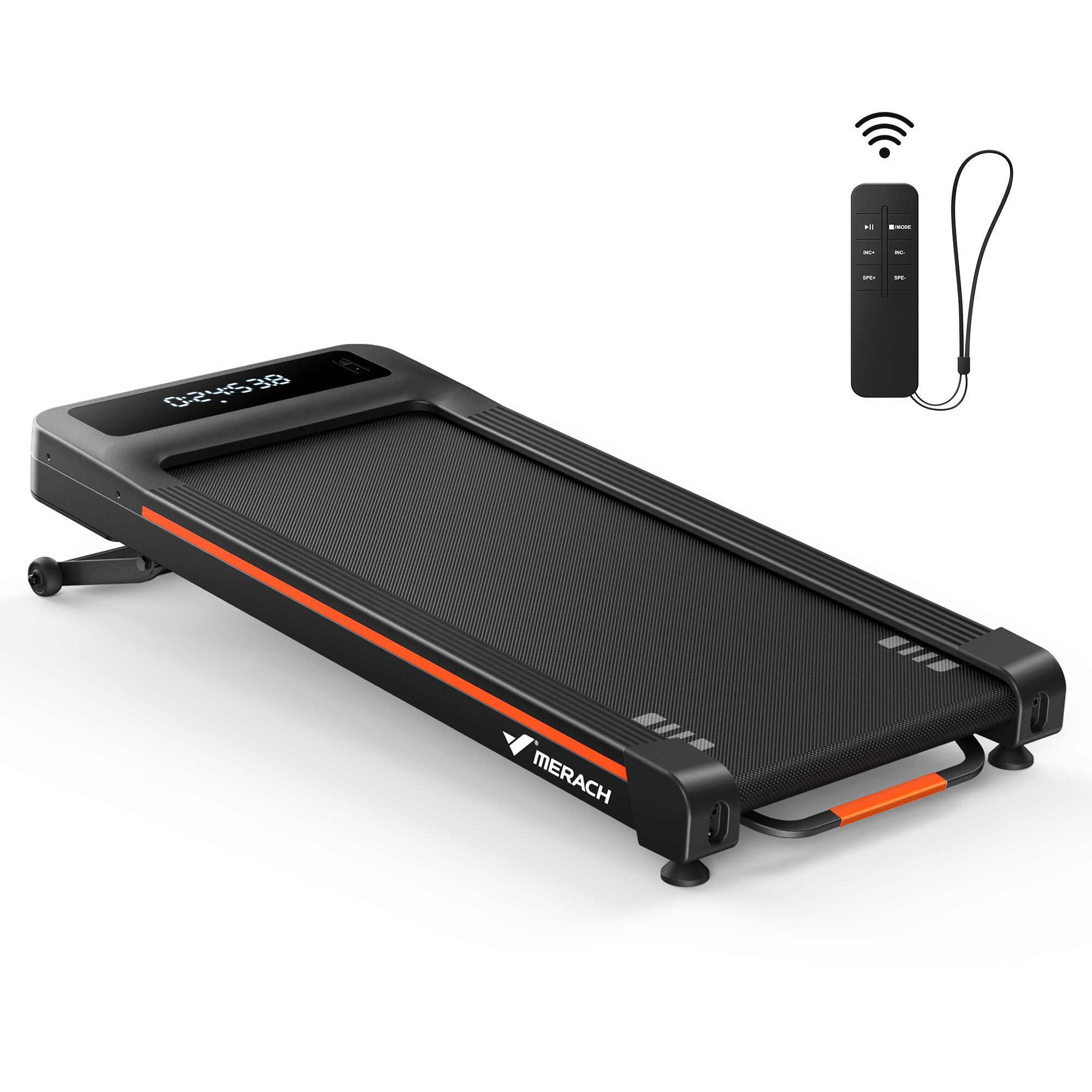
If you want to bring running into your home routine, you can choose the Merach T12 Pro Foldable Treadmill. Its foldable design makes it suitable for small apartments, so you can train seriously and still save space when not in use. With its up to 15% auto incline, this adds extra intensity to every session. The 6 shock absorption systems reduce impact on your knees. If you prioritize convenience, a more flexible option like the Merach W50 Walking Pad can be an alternative way to stay active at home. The powerful motor and 12 incline levels offer functionality comparable to that of a treadmill.
For swimming, you need goggles, a swimsuit, and a cap. You also need to travel to a public pool, pay entry fees, and share lanes—all making it less convenient. However, indoor swimming is less affected by weather, wind, rain, or darkness. A recurring cost might discourage you. If you think it might, swimming may not be for you.
6. Which Is the Best Choice Based on Your Fitness Goal?
You have already explored the benefits of both swimming and running for fat loss in detail. So, is swimming better than running? You need to understand your goal, body condition, and the stress your body can bear to recover from.
- For Weight Loss
If your ultimate goal is weight loss, running is better for fast calorie burn. Usually, running uses body weight and impact. In a steady run, you can burn around 500 to 800 calories per hour. However, it depends on speed and body weight. The higher the speed, the faster the calorie burn ratio. You can also increase intensity through incline or interval sessions on a treadmill, which is why calories burned on a treadmill tend to be higher than during steady running.
- For Joint Health & Injury Recovery
Generally, swimming is a better choice for joint health. This workout removes impact stress completely. Your body floats in water for a while. Therefore, the knees, hips, and ankles are not exposed to repeated shock. This enables your body to move freely without pressure on damaged areas. It is often used in recovery training and keeps the body active.
7. FAQs about Swimming vs. Running
By now, you should have a clearer understanding of how running and swimming differ in terms of calorie burn, muscle engagement, joint impact, and long-term fitness benefits. If you're still unsure which activity is right for you, the following frequently asked questions may help you make a more informed decision.
Q1: Is it okay to combine swimming and running in the same workout routine?
Yes. Many recreational exercisers and endurance athletes combine both activities. Running can help improve cardiovascular endurance and bone strength, while swimming provides low-impact cross-training that gives the joints a break. Alternating between the two can also reduce the risk of overuse injuries caused by repetitive training.
Q2: Which exercise is easier for beginners to start with?
Running requires very little equipment and can be started almost anywhere, making it more accessible for most beginners. Swimming is often easier on the joints but may require access to a pool and basic swimming skills before you can train comfortably.
Q3: Does swimming improve lung capacity better than running?
Swimming often requires more controlled breathing because your face is submerged in water for part of the workout. This breathing pattern can help improve breath control and respiratory efficiency. Running also strengthens the cardiovascular and respiratory systems, but swimmers typically spend more time consciously managing their breathing.
8. Conclusion
To sum up, it depends on fitness goals and physical body condition. If your focus is to burn excessive fat around the belly or hip, then running is a better workout.
It doesn't matter which exercise you select; you need to focus on the quality of gears. The gears directly affect comfort, performance, and safety during training. The key factors you consider include fit and comfort first. A poorly fitted gear can restrict movement or cause discomfort. So, choose and invest wisely.