How many calories are burned on a treadmill? You might be running consistently but still feel like fat loss is slow, while others seem to get better results with shorter sessions.
Furthermore, the body weight and intensity level also influence the total energy expenditure. A higher speed incline raises workout intensity and changes results noticeably. Read this blog to gain key insights into the exact calories burned on a treadmill and how to maximize fat burn without just running longer or harder. So, explore now.
1. What Factors Affect Calorie Burn On Treadmills?
Before looking at exact treadmill calorie numbers, it helps to understand the main factors that directly affect how many calories you burn on a treadmill. It changes with the speed, incline, body weight, session time, and workout categories. Furthermore, the intensity level also influences the total energy expenditure.
- Body weight: Heavier individuals generally burn more calories because the body needs more energy to move a larger mass.
- Speed & intensity: Walking, jogging, and running all place differently. A small increase in speed can significantly raise total energy expenditure.
- Incline level: Adding incline forces your body to work against gravity, activating more muscles. It increases calorie burn compared to flat running.
- Fitness level & efficiency: Beginners often burn more calories at the same speed because their movement is less efficient. More experienced runners may use less energy due to improved running economy.
- Duration & consistency: While longer sessions naturally burn more calories, consistent weekly training has a bigger long-term impact than occasional high-intensity workouts.
2. How Many Calories Are Burned on Treadmills?
With so many variables at play, you might wonder, which ones matter most? Let’s take a closer look at the role each factor really plays.
Duration & Intensity
Time is the most direct factor. In the first 10–15 minutes of a workout, your body is still transitioning into an active state. Around 15–20 minutes, energy use becomes more efficient, and fat starts contributing more to fuel supply. A 30-minute session is usually light fat-burning and warm-up cardio. 45–60 minutes is more effective for visible fat reduction and endurance improvement.
However, duration alone does not determine results. Intensity creates the real difference in calorie burn. That’s why you may wonder why you run for so long but still lose fat so slowly.
A person who is slowly walking on a treadmill burns 120–180 calories in 30 minutes. Easy to sustain, ideal for beginners, seniors, or recovery days. Brisk walking is the classic “fat-burning zone” most people aim for. For many home users, this is the most realistic long-term weight-loss intensity. You can burn approximately 180–250 calories in 30 minutes.

As you know, running increases energy demand significantly compared to walking. Therefore, the calorie burn rises quickly with intensity. Jogging is one of the most effective treadmill activities and the best way to burn calories on a treadmill. Moderate jogging is suitable for burning calories consistently. You don't need to exert more effort and stamina.
As intensity increases, the body uses more energy in less time. A person who runs slowly on a treadmill can burn 240–350 calories in 30 minutes. If you are running fast on a treadmill, you burn approximately 350–500 calories in 30 minutes. Here are details about the exact calories burned in different time duration sessions.
| Intensity | Calories (30 min) | Calories (60 min) | Fat-Burning Effect | Best For |
|---|---|---|---|---|
| Slow walking | 120–180 kcal | 240–360 kcal | Light calorie burn and warm up | Beginners, seniors, recovery days |
| Brisk walking | 180–250 kcal | 360–500 kcal | Steady fat-burning zone with sustainable cardio | Daily weight loss and home fitness |
| Slow jogging | 240–350 kcal | 480–700 kcal | Stronger calorie burn with stable fat metabolism | Endurance improvement and consistent fat loss |
| Fast running | 350–500 kcal | 700–1000+ kcal | Maximum calorie burn and cardiovascular demand | Advanced fat loss and HIIT training |
For most home users, brisk walking or light jogging usually provides the best balance between calorie burn, joint comfort, and long-term consistency.
Body Weight
Heavier people often notice faster calorie burn early in their fitness journey. Their muscles and cardiovascular system must work harder to support and move that extra body mass. This naturally increases calorie expenditure even if the speed stays the same.
| Body Weight | Brisk Walking (30 min) | Jogging (30 min) | Fast Running (30 min) |
|---|---|---|---|
| 120 lbs | 180–220 kcal | 240–300 kcal | 350–420 kcal |
| 160 lbs | 200–250 kcal | 280–350 kcal | 400–500 kcal |
| 200 lbs | 240–320 kcal | 350–450 kcal | 500–650+ kcal |
Incline Level
An incline treadmill refers to a certain angle or steepness of the workout deck, which stimulates walking or running uphill. You can increase workout intensity by adjusting incline settings. Compared to flat walking, you can burn calories by 20% to 50%, depending on the incline level. This makes the burnout more intense without needing higher speed. Here are general estimates of calories burned incline walking.
| Workout Type (30 Min) | Flat Surface Calories Burned | Incline Calories Burned |
|---|---|---|
| Slow walking | 120–180 kcal | 150–270 kcal |
| Brisk walking | 180–250 kcal | 230–375 kcal |
| Slow jogging | 240–350 kcal | 310–520 kcal |
| Fast running | 350–500 kcal | 450–850 kcal |

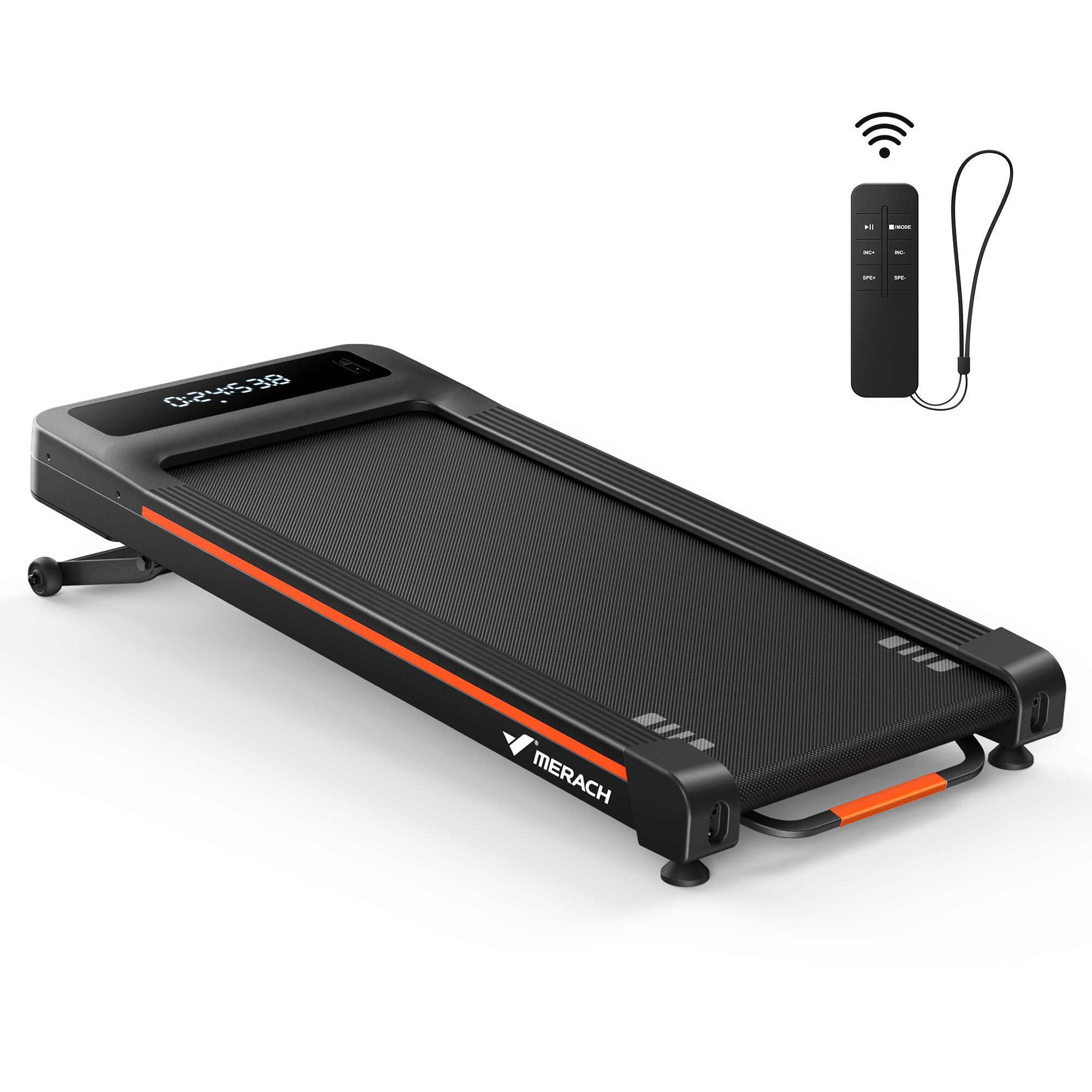
For home workouts, many people prefer treadmills with incline support because it increases calorie burn without forcing faster running speeds. The foldable treadmill with incline like the Merach T12 is especially practical for apartments or smaller workout spaces because they combine incline training with easier storage. With a 2.5HP brushless motor, this delivers secure performance for all individuals. Its 15% auto-incline feature transforms your daily movement into a productive investment in your health.
3. How to Maximize Fat Burning on a Treadmill?
To increase the calories burned on the treadmill, you need to focus on a certain approach. Make sure to avoid overtraining because it reduces recovery.
Use Interval Training
Generally, interval training means changing the treadmill intensity during the workout. You switch between higher effort and lower effort. This small thing keeps calorie burn high without adapting to maximum intensity. Furthermore, this also reduces fatigue. You can keep your body adjusted and increase total energy usage.
Add Incline Instead of Increasing Speed
As you already know, tilting increases calorie burn without overtraining. This forces your body to work against gravity. Furthermore, this activates your muscles, especially your legs and core. This increases energy demand in your body and burns calories without knee strain.
Focus on Consistency Over Extreme Sessions
A regular workout makes a significant impact on your body. An occasional intense session does not burn excessive calories. So, you need to stay consistent with treadmill sessions. This helps build endurance and maintain fat burning.
4. FAQs about Burning fat on the treadmill
Now that you know the what and the why, it’s time for the how. Below, we answer the practical questions that come up when you’re actually on the machine.
Q1: Does the treadmill lose belly fat?
Yes, you can lose your belly fat while working out on a treadmill. You can achieve better results by doing exercise along with following a certain diet plan. Treadmill exercise reduces your overall body fat, especially visceral belly fat.
Q2: What is the disadvantage of a treadmill?
Mostly, the treadmills are higher in price and require significant maintenance costs. Furthermore, this requires specific space in your home or gym. Despite its cushion surface feature, high-impact jogging can lead to knee or ankle pain.
Q3: Which burns the most calories, a rower, bike, or treadmill?
When comparing a rower, bike, or treadmill for weight loss, all three cardio machines can effectively help burn calories, but the treadmill usually burns the most calories because running requires your body to support full body weight while moving continuously. The calories burned on rowing machines are around 180–450 kcal for 30 minutes. While exercise bikes burn around 150–400 kcal. However, it all comes down to which sport you prefer. Consistency matters more than choosing the “perfect” machine.
Q4: Are there any treadmills suitable for small spaces?
Yes. Compact folding treadmills and walking pads are now designed specifically for apartments and smaller rooms. If your biggest concern is storage space, noise, or portability, a walking pad is usually the better choice. It takes up much less space than a traditional treadmill and also features an incline, so you can slide under a bed or sofa.
5. Conclusion
Whether you are a beginner starting with incline walking or someone pushing through high-intensity running sessions, the treadmill remains one of the most effective and accessible tools for calorie burning and home cardio training.
For most people, the biggest mistake is focusing only on running longer while ignoring intensity and sustainability. Most importantly, successful fat loss comes from building a routine you can realistically stick with. Even 30–45 minutes of consistent treadmill training several times per week can make a noticeable difference in calorie expenditure, endurance, and overall fitness over time.