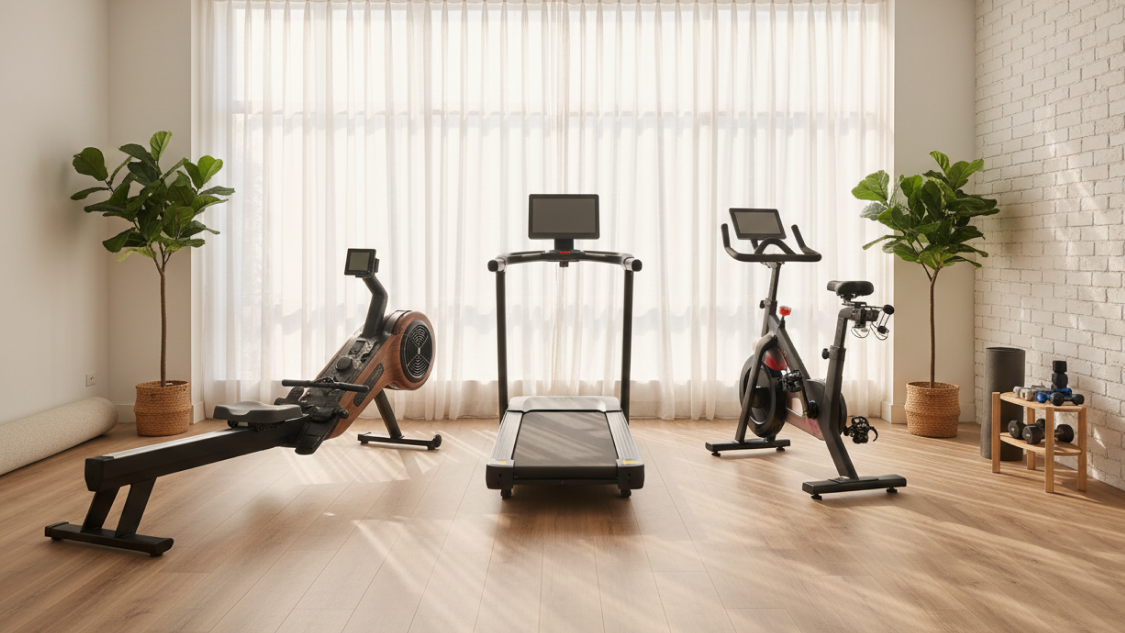
Choosing the right cardio equipment can completely change the way you train at home, especially in a home gym, but it's difficult to pick the right one based on your fitness goals. Many people get stuck between rowing machines, treadmills, and exercise bikes when buying their first piece of cardio equipment for home use. Treadmills are great for burning fat, but you're worried about hurting your knees. Exercise bikes feel quieter and easier, but some users worry the workouts may become repetitive over time. Rowing machines promise full-body training, yet beginners are often unsure if the movement will feel difficult to learn.
In reality, the better choice depends more on how you actually plan to use the machine in your daily life. That is why comparing these 3 machines is not just about fitness performance. It is also about space, noise, comfort, learning curve, workout variety, and whether the machine realistically fits your lifestyle. In this guide, we will break down the functionality, differences, benefits, calorie burn, muscle engagement, joint impact, ease of use, cost, etc., so you know which is the best cardio machine that fits your home and your goals.
1. Rowing Machine Vs. Treadmill Vs. Bike: An Overview
All three machines can deliver excellent and exceptional results when used properly. Before getting into a detailed rowing machine vs. bike vs. treadmill comparison, you should know each piece of equipment individually.
Rowing machine
The rowing machine imitates the water boat rowing experience, with a push and pull movement, which is highly effective. It is often the most challenging of the three because every stroke uses both the upper and lower body at the same time. They are also lower impact than running, making them easier on the knees when the form is correct. It can be used for cardio and strength-style training. However, rowing does have a slightly bigger learning curve in the beginning.

Treadmill
A treadmill is beginner-friendly and suitable for users of all fitness levels, so it is often the easiest machine to start using consistently. A treadmill is used for endurance training, heart health, daily cardio, and weight loss. But it also tends to be the loudest and largest of these 3 cardio machines, and running creates repeated impact on the knees, ankles, and hips, especially for heavier users or people with joint pain.

Exercise Bike
An exercise bike is also known as a stationary bike, which replicates cycling and mainly targets the lower body. It is a beginner-friendly cardio machine allowing you to adjust its resistance level accordingly. It is popular among seniors and people who are recovering from injuries. To help you see the differences at a glance, we’ve broken down the key factors in the comparison table below.

Comparison of Rowing Machine vs. Treadmill vs. Bike
| Factor | Rowing Machine | Treadmill | Exercise Bike |
|---|---|---|---|
| Overall Workout Style | Combines cardio + strength in one rhythmic full-body motion | Pure cardio based on walking, jogging, or running | Steady or intense lower-body cycling cardio |
| Muscle Engagement Level | Very high (legs, core, back, arms all active) | Moderate (mostly lower body) | Moderate (mostly lower body) |
| Calorie Burn Potential | High | Very high | Moderate to high |
| Fat Loss Efficiency | Very efficient | Extremely efficient | Lower compared to the treadmill/rower |
| Joint Impact Level | Very low | Moderate to high | Very low |
| Learning Difficulty | Moderate | Very easy | Very easy |
| Space Requirements | Medium | High | Low to medium |
| Noise Level | Medium | High | Very low |
| Maintenance Needs | Low to moderate | Moderate to high | Very low |
| Cost Range | Mid-range to premium | Often expensive | Most budget-friendly |
2. Which Burns More Calories & Is Better for Weight Loss?
One of the most common factors that people compare is how much it burns when choosing among these three machines. The answer is, it varies significantly with your body weight. Other than that, the workout intensity and duration can also affect the calorie burn. Here is a general breakdown of an average person weighing 155 pounds who works out for 30 minutes.
| Machine | Calories Burned in 30 mins. | Intensity Level of Workout |
|---|---|---|
| Rowing Machine | 260 to 300 | Moderate |
| Treadmill Running | 280 to 350 | Moderate to high |
| Treadmill Walking | 150 to 180 | Low to moderate |
| Exercise Bike | 200 to 260 | Moderate |
The answer is clear. The treadmill wins. Running on it can help you burn extra calories, and calories burned on a rowing machine are close behind. However, your fitness level and personal goals will determine which one will be the best match.
3. Which is Better for Muscle Engagement & Strength?
The muscle engagement differentiates these cardio machines.
Rowing Machine
It engages the full body, with a single stroke involving 60% of the legs and 40% of the upper body. Primary muscles worked include quadriceps, glutes, hamstrings, calves, core, latissimus dorsi, rhomboids, biceps, and forearms. For anyone who wants cardio and strength conditioning in a single session, the rowing machine is unmatched.
Treadmill
It only engages the lower body, making calves, hamstrings, quadriceps, and glutes work out, helping the core to maintain posture, especially at high speed. The upper body stays passive unless you regularly use incline training. If upper-body conditioning matters to you, the treadmill alone won't deliver it.
Exercise Bike
A stationary bike also focuses on the lower body and has primary emphasis on the quadriceps, hamstrings, glutes, and calves. The core engages isometrically to stabilize the torso, particularly on spin bikes with a forward-leaning position. Like the treadmill, the upper body is largely uninvolved during standard cycling.

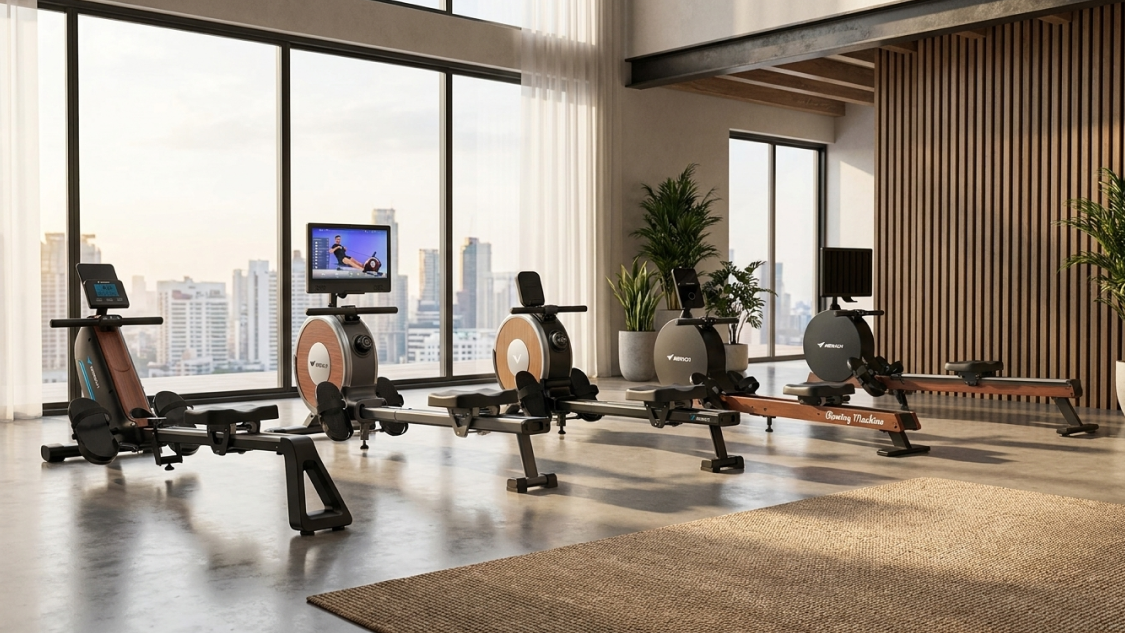
A rowing machine is the best option because its movement involves a full-body workout. For home gym enthusiasts, the Merach NovaRow R50 Air Resistance Rower is recommended with smart features and top-tier performance. It comes with sturdy construction and 10 levels of resistance, Bluetooth tracking, app connectivity, and many more features in your budget. The smooth and adjustable air rowing experience allows quick changes between light endurance work and heavy sprint sets.
4. Which Exercise is the Most Joint-Friendly?
This is the most crucial factor, especially for beginners, elders, and heavy individuals. All of them are low-impact cardio machines, but they function differently.
Rowing Machine
In a rowing machine, because the user remains seated throughout the session and feet remain intact with the footrests, there is no ground impact force. The rowing motion is smooth and cyclical, placing minimal stress on the knees, hips, and ankles. However, improper rowing form, particularly rounding the lower back during the drive phase, can place strain on the lumbar spine. With correct technique, rowing is joint-friendly.
Treadmill
A treadmill can cause a moderate to high impact. Walking on a treadmill is relatively low-impact, but running generates ground reaction forces of two to three times your body weight with every foot strike. This cumulative stress on the knees, hips, ankles, and lower back is why many people, particularly those who are heavier or have joint issues, find treadmill running uncomfortable or unsustainable over time. Modern treadmills with cushioned decks reduce this impact, but it cannot be eliminated.
Exercise Bike
It has the lowest impact of the three because the session is seated, and the pedaling motion is completely circular with no impact forces whatsoever. A stationary bike places almost no stress on the joints. It is universally recommended for people with knee pain, hip replacements, arthritis, or anyone who needs effective cardio without joint loading.

Here, an exercise bike is the perfect fit, followed closely by the rowing machine. For better results, the Merach S26 Exercise Bike with HD Screen is the perfect fit. It delivers the same high-end features at nearly a quarter of the price. Its impressive 15.6-inch Full HD touchscreen supports smartphone mirroring, making it easy to stream workouts, follow training videos, or join guided cycling classes while you ride. Furthermore, it provides a comfortable and low-noise riding experience that is ideal for apartments and shared living spaces.
5. Which is the Easiest and Most Suitable for Beginners?
The treadmill is beginner-friendly, followed by the stationary bike. The rowing machine requires the most technical investment upfront.
Rowing Machine
A rowing machine usually feels harder within the first few minutes because your legs, back, and arms are all working together. Beginners who row with poor form miss out on the full-body benefit and risk lower back strain. With a few coaching sessions or instructional videos, most people develop adequate technique within 2 to 3 weeks.
Treadmill
A treadmill has virtually zero learning curve and stepping onto a treadmill requires no instruction. Adjusting for speed and incline is intuitive. For beginners, the treadmill is the most immediately accessible option.
Exercise Bike
The main setup consideration of exercise bikes is adjusting the seat height correctly to protect the knees, a 5-minute process that makes an enormous difference in comfort and safety.
6. Which is Better for Small Spaces?
Home gym space is a real constraint for most people, so footprint is an important consideration. A compact machine that is easy to move and store is often the one people use more consistently at home. Rowing machines often have to do with how long they actually are. Even foldable rowers can still feel difficult in smaller apartments or shared spaces. Treadmills also take up considerable room, especially traditional running treadmills with larger frames and handrails.
Exercise bikes are usually easier to fit into home environments because their footprint is more compact and vertical. They work well in bedrooms, offices, or small home gyms.

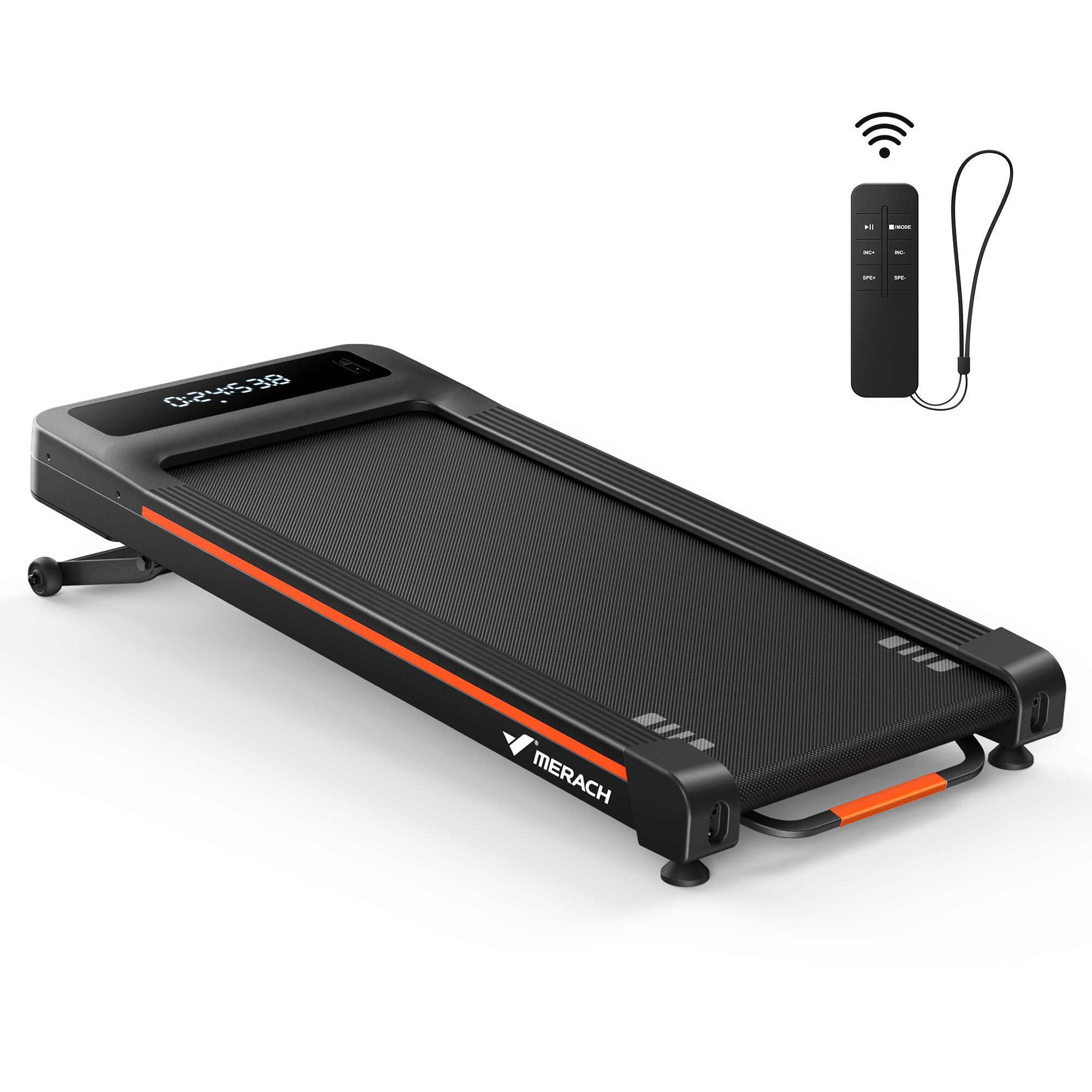
If you prefer a treadmill but have very limited space, a walking pad is often the most practical solution. Compared with full-size treadmills, the Merach W50 Walking Pad feels much easier to live with day to day because of its slim, lightweight design. It’s equipped with a treadmill-grade motor that won’t overheat or shut down automatically even during extended use. Plus, it has a weight capacity of 400 lbs and an incline feature. It can slide under a bed, sofa, or desk after use, making it ideal for apartments, remote work setups, or multipurpose rooms where permanent workout equipment simply is not realistic.
7. Which Cardio Machine is Right for You?
Instead of leaning on one cardio machine and making it an outright winner, the decision must be taken practically, supported by specific goals and circumstances.
Choose a Rowing Machine If
- Your fitness goals require a full-body workout for building cardio and strength
- You want to burn maximum calories in less time
- You have no lower back issues
- You are willing to invest a few weeks in learning proper technique
- You are looking for a single piece of equipment to engage full-body muscles
Choose a Treadmill If
- You have no knee or hip issues
- You are a runner or like to walk and want to train indoors
- Training for a race
- You prefer the most natural, familiar movement pattern
- You like incline-based interval training
Choose a Stationary Bike If
- You are recovering from any injury, knee issue, or joint pain
- You are a beginner and want to start comfortably
- Have a limited space at home
- You prefer longer, steady-state cardio sessions
- You want the most budget-friendly quality option.
8. FAQs About Rowing Machine, Treadmill & Bike
Still have second thoughts? Here, these frequently asked questions will help you to make a final decision.
Q1: Which cardio machine is easiest to stick with at home?
For most people, the exercise bike is usually the easiest to stay consistent with. It feels less intimidating, quieter, and more comfortable. If you prefer immersive cardio workouts, choose an exercise bike with a screen. You can watch TV and listen to music during longer sessions.
Q2: Which machine is safest for overweight users?
Exercise bikes and rowing machines are generally safer starting points for overweight users because both are low-impact and place less stress on the knees and ankles compared to running. A recumbent bike is often the most comfortable option for beginners who want extra back support and lower joint pressure. Before purchasing, be sure to check the weight capacity of the equipment and choose a heavy-duty exercise bike.
Q3: Is 30 minutes on an exercise bike the same as 30 minutes of walking?
Thirty minutes on a stationary bike and walking are both good cardio, but the intensity level makes the real difference. A moderate to high-intensity cycling session burns more calories compared to a casual walking session. This is because with this intensity, the heart rate stays elevated for a long time.
Q4: Can I lose belly fat by riding a bicycle?
Yes, riding a bicycle helps in reducing belly fat when it is combined with a calorie deficit and a healthy diet. Cycling helps in burning calories, improves metabolism, and increases overall physical activity, contributing to fat loss throughout the body.
9. Conclusion
Although choosing between a rowing machine, a treadmill, and an exercise bike can surely put you in a dilemma, since all of these pieces of equipment are the best for cardio. It is not about finding the single perfect machine, but more about finding the right tool to meet your fitness goals. For instance, if you are looking for full-body conditioning, the rowing machine is an ideal choice; a treadmill can help you burn maximum calories. If comfort, convenience, and joint-friendly exercise matter the most, the exercise bike is hard to beat.