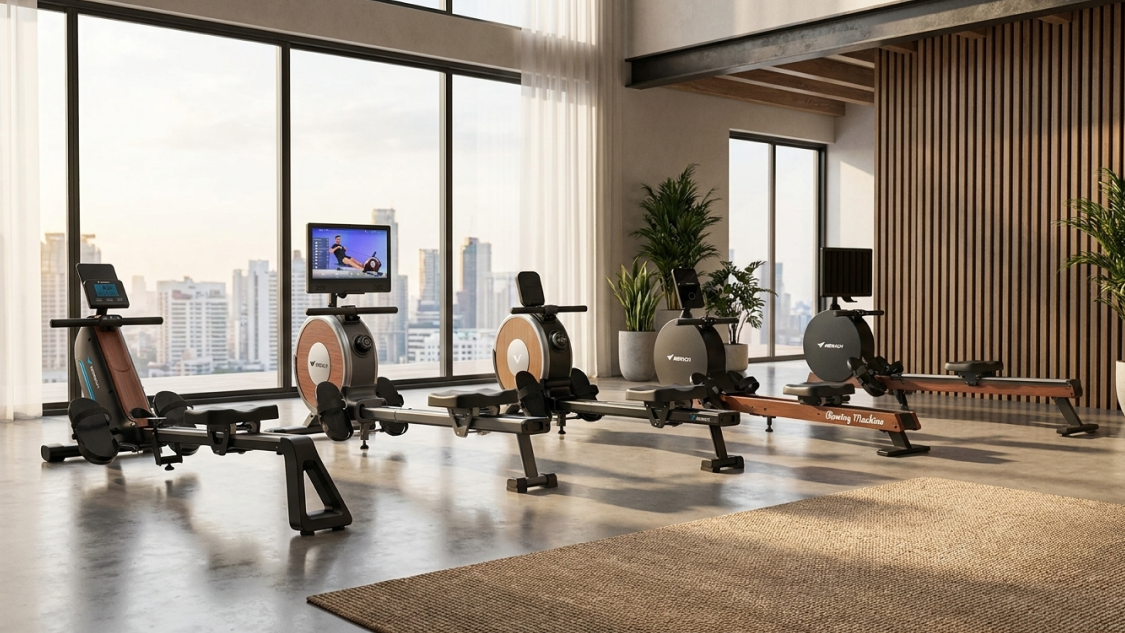
Rowing machines are widely recognized as an efficient full-body workout tool, combining low-impact exercise with high calorie-burning potential. The market offers four main types of resistance: air, water, hydraulic, and magnetic, with magnetic rowing machines becoming the top choice for most home users.
If you've been searching for a home rowing machine lately, you've probably noticed one thing very quickly: there are way too many choices. In this article, we'll provide an in-depth review of 5 popular magnetic resistance rowing machines from Merach. We'll break down their key specs, ideal user profiles, standout features, and real-world strengths—helping you make a clear, informed choice based on your budget, space, and fitness goals.
1. What's the Merach Magnetic Rower Series?
Unlike some traditional fitness brands that mainly focus on commercial gyms, Merach is a smart home fitness brand built around everyday users and modern living spaces. It focuses heavily on combining quiet operation, compact designs, app connectivity, and immersive training experiences to make home workouts feel less repetitive and easier to maintain long-term.
Currently available Merach magnetic rowing machine series include the single-scull R15, the Q1S series, the R7 series, and the dual-scull RS3. These rowing machines prioritize low-noise operation, beginner-friendly resistance adjustment, smart connectivity, and family-friendly usability. You can enjoy immersive fitness through smart technology, interactive screens, scenic training content, and app integration.
In this review, we will primarily focus on comparing the 5 single-handle models. Here is a comparison table to help you quickly understand the key differences between the R15, Q1S, and R7.
| Series | R15 | Q1S | R7 |
|---|---|---|---|
| Best For | Users with limited space who need foldable storage | Beginners & families; ideal for frequent multi-user home setups | Intermediate users who prefer wood aesthetics, high resistance, and heavy-duty build |
| Resistance Adjustment | Knob + handle buttons | Knob only | Knob + handle buttons |
| Peak Resistance | 88 lbs | 70 lbs | 130 lbs |
| Weight Capacity | 158 kg | 158 kg | 181 kg |
| Foldable | ✔ | ❌ | ❌ |
| Handle Length | 445 mm | 405 mm | 440 mm |
| Track Type | Single rail | Dual rail | Single rail |
| Track Material | Steel | Steel | Rubberwood |
| Display Metrics | Time, time/500m, distance, calories, SPM, watts, strokes, total strokes | ||
| Pros |
|
|
|
| Cons |
|
|
|
2. Key Difference Between R15 vs. Q1S vs. R7 Rowers
When comparing a home magnetic rowing machine, most buyers eventually care about the same few things: Will it last? Is the resistance smooth enough? And which one actually fits your home and fitness level? The R15, Q1S, and R7 aren't just different prices—they're designed for entirely different users and fitness goals.
Quality & durability
The R15 focuses more on practicality. Its steel track construction feels sturdy for daily cardio use. Some foldable rowers on the market tend to wobble after a few months, but the R15 feels more stable than most compact magnetic rowers in its price range. The 350 lbs weight capacity also gives it a more secure feel during harder pulls.

The Q1S series feels slightly more refined overall for shared household use. Its dual-rail structure improves balance and stability during rowing, especially for beginners who may not yet have smooth rowing form. Its handle length is the shortest of the three. It's perfectly fine for average-height users and beginners, but taller individuals might find the stroke a bit restrictive at the catch position.

The R7 is the premium build in the lineup. The wooden track construction immediately feels more substantial compared with standard steel-only frames. It also reduces some of the harsher mechanical feel that cheaper rowers sometimes have. The higher 400 lbs weight capacity makes it feel more stable, specifically suitable for heavier users.

Resistance & Performance
Resistance determines how the machine responds to your power and whether your workout feels smooth. The biggest advantage of R15 is convenience. The control panel allows you to adjust the 16 resistance levels in real time without interruption. It sits in the middle with a peak resistance of around 88 lbs. So it's ideal for beginner to intermediate users to do casual daily workouts. The resistance curve is smooth and predictable, offering a solid feel.
The Q1S has the lowest peak resistance at roughly 70 lbs, making it the most accessible of the three. It's not designed for brute strength but for consistent and smooth operation. This rowing machine is designed more for sustainable cardio. However, relying solely on the knob means adjusting resistance mid-workout is less seamless than on the R15 or R7.
Compared to the previous two models, the R7 series is the performance powerhouse. With up to 130 lbs of peak resistance, it delivers noticeably stronger pulls than both the R15 and Q1S. The added resistance supports higher-intensity interval training for experienced or advanced users. It includes three smart auto-modes that adjust resistance based on your performance, keeping your training smooth and intuitive.
Comfort & Noise
Compared to air rowers and water rowers, magnetic rowers stand out for their quiet operation, so all three models are ideal for apartments and families with multiple members without disturbing others. However, there is a slight difference.
R15 includes an adjustable device holder and a water bottle mount, so you can easily follow along with workouts or stay hydrated during longer sessions. Furthermore, it offers the longest pull in this lineup. It is equipped with a 51.2-inch extended slide track. Compared to the Q1S, it can deliver a fuller, more comfortable stroke without feeling cramped, especially for taller users.
The dual rail of Q1S creates smoother seat movement, which some users find more comfortable and stable than single-rail rowers. While R7 rowers use a belt-drive system and quiet track design, resulting in the lowest noise levels of these models. If you want the quietest rowing machine, you can choose the R7 series.
Display & Smart Features
In terms of smart features, the R7 is your home theater on a rower, the Q1S is the modern smart upgrade, and the R15 is the no-fuss workhorse. All of these 3 magnetic rowers include workout tracking metrics such as time, distance, calories, strokes, and watt output.
The R15 keeps things simpler. The LED ambient lighting changes color based on resistance level, adding a fun visual element to your workout. But for anything else, like watching videos, you'll be using the included tablet holder with your own device. Overall, this model is more focused on efficient workouts than entertainment.
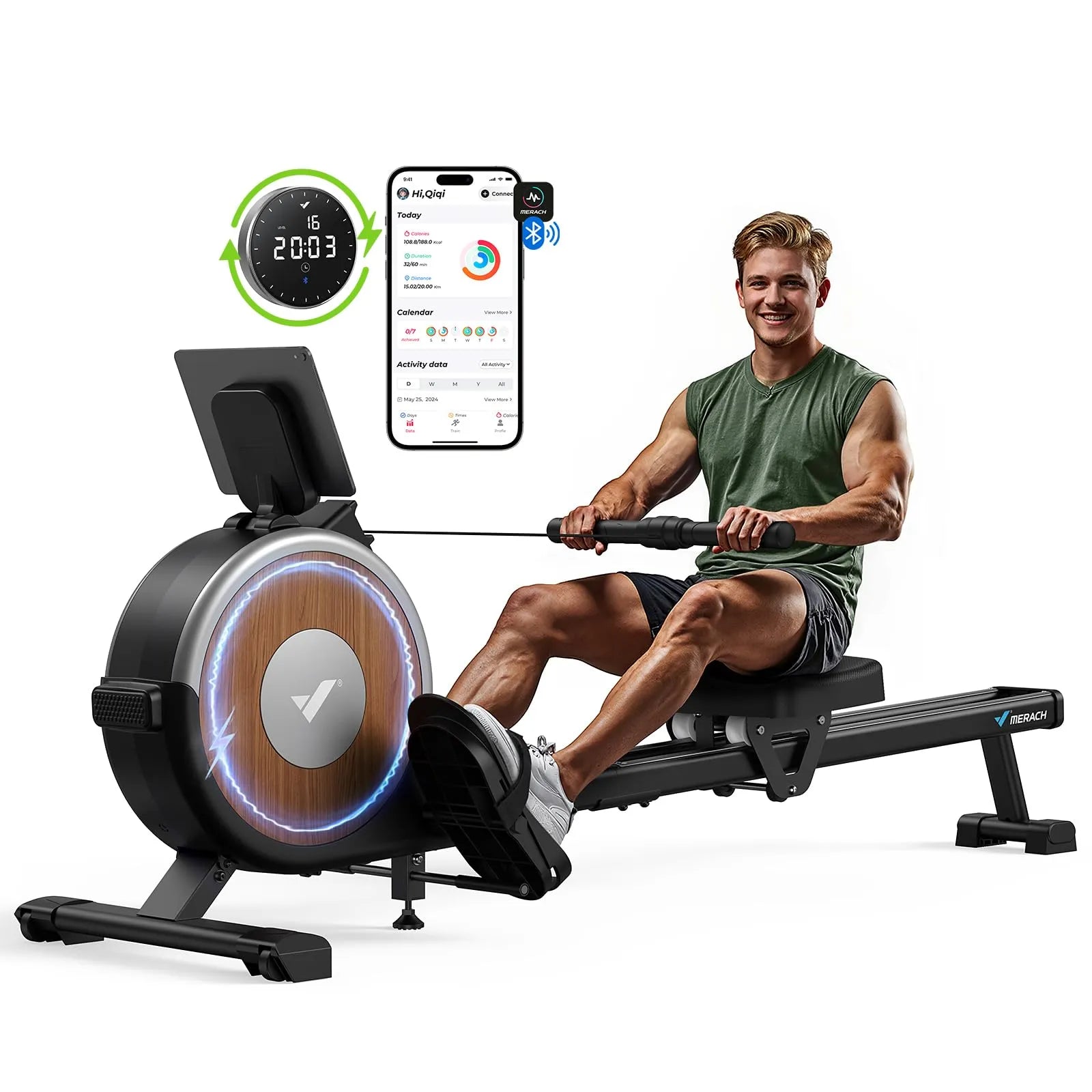
Both the Q1S and R7 series come in two versions: self-powered and color screen. The self-powered rowing machines are equipped with an advanced ECO battery power system that converts your rowing motion into stored energy to drive resistance adjustment, Bluetooth connectivity, and the display. No power cord. It works perfectly even during a power outage at home or when used outdoors.
The rowing machine with screen needs to be connected to a power source. It supports both wired and wireless connections. The wireless connection allows you to easily follow along with live classes or virtual rowing sessions in the app, with data syncing in real time, while the wired connection provides a reliable backup in case of unstable internet. This dual-mode design ensures a smooth experience regardless of your home internet conditions. You can also mirror your screen to watch your favorite shows.
The difference between the Q1S and the R7 is the screen. The R7 features a 21.5-inch display, while the Q1S comes with a 16.5-inch one. The larger screen offers a more immersive viewing experience and delivers clearer data. Meanwhile, the compact 16.5-inch screen is more practical and suitable for smaller spaces. Both models provide identical clarity and sensitivity, along with adjustable rotation to accommodate various training needs.

Storage & Mobility
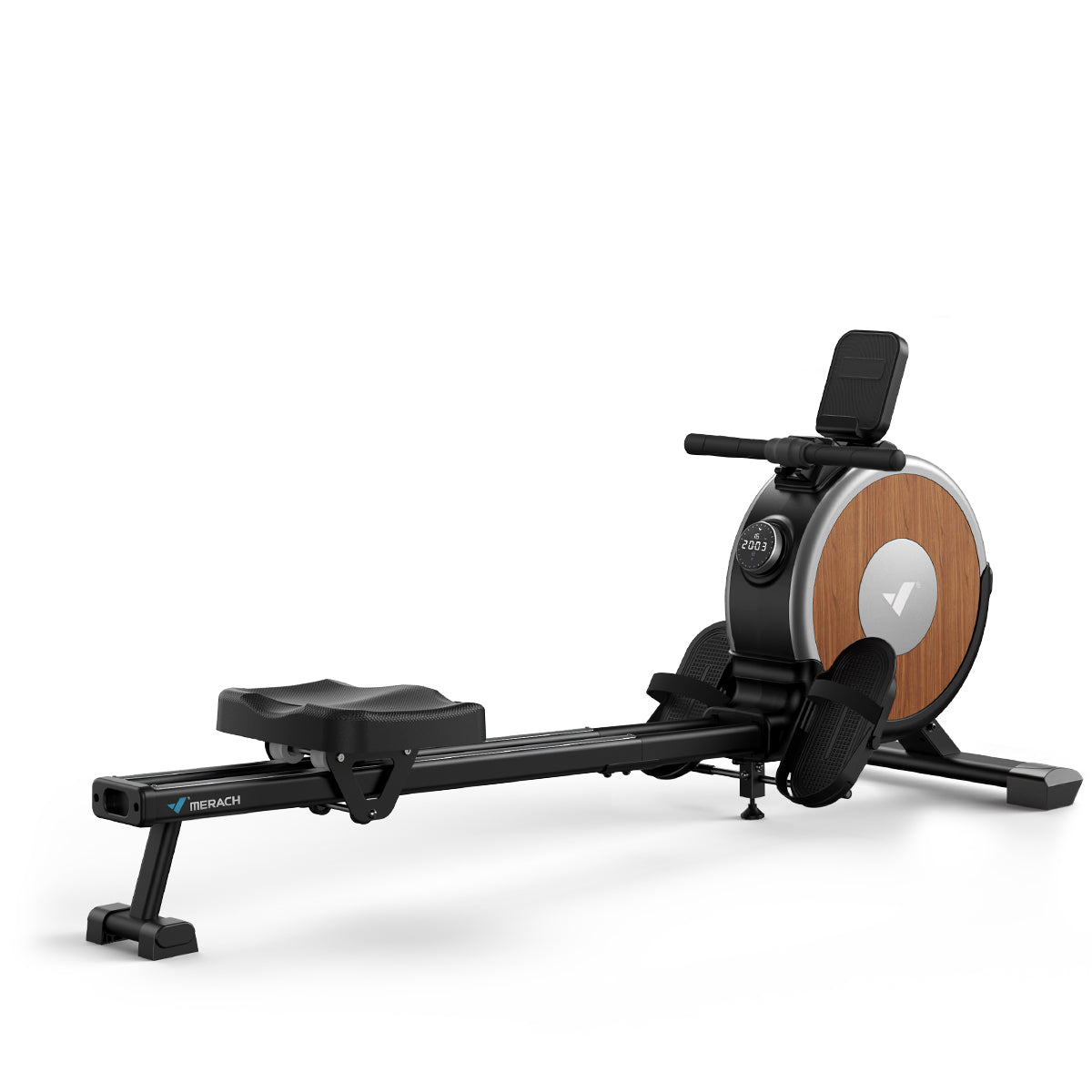
A rowing machine is a commitment in floor space. So where does this thing live when you're not using it? If storage stress is your biggest concern, the R15 is the best option. It's the only foldable rower in the lineup. When you're done, you can fold it completely. At around 20 kg, it's the lightest of the three, making it a breeze to lift and store vertically in a closet or behind a door.

While it doesn't fold in half like the R15, the Q1S is designed for effortless vertical storage. It's lightweight and has a relatively short track length, so tipping it up on its end takes minimal effort. The built-in wheels make it easy to roll into a corner.
The R7 is the least storage-friendly of the three. The larger frame and wooden track design simply take up more room. But for buyers wanting a premium long-term rowing setup, that tradeoff usually feels worthwhile. This machine is really meant for a semi-permanent spot in a garage, basement, or dedicated workout area. Moving it frequently is not recommended.
3. Which Merach Magnetic Rower Is Worth Buying?
After comparing the R15, Q1S, and R7 across build quality, resistance performance, comfort, smart features, and storage practicality, it becomes clear that these 3 magnetic machines are designed for different needs.
| Category | R15 | Q1S | R7 |
|---|---|---|---|
| Quality & durability | ★★★★☆ | ★★★★☆ | ★★★★★ |
| Resistance & performance | ★★★★☆ | ★★★☆☆ | ★★★★★ |
| Comfort & noise | ★★★★☆ | ★★★★☆ | ★★★★★ |
| Display & smart features | ★★★☆☆ | ★★★★☆ | ★★★★★ |
| Storage & mobility | ★★★★★ | ★★★★☆ | ★★★☆☆ |
The R15 prioritizes convenience and compact living. The Q1S focuses on beginner-friendly daily cardio and family use. The R7 is the premium model for HIIT, heavy people, and long-term home fitness experience.
If you plan to row consistently for long-term or intense training, the R7 is the clear winner. The stronger resistance, quieter operation, larger display, and more refined rowing feel all combine into a noticeably more immersive experience. You especially notice this during longer workouts. Sessions simply feel smoother and more engaging. It's the only model here that won't limit you as you get stronger. If your budget and space allow for it, the R7 is the rower that truly rewards commitment.
If your biggest concern is storage or simply getting consistent cardio at home without hassle, the R15 makes a lot of sense. You can fold it away after workouts and reclaim your living space almost immediately. For casual home fitness users, that convenience can matter more than premium performance features.
If you're new to rowing or need a machine the whole family can use safely, the Q1S is the most approachable. Its dual-rail system offers unparalleled stability. The consistent pull is perfect for building a sustainable cardio habit without intimidation.
4. FAQs about Merach Magnetic Rowers
Now that you've seen how the R7, Q1S, and R15 stack up, you probably have a few practical questions. Here are the answers to the most common queries.
Q1: Are magnetic rowing machines good for beginners or older adults?
Yes. Magnetic rowing machines are actually one of the most beginner-friendly rowing machine types available. Air rowers generate resistance based on how hard you pull, which can sometimes feel too aggressive or physically demanding for first-time users. Water rowers provide a more realistic rowing sensation, but the resistance can feel heavier and less forgiving during longer workouts.
Compared with air rowers and water rowers, magnetic rowers feel much more controlled and predictable. That matters a lot for beginners or older adults who are still learning proper rowing form.
Q2: Can a magnetic rowing machine help with weight loss?
Yes, rowing is actually one of the most sustainable cardio options for long-term fat loss. A big reason is full-body efficiency. That full-body engagement increases overall energy expenditure, which is why the number of calories on rowing machine workouts is higher compared with traditional steady-state cardio. Moderate rowing for 30 mins can burn around 200–400 calories. If you want higher calorie output and more intense interval training, the R7 becomes the stronger long-term option thanks to its significantly higher resistance ceiling and smarter performance modes.
Q3: I want a home rowing machine suitable for daily workouts for people of different ages. Which one should I choose?
If you're buying one rowing machine for the entire household, the decision usually comes down to durability and weight capacity. Among the three models, the R7 series is probably the strongest long-term choice for shared home use. It has the highest weight capacity in the lineup at up to 181 kg, making it more accommodating for users with different body types and fitness levels. Another advantage is versatility. The R7 has a wider resistance range and a smoother overall rowing feel for light daily cardio, fat-burning sessions, or higher resistance training. The smart screen version also makes workouts feel much more engaging.
Q4: How difficult is it to assemble these rowing machines?
It's surprisingly easy. All three models arrive approximately 80% pre-assembled. You're not building from scratch. Most users can complete the setup in about 20 minutes with the included tools and user manual.
Q5: How to maintain the magnetic rowers?
The magnetic system is maintenance-free. The primary upkeep is keeping the slide track clean (wipe with a dry cloth) and occasionally checking bolt tightness. If the seat rollers develop a squeak, a small amount of silicone-based lubricant on the track usually solves it.
5. Conclusion
Ready to make a change? Whether you choose the R15, Q1S, or R7, Merach magnetic rowers are more affordable than many high-end home rowers. Turn your living room into your personal wellness sanctuary. Your future self will thank you.