Bringing an exercise bike into your fitness routine is a good start, but learning how to use an exercise bike the right way can turn an ordinary workout into an effective, smooth, and surprisingly enjoyable ride. Whether it is for weight loss, strengthening the core or building your stamina, learning the right technique and proper setup makes all the difference.
Most people hop on an exercise bike, considering it as simple as riding a bicycle. Still, without adjusting anything, they can get severe injuries to their joints with a tiring workout. In this guide, you will learn about the types, how to use exercise bikes correctly, and effective workout plans.
1. Types of Exercise Bikes
The exercise bikes come in a variety of styles, but not all exercise bikes are built for the same purpose. Understanding the key difference can help you use them correctly.
Upright Bike
The upright bike is the most common and beginner-friendly mode, designed for both home and commercial gyms. It gives the feel and look of a traditional outdoor bike and helps in maintaining your natural vertical posture.
Best for: beginners, daily cardio, calorie burning.

Recumbent Exercise Bike
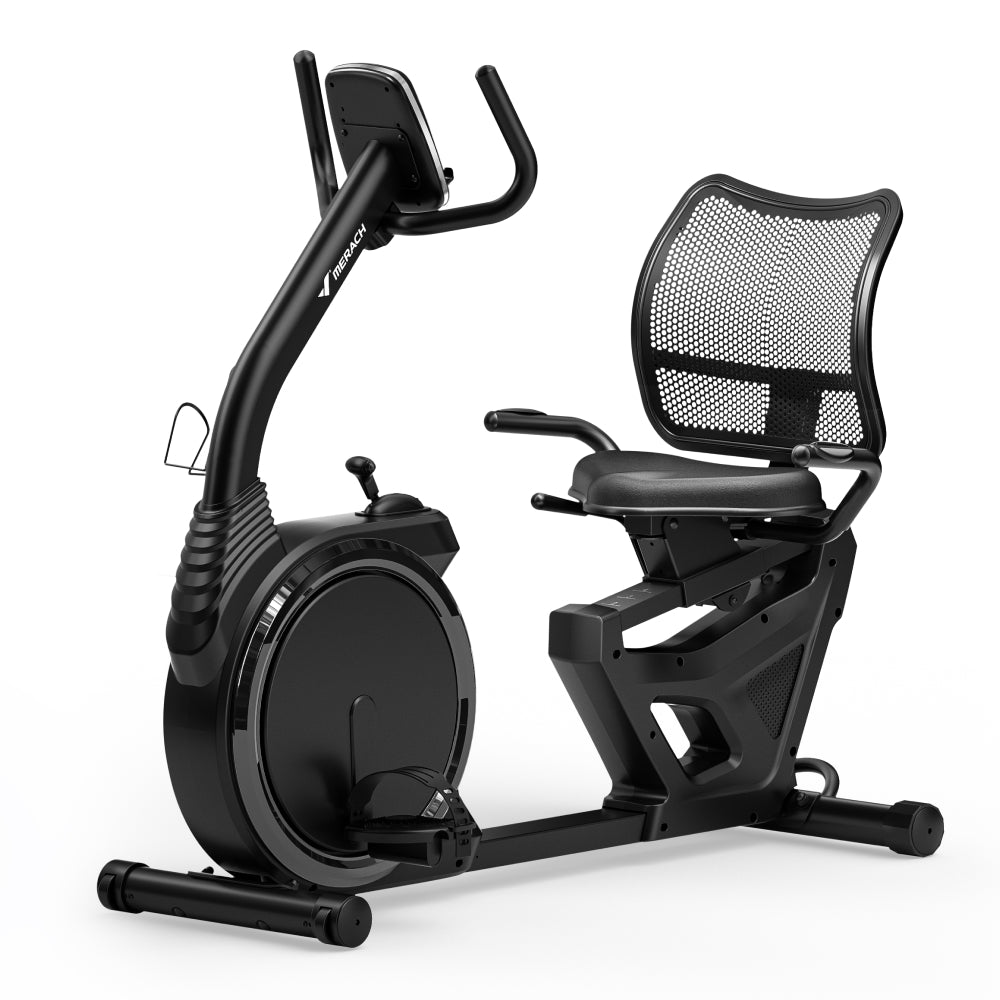
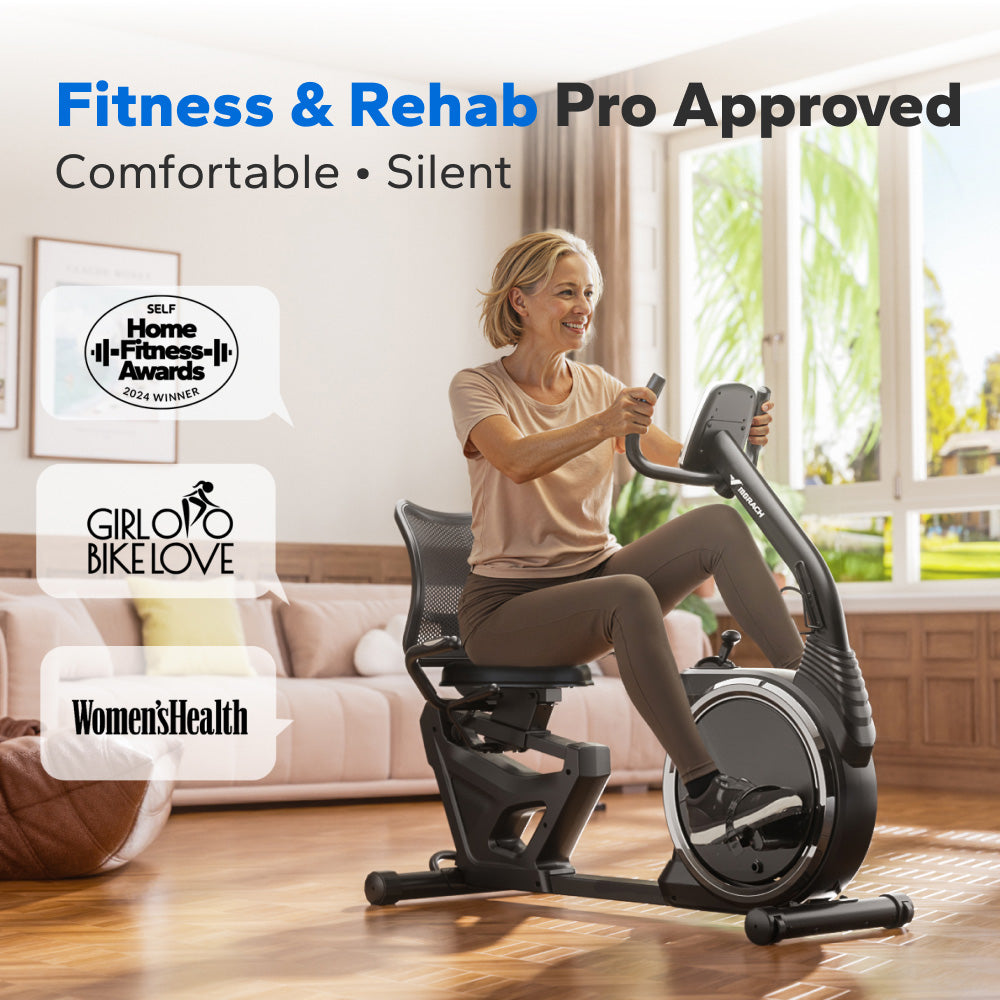
The recumbent bikes look different thanks to their reclined chair and extended pedal positions. Instead of sitting upright, you lean back with full lumbar support. This type of bike is suitable for seniors and for people who are recovering from injuries, as it minimizes the pressure on your lower back, hips, and knees.
Best for: seniors, rehab, and people with joint issues.

Indoor Cycling Bike (Spin Bike)
Indoor cycling bikes or spin bikes are built for a challenging workout; they resemble road bikes, allowing you to ride seated or standing. It has a heavy flywheel for smooth pedaling and an adjustable handlebar and seat. You can also do sprints, climbs, and interval sessions to replicate the feel of outdoor cycling.
Best for: advanced riders, HIIT training, intense cardio.

Air Bike (Fan Bike)
Air bikes, or the fan bikes, use a large fan instead of a flywheel. The intensity and resistance increase with your pedaling effort. Some of the models offer moving handles for a full-body workout. However, they are loud, intense, and physically demanding, not ideal for apartments or quiet environments.
Best for: athletes, CrossFit Training, HIIT lovers.

A Quick Comparison Table for Exercise Bikes
Before you pick the right bike for your routine, here is a quick table comparing how each variant stacks up with the features.
| Bike type | Best for | Comfort level | Intensity range | Space needed | Key advantage |
|---|---|---|---|---|---|
| Upright bike | General cardio | Medium | Moderate | Low | Simple and beginner-friendly |
| Recumbent bike | Seniors and rehab | High | Low to moderate | Medium | Great back support |
| Indoor cycling bike | High intensity | Low to medium | High | Low | Best for calorie burn |
| Air bike | HIIT training | Medium | Very high | Medium | Full-body workout |
2. How to Use an Exercise Bike?
Using an exercise bike may seem easy, just like riding your regular outdoor bike, but there are a few things that can change your complete experience. The proper setup and posture can help you burn more calories and avoid unnecessary strain, so you get the most out of every session.
Here are a few core elements that require adjustments to make your workout session more comfortable and result-driven.
Step 1. Bike Assembling & Adjustment
Not all the exercise bikes come pre-assembled, so the first thing is to bring the equipment into shape by fitting it properly. Since everyone has a different body type, and exercise bikes do not come in one size, you can assemble it to fit your arms, legs, and torso length. For that, you need to look for the exercise bike that features adjustability; otherwise, the wrong equipment can strain your joints with possible injuries and poor performance.
Step 2. Start With Seat Height Adjustment
The first thing is to adjust the seat height; otherwise, the entire ride will feel uncomfortable and awkward. Mostly, the majority of exercise bikes have similar seat adjustment settings regardless of their type.
To adjust the seat height, you need to
- Stand next to the bike.
- Usually, there is a knob screw to raise and lower the height. Align it roughly according to your hip bone.
- The seat height should be set in a way that when you sit and place your knees on the pedals, your knees should have a slight bend, not overly, or locked. So, when you pedal, you don’t have strain on your lower body.
- Adjust the seat forward or backward. This will help to position your knees directly over the pedal because if your knees feel cramped, it is close; if they feel cramped and overextended, it is overextended.
Quick setup test
- Sit normally.
- Place your foot on the pedal at the 3 o’clock position.
- Your knee should align right over the center of the pedal axle.
Step 3. Set the Handlebar Height
The height of the handlebars affects your sitting posture, whether straight or leaned forward. Here is a general rule.
Here is a general rule
- If you are a beginner or have back issues, adjust the handlebars slightly higher.
- And, if you are an expert or looking for a more intense workout, you can lower them a bit.
However, a comfortable handlebar setup, which is neither too high nor too low and is perfectly aligned according to your height, will keep your back straight, reduce stress on your shoulders, and allow you to hold them without stretching.
Step 4. Position Your Feet Correctly on the Pedals
Your foot placement can also influence how your muscles work during the ride; that is why you have to make sure your foot placement is correct. For that,
- The ball of your foot should sit over the center of the pedal.
- Feet should stay flat, not tilted inward or outward.
This foot positioning helps you to achieve better output and reduces foot fatigue with a more natural pedaling.
Step 5. Learn Proper Cycling Posture

Your posture matters and affects your workout as well. Even with a perfect setup, if your posture is incorrect, it will cause fatigue and strain. Before increasing resistance or speed, begin with a short warm-up at a comfortable pace to gradually raise your heart rate. A simple warm-up session could be relaxing and should be 2 minutes. Add light resistance for 1 minute and make it your short routine.
During your ride, you have to keep your chest open while your back is straight and not slouched. The shoulders should be relaxed; avoid lifting them towards your ears. Hold the handlebars slightly and avoid putting your weight on them. Make sure to engage your core gently to support your spine. Focus on a smooth, controlled pedal stroke rather than pushing in short bursts. Consistent cadence improves muscle engagement.
After finishing your workout, slow down gradually instead of stopping abruptly. Usually, the cool-down is three to five minutes, depending on you to slow down on a low resistance. You can also do light stretching for legs, hips, and lower back afterward and help your muscles recover smoothly. Using your exercise bike this way will maximize the results and minimize the risks of sore muscles.
Step 6. Choose the Right Resistance
Resistance is the core of any exercise bike and your workout session. It is what turns your easy pedaling into a strength-building or calorie-burning effort. For that, you need to understand the resistance levels.
- Low resistance is perfect for warmups, cooldowns, and beginners.
- Medium resistance helps you build endurance and keeps your heart rate elevated.
- High resistance strengthens your quads, glutes, and hamstrings during climbs or interval bursts.
Try to avoid super-fast pedaling with no resistance, which can strain your knees and is not beneficial.

For home gym users and beginners, choosing a quiet magnetic resistance, stable construction, and easy seat and handlebar adjustments can significantly lower the learning curve. The S26 Aura Exercise Bike with Sreen is designed with these needs in mind, making it easier for new riders to focus on form and rhythm rather than technical setup without the premium price often associated with brands like Peloton or NordicTrack.
Its 15.6-inch Full HD screen supports smartphone mirroring, allowing riders to follow training videos or enjoy entertainment during longer sessions, which helps make steady-state rides feel less repetitive. The pivoting display also adds flexibility for light off-bike workouts. It is suitable for both interval training and cardio sessions.
3. 5 Effective Exercise Bike Workouts
An exercise bike is perfect for cardio, with a potential calorie-burning process. However, to choose the best workout, be mindful of your experience level. If you are a beginner with low cardio fitness, a low-intensity workout is recommended. With time, as you become used to cycling, you can gradually increase your session time according to your comfort level with your exercise bike. For advanced-level users, workouts with sprints, hill climbs, etc.
If you are looking for a beginner exercise bike workout or someone who wants to add to their fitness goals, here are a few of the most effective exercises that will positively improve your fitness routine.
Workout 1: A 20-Minute Beginner Steady Ride
This is great for beginners or anyone who wants a simple ride to stay active.
Start this workout session with
- A warm-up of 5 minutes with light pedaling and low resistance.
- Mainly a 12-minute ride with a light to moderate, but steady pace. Your breathing has to be stable.
This is a great beginner exercise bike routine for building stamina and learning proper form.
Workout 2: A 30-Minute Weight Loss Interval Ride
This workout session burns calories quickly and strengthens your legs.
Start this workout session.
- A warm-up of 5 minutes with a light pace and gradually increasing the resistance.
- Take intervals of 20 minutes, 1 minute of fast pedaling at high resistance, and 1 minute of slow pedaling at low resistance. Repeat this session 10 times.
- Cool down for 5 minutes.
This exercise will ensure fat loss and improved metabolism.
Workout 3: A 35-Minute Hill Climb Strength Ride
This workout simulates hill climbs and helps you build lower-body strength.
Start this workout session with
- A warm-up of 5 minutes
- The main climb session should be 25 minutes; increase the resistance level every three minutes and maintain a moderate pace. This will engage the core. If it is a spin bike, you can stand during some climbs.
- Relax your body with a 5-minute cool down.
This hill climb workout session is great for building stronger glutes, hamstrings, and overall power.
Workout 4: A 40-Minute Endurance Ride
This workout session is for those who want to build cardio stamina.
Start your workout with
- A warm-up of 5 minutes
- The main ride should be 35 minutes at a moderate resistance. Maintain a steady pace and focus on your breathing.
- The cool down should be 5 minutes.
This exercise will improve your lung capacity, your heart health, and your mental focus.
Workout 5: A 15-Minute Quick Fat Burn Ride
This workout session is perfect for your busy days.
Start your workout with
- 2 minutes of warm-up.
- The main ride should be 11 minutes. Cycle through 30 seconds with hard and 30 seconds of easy effort.
- Cool Down should be 2 minutes.
This session is great for boosting calorie burn in a short time.
7. FAQs about How to Use Exercise Bikes
Whether you're new to indoor cycling or looking to improve your technique, it's natural to have questions about getting the most from your workouts. Here are a few common questions about maximizing your exercise bike workout.
Q1: Can you lose belly fat by riding an exercise bike?
Yes, an exercise bike helps in losing belly fat along with an efficient calorie deficit. This will help to burn calories and overall body fat, but you can't spot only belly fat.
Q2: How long should you ride an exercise bike for a workout?
A workout session of 20 to 30 minutes for beginners builds up to 30 to 60 minutes for general fitness. However, for the best results, a 150+ minute weekly ride on an exercise bike is ideal.
Q3: Is a 30-minute workout enough for a day?
Yes, a 30-minute workout daily on a bike is generally enough to efficiently improve cardiovascular health, build endurance, and burn calories to tone muscles.
Q4: How much biking is equal to 10,000 steps?
The biking on an exercise bike depends on your speed and intensity. A workout session of 30 to 45 minutes with moderate resistance can roughly cover a count of 10,000 steps.
Q5: Is a stationary bike better than walking?
Walking and stationary bikes target and build different muscles. A stationary bike helps in burning calories, lower impact, and leg strength efficiently while ensuring joint and pain recovery. At the same time, walking is weight-bearing and improves bone density.
8. Conclusion
An exercise bike is the easiest workout tool that provides flexibility. Whether your goal is to lose weight, improve your cardio health, or build strength, an exercise bike will help you to get there without complex gym equipment.
However, the key is to learn how to use an exercise bike properly, with proper form, which gives you a safer, smoother experience and prevents strain on your back, knees, and joints. With consistent workouts on the right exercise bike, like the S26 Aura Exercise Bike With Screen, and opting for the right approach, you will see noticeable improvements in strength, stamina, and overall fitness.