It’s not always easy to pick the right home training equipment, especially for beginners. Walking pads and stationary bikes are two of the most popular indoor cardio pieces of equipment, but they target different muscle groups and suit different fitness goals. Knowing the differences between the two can help you make a wise choice and avoid wasting money on a machine that doesn’t meet your needs.
This guide breaks down the key differences in calorie burn, muscle engagement, convenience, and long-term results. We'll help you identify which machine aligns with your fitness goals, space constraints, and lifestyle, so you can invest in the equipment that will actually keep you moving.
1. Walking Pad vs. Stationary Bike: Key Differences
A stationary bike vs. walking pad are designed for home workouts, but they serve distinct fitness goals. If you know these differences, you’ll be able to pick one that fits your aims precisely.
Workout Style & Motion
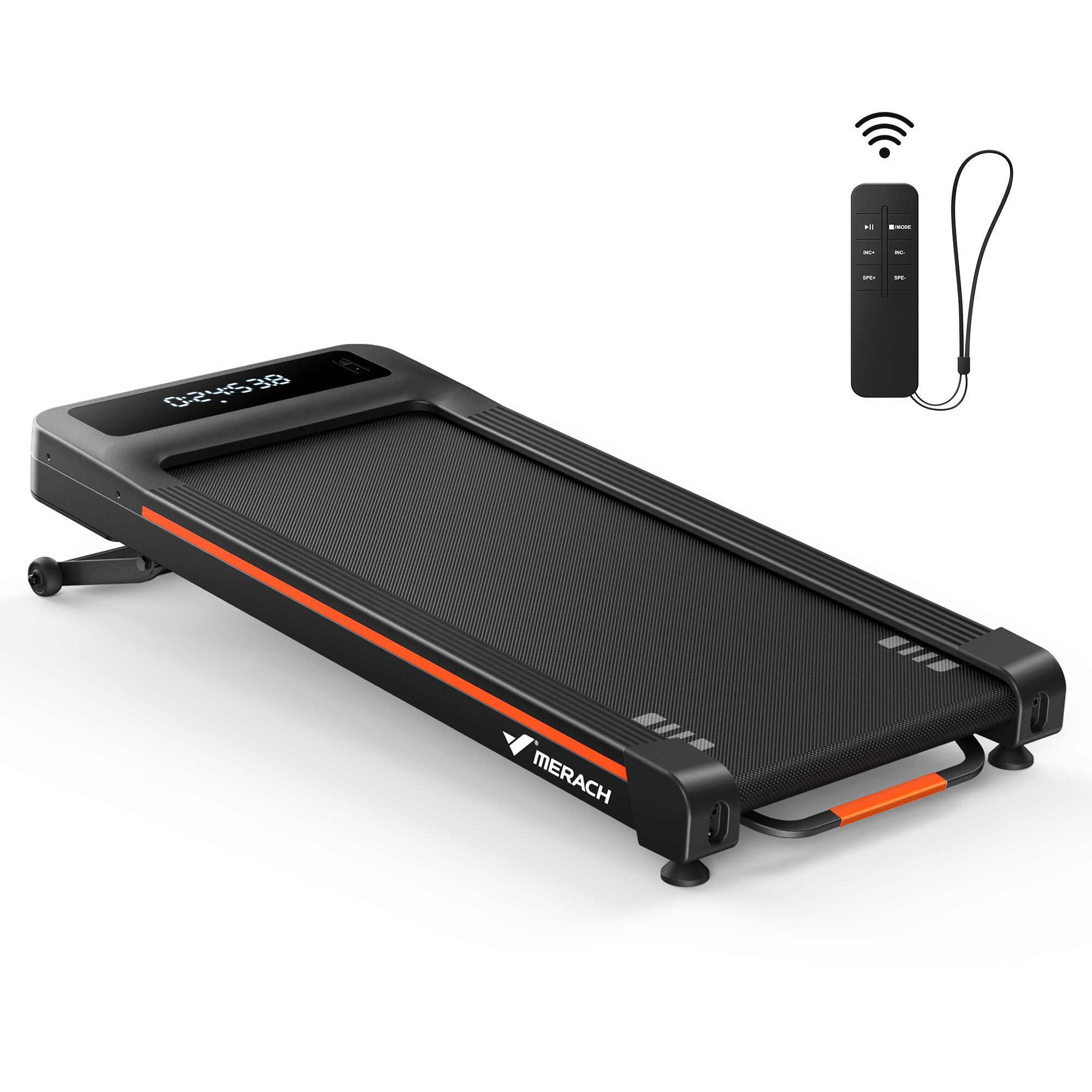
A walking pad is smaller than regular treadmills, uses less electricity, and can be simply put under a bed or couch. Many people use it for indoor walking workouts, especially when they don't want to go outside. It’s perfect for people who are just starting or want to work out at a low level. Anyone can use it right away, even if they’ve never used it before.
For instance, if you work from home and sit at a desk for eight hours a day. You can easily fit a walking mat beneath the desk, allowing you to move slowly while working. These short walks add up to thousands of steps per week, which is excellent for keeping your weight in check and your heart healthy.
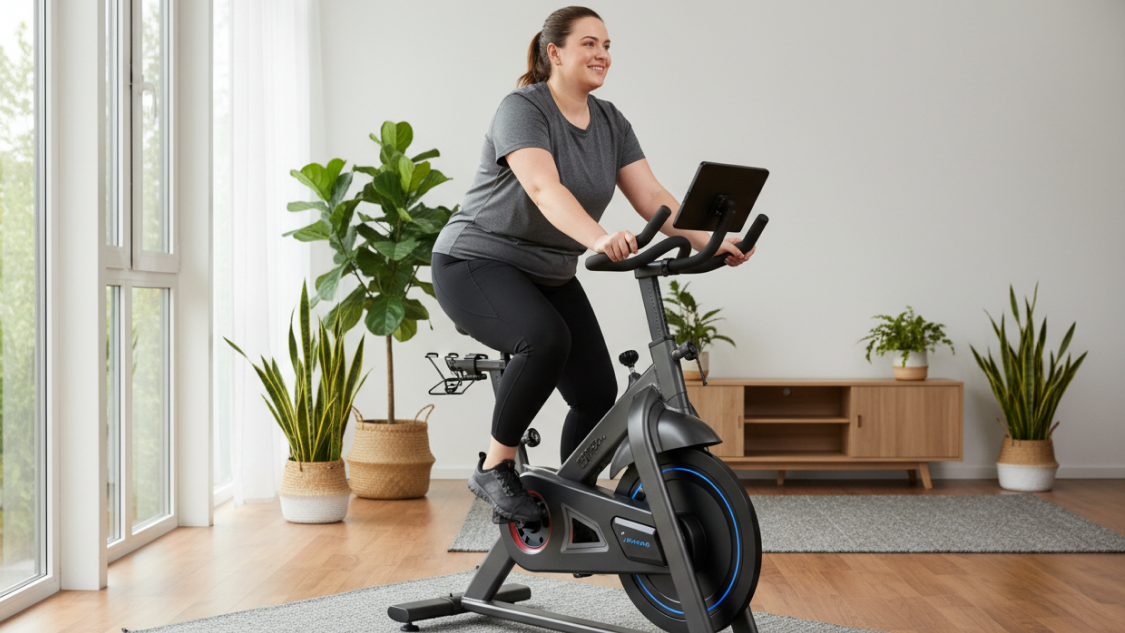
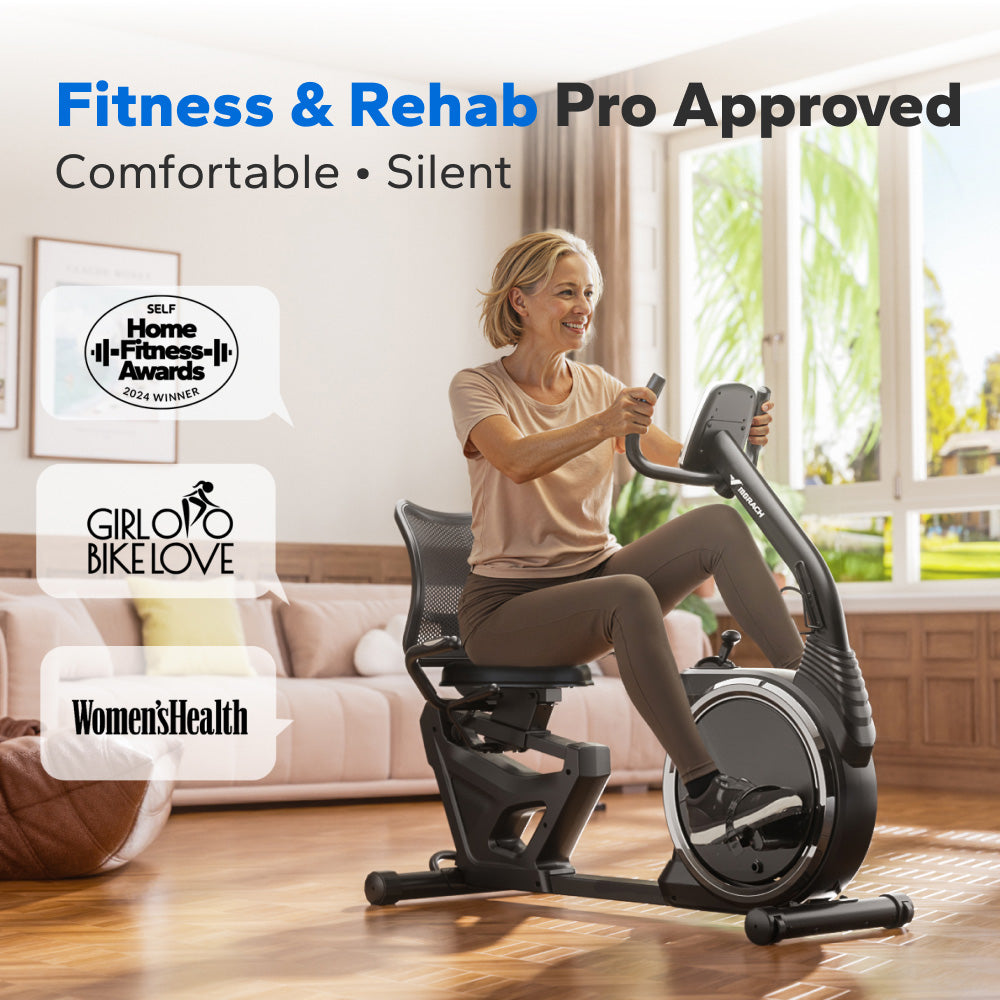
A stationary bike is an indoor exercise bike you use to get your heart rate up. On the other hand, it is all about pedaling. The pedaling motion works your glutes, hamstrings, quads, and calves. You can adjust the resistance, letting you move from a light warm-up to a challenging cardio workout. It means that stationary bikes are suitable for people who want to build leg muscles and burn more calories in less time.
A walking pad would be ideal if you want an exercise that seems more like a regular daily activity and less like a “workout.” A stationary bike is a better choice if you would like to work out in a structured way that gets your heart and muscles working.
Space Requirements & Portability
A walking pad is tiny and made to be easy to store. They can slide beneath mattresses, couches, or even closets. You can easily move them around your home because they are light, which makes them great for apartments or shared spaces.
Stationary bikes are usually heavier and take up more space. They can fit in a corner, but they are more of a permanent part of your room. If you want your living space to be flexible, this is worth considering.
A walking pad is more versatile if you want to work out while doing other things, including watching TV or working at a desk. A stationary bike works best if you set up a modest space for your workouts.
Noise Levels & Home Compatibility
If you live in apartments or shared homes, you would wonder which one is quieter. Walking pads are usually silent, and you won’t hear much noise.
If you want a quiet stationary bike, you can choose a magnetic type. Unlike traditional friction-based bikes that generate noise from physical contact, magnetic stationary bikes operate through a non-contact system, eliminating mechanical friction and resulting in near-silent operation. It means you may work out early in the morning or late at night without bothering your family or neighbors.
Both machines can be used at home. Stationary bikes are better because they remain silent even during high-intensity workouts.
| Features | Walking pad | Stationary bike |
|---|---|---|
| Style of motion | Forward walking | Pedaling |
| Needed space | Very tiny and easy to fold | Not foldable, medium size |
| Level of impact | Minimal effect | Zero to low impact |
| Best for | Daily steps, light workouts | Cardio, stamina, leg strength |
| Easy to carry | Very high | Low |
| Level of noise | Not much | Very low |
| Workout intensity | Light to moderate | From light to heavy |
| Burning calories | Not too much | Medium to high |
| Level of difficulty | Very simple | Not too hard |
| Ideal users | Beginners, office workers | From beginner to advanced |
2. Walking Pad vs. Stationary Bike: Calorie Burn and Weight Loss Potential
People who want to lose fat would often like to know how many calories each machine can burn and how well the routines work. Because of this, many people who are just starting to work out or who work out regularly compare different machines to determine which one burns more calories: the walking pad or stationary bike. Both machines have various workouts, but how much weight you lose depends on how long, how hard, and how often you use them.
Walking Pad vs. Stationary Bike Calorie Burn Comparison
When comparing a walking pad vs. a stationary bike, calorie burn is often the deciding factor for weight loss. Here is a calorie burn comparison at moderate intensity.
| Workout duration | Walking pad | Stationary bike |
|---|---|---|
| 30 minutes | 150–250 calories | 200–300 calories |
| 45 minutes | 250–350 calories | 350–500 calories |
| 60 minutes | 300–450 calories | 450–650 calories |
Walking pads let you move naturally, which is excellent for folks who like to work out slowly and steadily. Walking slowly and safely improves your metabolism, making it easier to stay active for more extended periods. More time means more calories burned overall. If your walking pad can go up and down, you burn even more calories because your muscles have to work harder against gravity.

A walking pad like the W50 Walking Pad is especially effective for weight loss. Its quiet 3.5HP brushless motor allows long sessions, even during work calls, while the reinforced deck and 400 lb weight capacity make it suitable for heavier users. Its auto-incline feature allows users to increase workout intensity. For users who walk consistently rather than intensely, it makes calorie burn sustainable.
Stationary bikes help you burn more calories in less time because you can pedal at a high rate. With adjustable resistance, every push requires work, targeting major muscle groups like the glutes, hamstrings, and quads.HIIT cycling burns even more calories, with the afterburn effect, which keeps the body burning calories even after the activity ends. The stationary bike is clearly better for burning fat for folks who want short, intense workouts.

The S26 Aura Exercise Bike features a smooth magnetic resistance system for both steady rides and interval training, while the large HD screen with smartphone mirroring keeps users engaged during longer or harder sessions. This makes it easier to push intensity without boredom while focused on efficient calorie burn.
Which Option Is Better for Weight Loss?
Both can help you lose weight, but if you only have 20–30 minutes, a stationary bike will burn more calories in the same amount of time. If you can stay active for 45–60 minutes or more, a walking pad allows you to burn calories steadily with less fatigue.
Choose a walking pad if:
- You like long, easy workouts.
- You want to move every day without getting exhausted.
- You have trouble with high-intensity workouts.
Choose a stationary bike if:
- You would like to burn calories quickly.
- You like to work out while sitting down.
- You would like to lose fat and tone your legs.
3. Walking Pad vs. Stationary Bike: Muscle Activation Comparison
Calories are only part of the equation. How your muscles work and how your joints feel also matter. The muscle engagement patterns differ significantly between walking pads and stationary bikes, affecting everything from shaping your body and core stability to your lower body strength development.
Lower Body Muscles Targeted
Walking pads engage your hamstrings, calves, and other leg muscles in a way that feels natural. Even though the effort isn’t too hard, the muscles work steadily over time, which makes the lower body more toned and able to last longer.
Stationary bikes primarily target the quadriceps and hamstrings, but they also engage the calves and glutes. This is why people who are into fitness typically use a stationary bike for building leg muscles.
Differences in Core Engagement
Walking naturally activates your core muscles as you maintain balance and posture. This natural core engagement improves posture and builds functional strength that translates to daily activities.
Cycling is primarily a lower-body exercise, with the seat supporting your weight and minimal core involvement unless you intentionally engage it. However, you can increase core activation by keeping your back straight. Standing climbs and interval training can further engage your core.
Overall Body Involvement
Neither machine provides a complete upper-body workout. Walking pads let you move your arms while walking, and stationary bikes primarily work your lower body and core. You can work out your whole body with either machine or bodyweight workouts.
4. Impact on Joints and Injury Risk
Beyond calories and muscle engagement, comfort and sustainability matter just as much. For many people, joint stress, knee comfort, and injury risk are also factors when choosing between a walking pad or a stationary bike, especially for beginners, seniors, or anyone returning to exercise after a break.
Impact on Joints - Walking Pad
Walking is a weight-bearing exercise that applies moderate pressure on the knees and hips. It simulates natural gait, helping maintain joint flexibility and bone density. So they are excellent for older people or those with weak knees because they don’t put much stress on the knees. They let you walk around without putting too much stress on your joints, but those with knee arthritis should control the session duration carefully. You can choose models with cushioning systems to reduce knee impact.
Impact on Joints - Stationary Bike
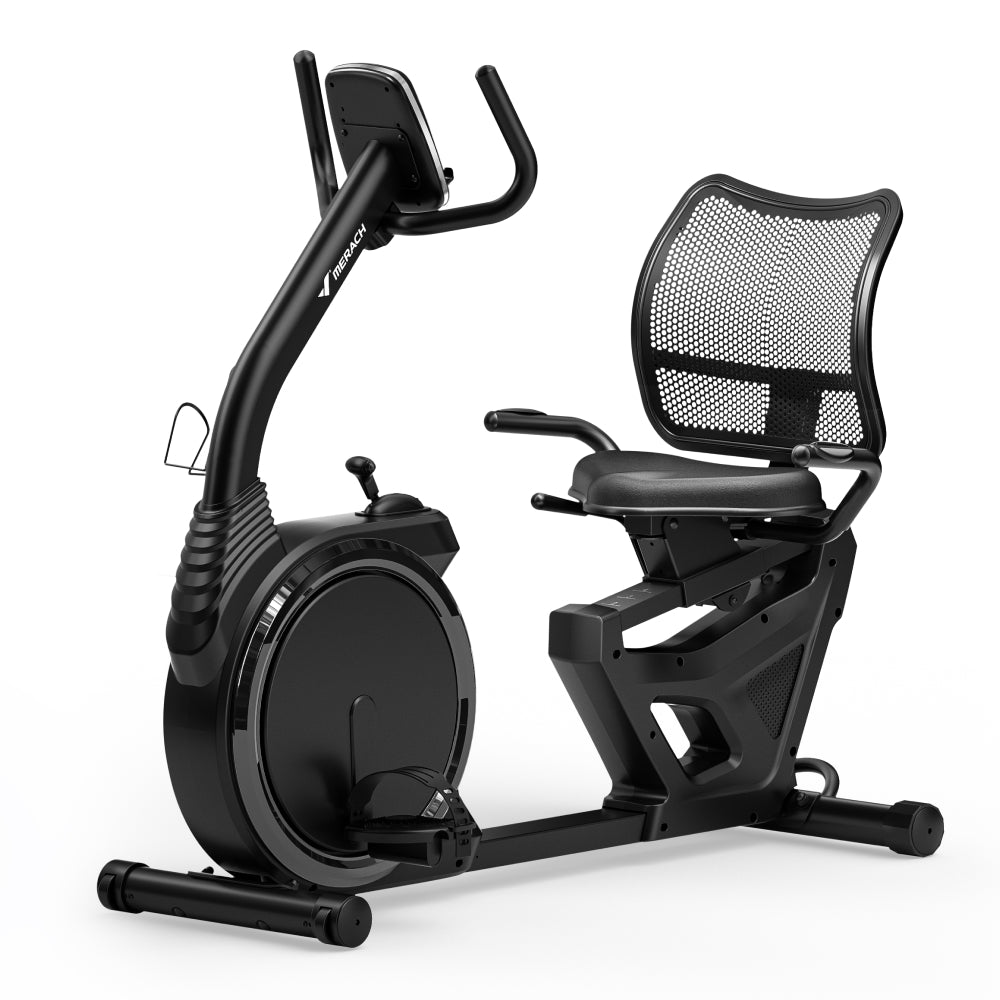
When you use the stationary bike, the seat supports most of your body weight, significantly reducing joint stress. So it is ideal for arthritis patients, heavier individuals, or post-surgery rehabilitation. But the incorrect seat positioning may increase lateral knee pressure.
Injury Risk Comparison
While both walking pads and stationary bikes are designed with user safety in mind, they present distinct risk profiles that warrant careful consideration.
| Equipment | Primary risks |
|---|---|
| Walking pad |
|
| Stationary bike |
|
Best Choice for Sensitive Knees
If your knees hurt, stationary cycles are safer because you sit down, although walking pads are also soft enough for most people.
- For arthritis or osteoporosis: Prioritize stationary bikes.
- For improving bone density: Walking pads are more suitable.
- For post-surgery recovery: Use heavy-duty stationary bikes under medical guidance.
4. FAQs about Walking Pads vs. Stationary Bikes
Still weighing the pros and cons of these two popular cardio machines? You're not alone. Here we answer the most frequently asked questions to guide your decision.
Q1: Does a walking pad help you lose belly fat?
Yes, if you use it regularly with a healthy diet, it will help you lose belly fat over time. Walking at a low intensity speeds up your metabolism and enables you to burn calories steadily.
Q2: Which is better for reducing weight: a walking pad or a stationary bike?
A stationary bike burns more calories in less time, while a walking pad allows you to work out for more extended periods of time to shed fat more slowly. The main question is: which is better, a stationary bike or a walking pad?
Q3: Does a walking pad truly work?
Yes. It helps you take more steps, improve circulation, and be more active overall. This is especially useful for folks who work in an office or stay at home.
Q4: Is it preferable to ride a bike that doesn’t move than to walk?
It all depends on what you want to do. A stationary bike is a great way to build muscle, burn calories, and improve your heart health. Use a walking mat if you would like to keep consistent, work out at a low intensity, and move slowly.
5. Conclusion
Deciding between a walking pad and a stationary bike depends on how you realistically plan to stay active every day. If you want to work out every day, perform some mild cardio, and make it easy for novices to use, a walking pad is a fantastic choice. It’s also easy on the joints and great for anyone who wants to keep active in a low-stress, regular approach. If you’re looking to burn more calories, build stronger leg muscles, and engage in more intense cardio, a stationary bike is a great alternative.
Choose the machine that fits your space, schedule, and motivation style. You’ll see better results than chasing the “perfect” workout you never stick to.