Do you have a dream of building a strong back? Absolutely, you make a plan to spend hours in the gym to chase this dream. Yet when it's time to start training, you're not sure whether you should reach for dumbbells or head to the cable machine.
Both dumbbell rows and cable rows work, so which one should you prioritize? Read the article to understand the difference between dumbbell rows vs. cable rows and decide which one is the better option for your goal.
1. Dumbbell rows vs. cable rows: What’s the key difference?
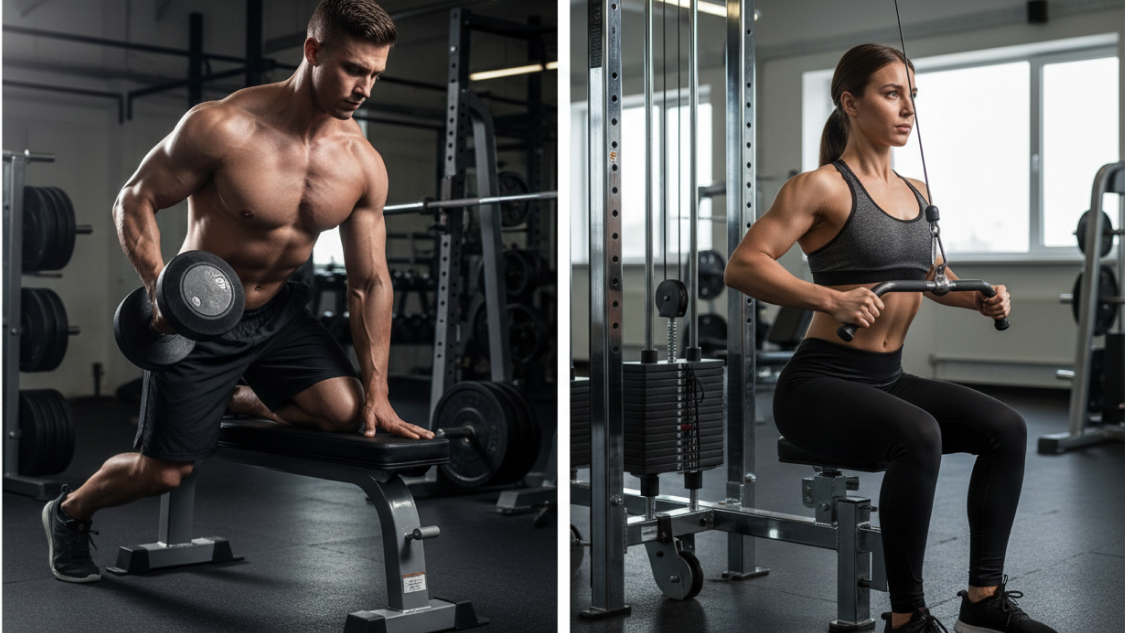
Primarily, dumbbell rows are a free-weight exercise. They target the latissimus dorsi, rhomboids, trapezius, and rear deltoid muscle groups. During this exercise, the movement involves pulling a dumbbell toward your torso. It corrects muscle imbalances and builds unilateral strength. Therefore, you can achieve overall back development.
The cable row provides resistance through a pulley system. You can keep the muscles under tension during exercise. This consistent resistance makes the session easy to control. You can fully focus on muscle contraction. During this exercise, your lats, rhomboids, trapezius, and biceps muscles are engaged and move. It helps maintain proper technique and perform high-intensity training sessions safely.
The following detailed differences between the dumbbell row and the seated cable row enable you to choose the right exercise based on your training goal.
| Feature | Dumbbell Rows | Cable Rows |
|---|---|---|
| Muscle Activation | Trigger lats, rhomboids, traps, rear delts, and core muscles | Activate lats, rhomboids, traps, and biceps with constant tension |
| Strength Potential | Provide advanced lifters 100–150 lb per arm | Offer 200–250 lb weight stacks |
| Stability Requirements | High core and shoulder muscles provide stability | Require a machine for stability |
| Equipment Needed | Need 1 pair of dumbbells + weight bench | Require 1 cable machine + row attachment |
| Injury Risk | Moderate due to higher stability requirements and form dependency | Low to moderate due to controlled movement and guided resistance |
In simple terms: dumbbell rows give you more freedom; cable rows give you more control. If you prefer a more natural, free-moving exercise, dumbbell rows have the advantage. If you want a more controlled resistance profile, cable rows may feel better.
2. Which is Better for Building a Wider Back?
If your goal is a wider-looking back, cable rows may give you more control over the movement and make it easier to focus on your lats. It includes V-bars, straight bars, and single D-handles. A close neutral grip generally emphasizes the lats. Over time, developing these muscles can contribute to a wider upper-body appearance.
Dumbbell rows are still effective for the lats, but they require more balance and stabilization. Because you're supporting your body while rowing, more of your attention goes toward controlling the weight and maintaining your position rather than keeping the movement as consistent as possible.
However, rows are not the only exercise you should rely on for back width. Lat pulldowns and pull-ups are vertical pulling exercises that are also effective for developing the lats.
3. Which is Better for Building a Thicker Back?
The dumbbell exercise promotes muscle growth through heavy mechanical loading. This makes the dumbbell row valuable for building back thickness. The dumbbell moves freely, and your arm follows its own natural path. This enables up to 90° of shoulder extension. At this angle, your elbow is slightly pulled behind your torso. This greater range of motion creates a stronger contraction. During dumbbell exercises, your muscles find a comfortable direction to move freely. It also requires you to stabilize your body while you pull, so your core and other supporting muscles have to work as well.
Cable rows can absolutely build back thickness. But you have to follow the fixed movement pattern. It has a typical range of 60–75° of shoulder motion. They are better suited to keeping resistance and movement consistent rather than giving you as much freedom to find your strongest pulling position.

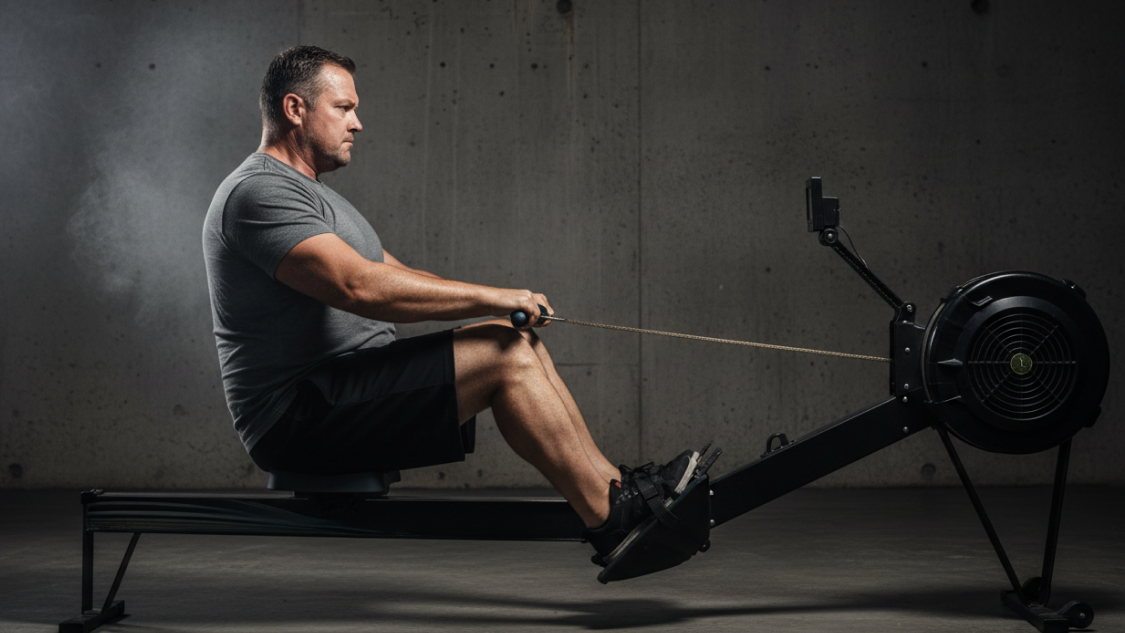
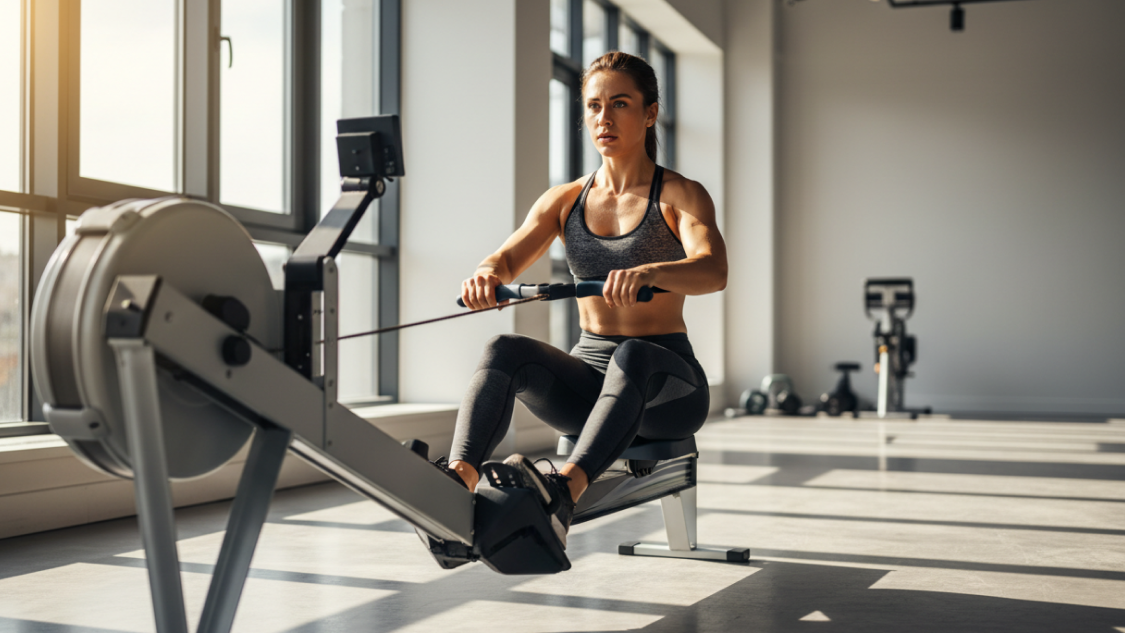
If you don't have room for a cable machine or a full set of free weights, a rowing machine can be a practical addition to your home workout. An air rower is particularly useful for building back muscles. The harder you pull, the more resistance you create. With an ergonomic seat design, you can experience a more comfortable workout. Its drive holder provides stability to attach the tablet and take live classes.
However, the rowing machines shouldn't completely replace strength exercises if your primary goal is maximizing muscle size. Use it alongside rows, pull-ups, or lat pulldowns for more complete back development.
4. Which Can Fix Muscle Imbalances?
If you want to improve muscle imbalances, the dumbbell row is an excellent exercise. You can train one arm at a time, so your stronger side can't easily take over. You can also notice differences in strength or control between your left and right sides.
A standard cable row usually has both arms working together, so your stronger side can still contribute more without you noticing. Although single-arm cable rows can address this issue, dumbbells make unilateral training more straightforward.

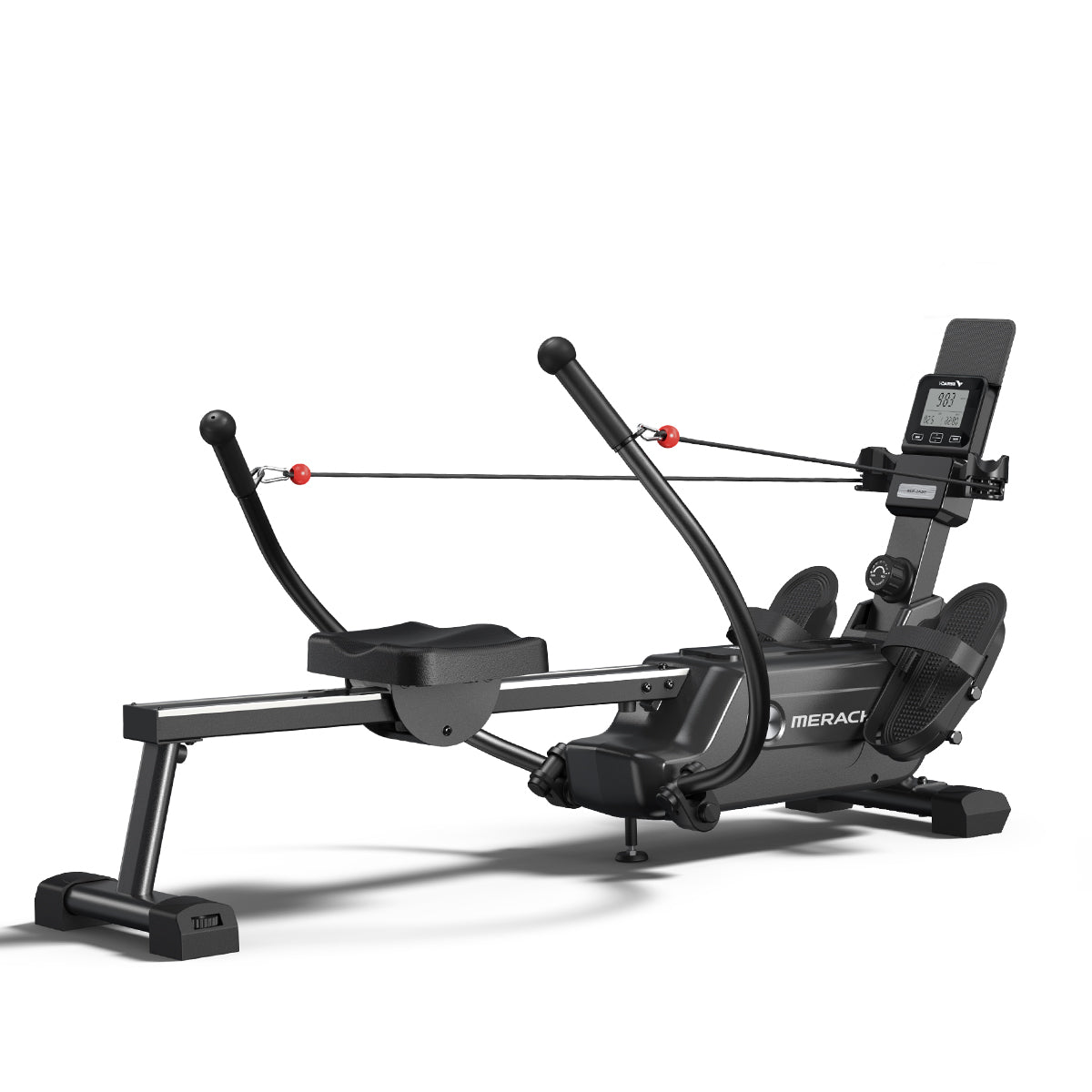
So how do you work on muscle imbalances at home if you don't have time to go to the gym? The indoor double-scull rowing machine is designed specifically for independent left-right training. Its dual handlebars allow each arm to move separately, so you can work both sides without letting your stronger side take over. The 120° outward arm motion also gives you a wider rowing path. You can adjust the resistance through 16 magnetic levels.
Don't have a rowing machine or dumbbells at home? You can still work on muscle balance with bodyweight exercises. Try single-arm wall presses, bird dogs, side planks, or slow single-arm resistance-band rows.
5. Which Is Better for Your Fitness Goal?
Both the one-arm dumbbell row and the cable row are designed to control body movement and improve stability. However, the right workout selection depends on the result you expect. So, read the details below that help you choose the ideal workout.
For Building Maximum Back Strength
If your main goal is to develop pulling strength, the dumbbell row is a better option. Your arm works independently. This exercise corrects muscle imbalance over time. In addition, the dumbbell row targets the latissimus dorsi and rhomboids. Throughout the exercise, your lower back and hips coordinate. Another great advantage is greater range of motion. You can easily pull the dumbbell higher toward your hip.
For Building Muscle Size
Do you want to build muscle? The cable rows are usually a more effective exercise. It provides more constant tension during movement. You can keep your muscles engaged before the recovery phase. This continuous movement increases the muscle tension. Furthermore, the cable row also maintains your proper body posture. This enables you to fully contract your back muscles. You don't need to worry about body imbalance.
For Improving Athletic Performance
A busy professional focuses on workouts that develop strength. A dumbbell row stabilizes your body. You don't need extra support during the repetition stroke. It also strengthens anti-rotational core muscles. This core engagement can improve performance in sports. This includes running, throwing, lifting, and rapid changes in direction. In addition, this exercise reduces the risk of injuries. You just have to focus on helping build functional pulling strength.
For Beginners & Learning Proper Technique
As a newbie, your body needs lightweight exercise. During this phase, you need to focus on learning the techniques of using equipment. So, the cable row is generally easier to learn. With proper guided movement, the cable row provides more stability. You can fully understand the tips to maintain posture and shoulder blade movement. Overall, it trains your body for more challenging movement.
For Correcting Muscle Imbalances
If you want to make one side of your body stronger, then the dumbbell row is an excellent choice. It trains one arm and prevents your stronger side from taking over the movement. Over time, this exercise improves muscle symmetry. You can feel better coordination and overall strength balance. This enhances your physique. Furthermore, the dumbbell lowers the risk of shoulder injuries.
6. FAQs about Dumbbell Rows vs. Cable Rows
Choosing the right rowing exercise is only the first step. Why do I feel the exercise in my lower back instead of my lats? How often should I train? And do I need expensive equipment to build a stronger back? Below are answers to the most common questions to help you train smarter and avoid common mistakes.
Q1: Can you build a big back with only rows?
With rowing, you can build significant back size. However, the rowing workout does not build a big back alone. You have to combine this workout with some vertical pulling exercises. It includes pull-ups and lat pulldowns. Make sure to eat a balanced and nutrient-rich diet. This combination trains your back from different angles. Overall, it improves your body symmetry and promotes better muscle growth.
Q2: Why do I feel dumbbell rows more in my lower back?
If you feel your lower back more than your back muscles during dumbbell rows, your body may be working too hard to hold the rowing position. Using too much weight can make this worse. Try lowering the weight, keeping your spine neutral, and supporting yourself with one hand on a bench. Your torso should stay relatively still while your arm does the pulling.
Q3: How many dumbbell rows or cable rows should I do?
For general strength and muscle building, 8–12 repetitions for 3–4 sets is recommended. Choose a weight that makes the final few repetitions challenging while allowing you to maintain good form.
Q4: Which is better for more defined back muscles?
For muscle definition, cable rows can be convenient because the stable position makes it easier to perform controlled repetitions and higher training volume. Dumbbell rows are useful when you want to train each side independently. A better choice is muscle training plus overall fat loss, which creates more visible definition.
Q5: Can rowing machines replace dumbbell or cable rows?
Not completely. A rowing machine can provide resistance-based back training, but the movement is different from an isolated dumbbell or cable row. A rowing machine also involves your legs and core, making it useful when you want to combine back training with a full-body cardio workout.
7. Conclusion
To sum up, dumbbell rows vs cable rows: both workouts strengthen your core muscles. The right choice depends on what you actually achieve. You have to ask yourself: Is your goal to build back muscle? Or do you want to improve athletic performance? This enables you to think clearly and make better decisions.