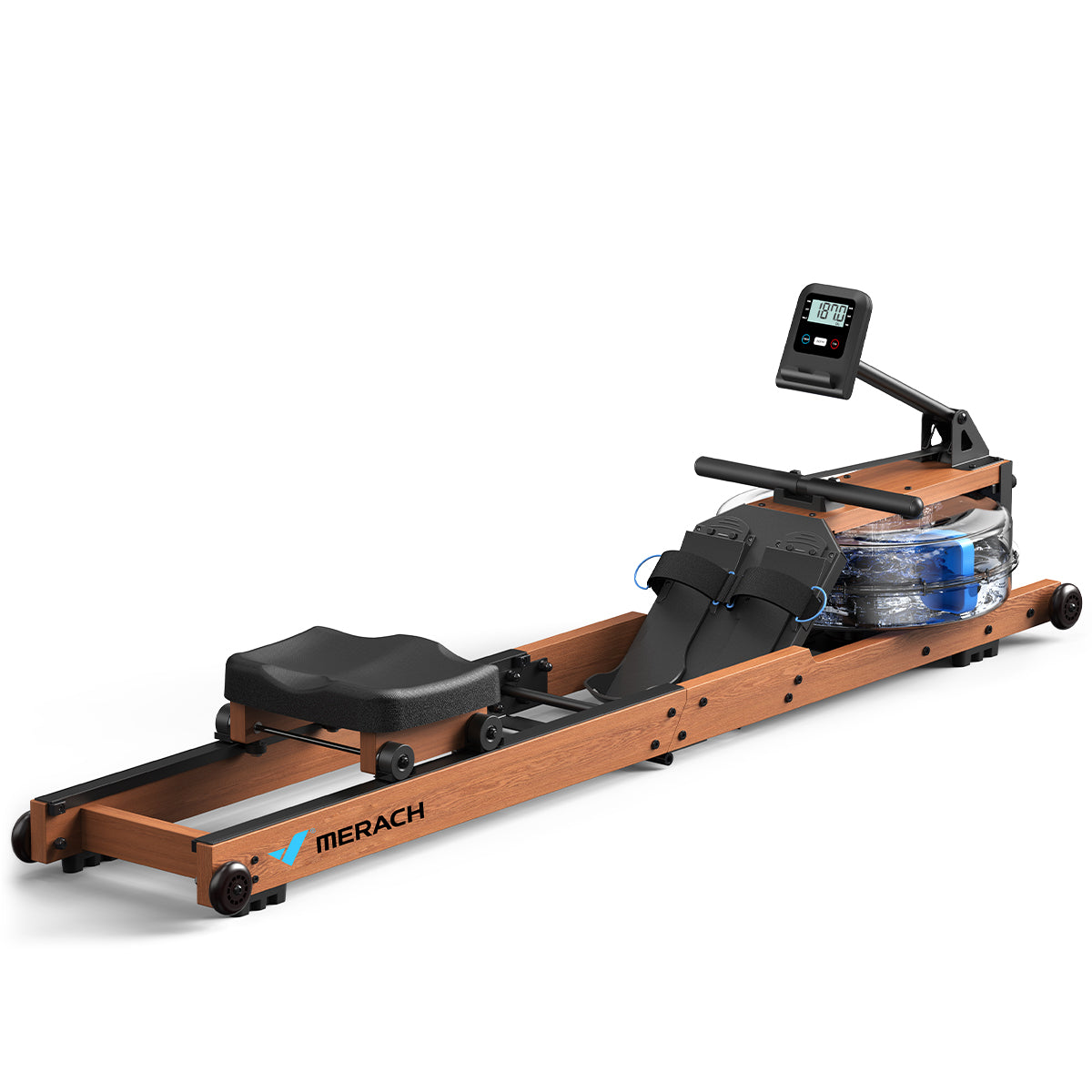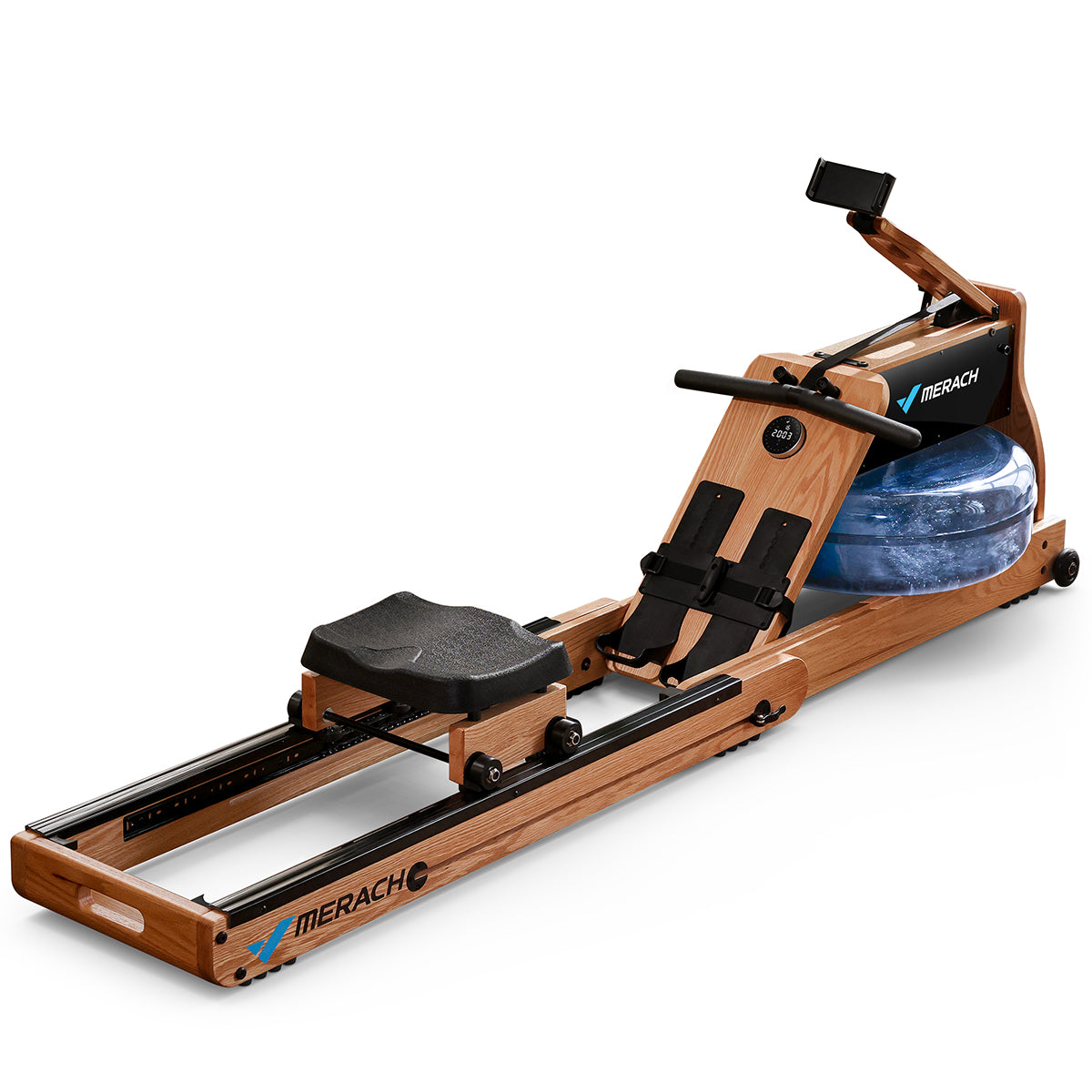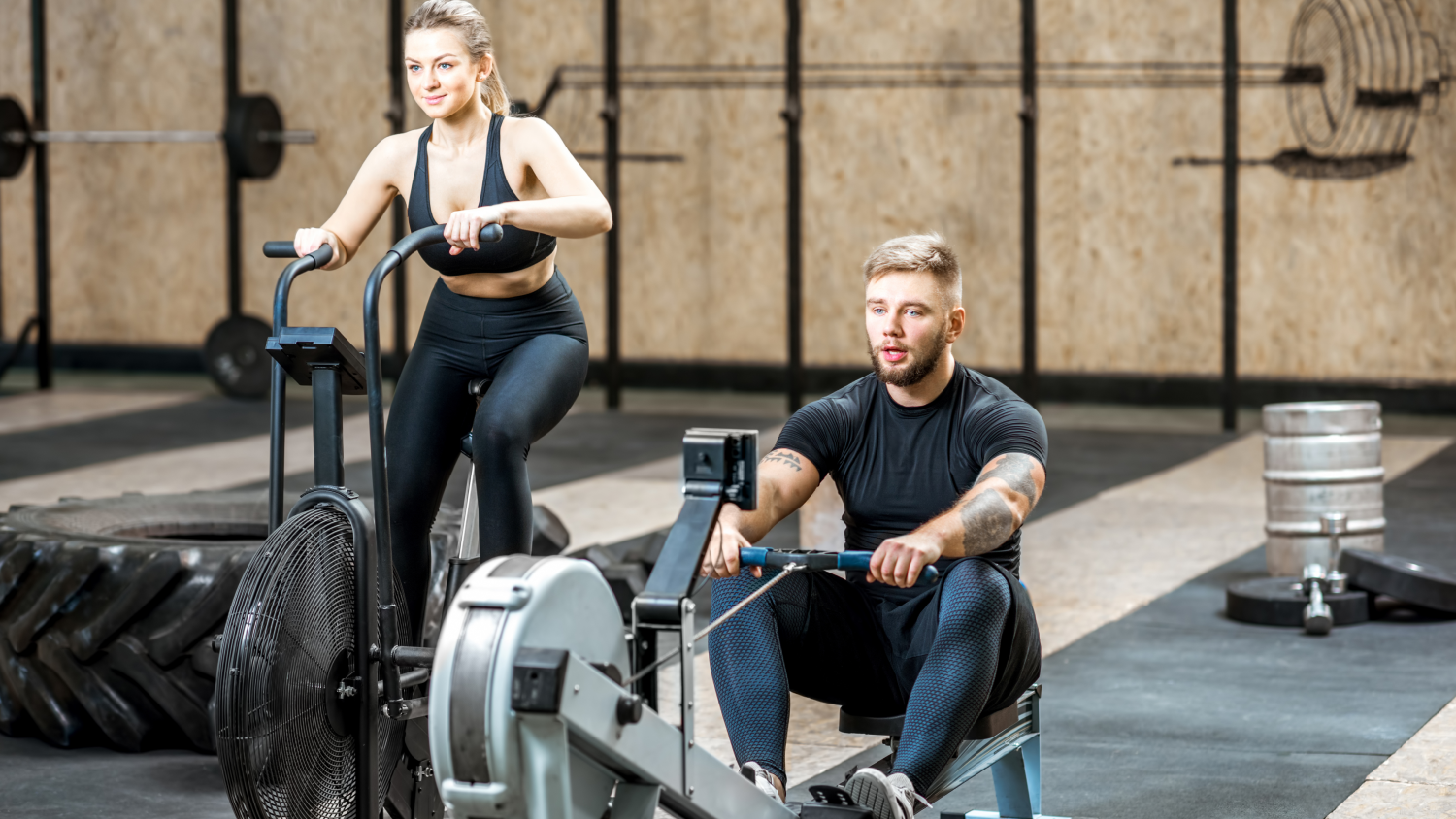
Want to lose weight or strengthen your body? Air bikes and rowers are the best cardio machines. They burn calories rapidly and offer full-body workouts. The rower utilizes a pulling mechanism and a sliding seat. It creates resistance through magnets, water, or air. The air bike utilizes a fan wheel. As you push harder, the resistance increases. At first, the air bike vs rower seems similar, but they offer completely different training experiences and workouts.
Getting these differences will help you select the machine that best suits you. These differences help you set long-term goals, determine your comfort level, and define your fitness style. You can choose from them according to your needs. These differences affect how comfortable your workout feels, how fast you get tired, and how your muscles work.
1. Full-Body Fitness Showdown with Air Bike vs Rower
The air bike vs rower gives unique benefits fitting to different fitness goals and styles when it comes to full-body workouts. The rowing machine engages your core, arms, back, and legs in a coordinated sequence. It makes the devices ideal for endurance-focused, longer sessions. These machines offer a controlled and smooth motion. On the other side, the air bike gives explosive, high-intensity workouts pushing both your lower and upper body at the same time. These two machines help you select the best fitness tool according to your needs.
Full-Body Engagement
Both machines target the whole body, but they do that with different techniques. The air bike uses your legs and arms simultaneously. It pedals hard with your lower body, forcing you to pull and push with your upper body. Several people find rowing effortless to keep for longer sessions. On the other side, the air bike is best for short, intense bursts.
Rowing can feel less chaotic and more controlled than the air bike, as it depends heavily on technique. Working your legs first, a rower challenges you with a smooth pulling motion. After legs, it works your arms, core, and back. This makes a powerful whole-body burn, particularly during sprints.
Impact on Joints
The level of stress on your joints varies, but the air bike vs rowing machine is both low-impact. The air bike gives a secure alternative to jumping or running. This feature makes it an excellent choice for those recovering from high-impact workouts. If the seat isn't adjusted correctly, the air bike can feel taxing on the knees. The pedaling against resistance also becomes more demanding. As you sit and glide smoothly throughout the motion, rowing gives one of the lowest-impact forms of cardio. Rowing usually feels easier and gentler to sustain for people dealing with stiffness, injuries, or joint pain.
Cardio Intensity and Calorie Burn
Air bikes are best for their intensity. Rowers deliver a smoother, higher-calorie output over time, whereas an air bike delivers an explosive calorie burn. More air resistance is generated with every increase in effort. It forces you to work more with every pedal stroke. This makes the air bike great for calorie-burning sessions. It is also an all-out HIIT interval. The calories burned on the rowing machine are more endurance-focused and steadier. As the rower engages 85-90% of major muscle groups, they also burn a significant number of calories.
After a comparison of air bikes and rowing machines, it becomes clear that while air bikes excel at high-intensity explosive training, rowing machines are the superior choice for those seeking coordinated full-body workouts and are ideal for sustained daily exercise.

If you're looking for a versatile, space-efficient exercise machine suitable for the whole family, we highly recommend the Merach R50 Air Rower as the affordable home fitness solution. Utilizing an air resistance system, it offers 10 levels of resistance, smart Bluetooth tracking, ergonomic comfort, app connectivity, and a foldable steel design. Most importantly, it is an air rower that offers the same high-quality rowing experience for only half the price compared to the premium models like Concept2, delivering a professional-grade workout experience right in your home, whether your goal is fat burning, cardiovascular improvement, or weight loss.
2. Air Bike vs Rower for Weight Loss and Strength Training
Both machines are efficient for weight loss. An air bike vs rower uses many muscles at once. The rower has a benefit for strength training. The air bike gives exceptional conditioning for the legs and the upper body. It makes the machine great for people who need balanced muscle endurance and for athletes. Each rower's stroke needs strong back engagement and leg drive. This boosts metabolism and increases calorie burn.
Core Engagement
When you talk about core activation in the Airdyne bike vs rower, rowers win. To pull safely, each stroke requires a stable, strong core. Engagement is less targeted with air bikes, as they use your core for posture and balance. If you want to improve mid-section strength, posture, and balance, the rower has a clear benefit.
Steady-State Cardio Comparison
Rowers feel easier to maintain and smoother, so they are better suited for steady-state, long workouts. You can row for 20-40 minutes without hitting a wall. Air bikes, even at low intensities, feel demanding. They make long cardio sessions mentally challenging and more tiring. These machines are best for steady-state cardio sessions.
Which Machine Supports HIIT Better?
Rowers support HIIT training, but the air bikes dominate it. Their fast acceleration and unlimited resistance help you reach maximum effort quickly. Rowers, on the other hand, need more technique. It takes more time to reach peak power. The air bike offers a more explosive and faster challenge for those who love intense, short intervals.
Lower-Body Activation
An air rower benefits you by activating your legs to burn calories. The rowers provide you with smoother, long-range movement to make them stable and build leg endurance. They depend strongly on your legs, especially quads and glutes. It makes you feel like cycling with consistent pedaling. Air bikes reinforce explosive power, with both machines strengthening your lower body.
Upper-Body Activation
Rowers create a whole pulling movement, recruiting rear shoulders, biceps, and upper back more deeply. Air bikes provide continuous arm movement with every pull and push of the handles. Both an air bike vs rower machine work your back, chest, shoulders, and arms, but in different ways. The rower uses fewer muscles and, with each stroke, activates them more intensely. On the other hand, an air bike continuously uses the upper body.
3. Pros & Cons of an Air Bike vs Rower
Understanding the pros and cons of rowing machine or air bike is essential. It helps you select the right option for you. Rowers give sustainability, strength, and smooth movement. Air rowers and air bikes outperform in conditioning and intensity. Each machine has drawbacks, but they offer more advantages.
Pros & Cons of Rowing Machines

Pros of Rowing Machines:
|
Cons of Rowing Machines:
|
Pros & Cons of Air Bikes

Pros of Air Bikes:
|
Cons of Air Bikes:
|
In short, rowers excel in providing sustainable, low-impact full-body workouts that build endurance and balanced strength. Air bikes dominate in high-intensity conditioning, offering explosive calorie burn and adaptive resistance that challenges athletes and HIIT enthusiasts. The choice ultimately depends on your fitness goals, preferred workout style, and physical condition.
4. Which Burns More Calories?
Both the rowing machine vs air bike work differently, but are excellent calorie-burning machines. Rowers burn almost as many calories, but they do so in a steady and more controlled way. Air bikes are best for interval training as they create extremely high calorie burn in short bursts. Rowers are ideal for sustained, long workouts. You can keep them without feeling exaggerated. It also depends more on your efforts on how many calories you burn in total. The air bike tends to edge ahead for high-intensity, short sessions. In rower vs air bike, an air bike compels your whole body to work at once.
Estimated Calorie Burn for Each Machine
Air bikes rely on fan-based, low-resistance design, so they burn more calories in less time. It increases calorie burn per minute, so you can spike your heart rate rapidly. There is a slight difference between an air bike vs rower, unless you are having high-intensity intervals. Rowers, for steady exercise, burn slightly fewer calories than air bikes. During longer sessions, rowers burn a high number of calories, as they target the whole body with each stroke.
Factors That Influence Total Calorie Burn
Calorie burn relies on your intensity, training styles, workout duration, and weight. The more rowing air bike gives, the harder you apply force. Most people push harder for short intervals to make air bikes feel brutal. In deducing your final numbers, heart rate, technique, and fitness level play a vital role. Rowers help users maintain a consistent pace for longer sessions thanks to their smoother movement. It increases total calories burned over time.
5. Who Should Select an Air Bike or a Rower?
It depends on your training preferences, physical condition, and goals when choosing between an bike and a rower. The air bike might be best if you prefer intense workouts that test you rapidly. The rower will feel more comfortable if you enjoy longer sessions and controlled, smoother movement. Each machine serves different users, making it effortless to select the one that fits your style.
Best for Full-Body Endurance and Low-Impact Workouts
Rowers are the best choice for people who need gentle exercise. They are perfect for building long-term endurance as the movement is more manageable and smoother to maintain. They allow longer, more controlled sessions without the same level of exhaustion as air bikes. Comparing the air the rower is the best option for people with arthritis, joint pain, or recovering from injuries. The smooth sliding motion secures the ankles, hips, and knees.
Best for Athletes and Cross-Training
Athletes who require lung capacity, stamina, and power benefit greatly from air bike workouts. Rowers build endurance, explosiveness, and strength, making them well-suited for cross-training. Professional athletes use rowing to improve core strength, coordination, and balance.
Best for HIIT and Conditioning
Air bikes allow you to reach maximum intensity in seconds and dominate HIIT training. They are ideal for fitness lovers and athletes. They are best for those who want effective, tough, and fast conditioning workouts.
6. FAQs About Air Bike vs Rower
As you consider which machine best fits your fitness goals, some common questions often arise. Here we answer the most frequently asked questions to help clarify the differences and guide your decision.
Q1: Which machine helps strengthen and build more muscle?
Due to the powerful rowing stroke, rowers build strong core, back, and legs. In air bike vs rower machines, air bikes are more focused on conditioning than strength. In this way, they build muscle endurance.
Q2: Is a rower more effortless to use than an air bike?
Yes, most beginners find the rower easier to use because the movement is controlled and smooth. The air bike engages the whole body at once and feels harder right away.
Q3: Are air bikes suitable for long workouts?
Air bikes can be good, but for long sessions, several people find them too intense. Air bikes are usually utilized for shorter interval-style workouts. If you prefer endurance training, consider rowing workouts for low-impact, full-body stamina building.
7. Conclusion
Both the air bike vs rower machines are best suited to your workouts. The right choice always depends on your goals and workout preferences. If you need challenging, fast-paced workouts, consider an air bike. It will make you sweat quickly. The air bike is best for conditioning, athletes, and HIIT. It is also best for those who need to burn calories rapidly. You can go with a rowing machine if you need smooth, low-impact movement. The rowing machine works your whole body.