If you're new to exercise, walking, jogging, and running can allstart to look like the same thing—just at different speeds. So if you only have 30 minutes to work out, should you walk, jog, or run to burn more calories?
A lot of people assume running is always the winner. It feels harder, takes more effort, and leaves you out of breath, so it must be the best way to burn calories. But that's not the whole story. In this guide, we'll break down the differences between walking vs. jogging vs. running, compare their calorie burn, and help you choose the right one for your fitness level and goals. So keep reading.
1. Walking vs. Jogging vs. Running: What's the Key Difference?
The biggest differences between walking, jogging, and running come down to speed and how your muscles work. As the pace increases, your posture changes, more muscles work together, and the impact on your body also increases.
Walking
Basically, walking is the slowest and lowest-impact form of cardio. It's usually done at 2–4 mph. It primarily works your calves, quadriceps, hamstrings, and glutes. Your core also helps stabilize your body, but the overall muscle demand remains relatively low. Your arms swing naturally as you walk.

Jogging
Jogging is a moderate-intensity exercise. You can jog at 4–6 mph. It is faster and more demanding than a brisk walk. Your glutes, hamstrings, quadriceps, calves, and core work harder to support the faster pace and repeated impact. Your arms also swing more actively to help maintain momentum.

Running
Running is a high-intensity exercise. It is performed at speeds above 6 mph. Well, this exercise requires more effort from your heart, lungs, and muscles. So, it leads to a higher calorie burn in less time. However, the repeated impact places greater stress on the knees and hips.

| Feature | Walking | Jogging | Running |
|---|---|---|---|
| Typical Speed | 2–4 mph | 4–6 mph | 6+ mph |
| Muscle Demand | Lower | Moderate | Higher |
| Arm Movement | Natural swing | More active swing | Stronger arm drive |
| Impact | Lowest | Moderate | Highest |
2. Which Is More Effective for Weight Loss?
If your goal is to lose weight, running generally burns the most calories per minute, followed by jogging and walking. But that doesn't automatically make running the best choice. So, which one actually gives you the best balance of calorie burn and workout intensity? Here's a quick comparison:
| Workout | Approx. Heart Rate* | Training Zone | Calories Burned (30 min) |
|---|---|---|---|
| Walking | ~95–125 BPM | Lower intensity / fat-burning | ~120–180 cal |
| Incline Walking | ~110–145 BPM | Fat-burning → aerobic | ~150–250 cal |
| Jogging | ~125–155 BPM | Aerobic | ~240–350 cal |
| Running | ~145–175+ BPM | Vigorous aerobic → anaerobic | ~350–500 cal |
Walking is lower intensity, so it is easier to sustain. At around 95–125 BPM for the example above, walking generally falls into a lower-intensity range. Almost 60–70% of the energy comes from stored fat. Throughout the workout, you don't need to worry about placing excessive strain on the body. Therefore, this workout is especially suitable for beginners and older adults.
In brisk walking, you can burn 120–180 calories in 30 minutes. The calorie burn is lower than jogging and running. However, you can increase the incline to raise your heart rate and energy expenditure while keeping your feet walking rather than running. Incline walking may bring your heart rate closer to 110–145 BPM. This can move the workout from a lower-intensity fat-burning range toward the aerobic zone while keeping the movement low-impact compared with running.

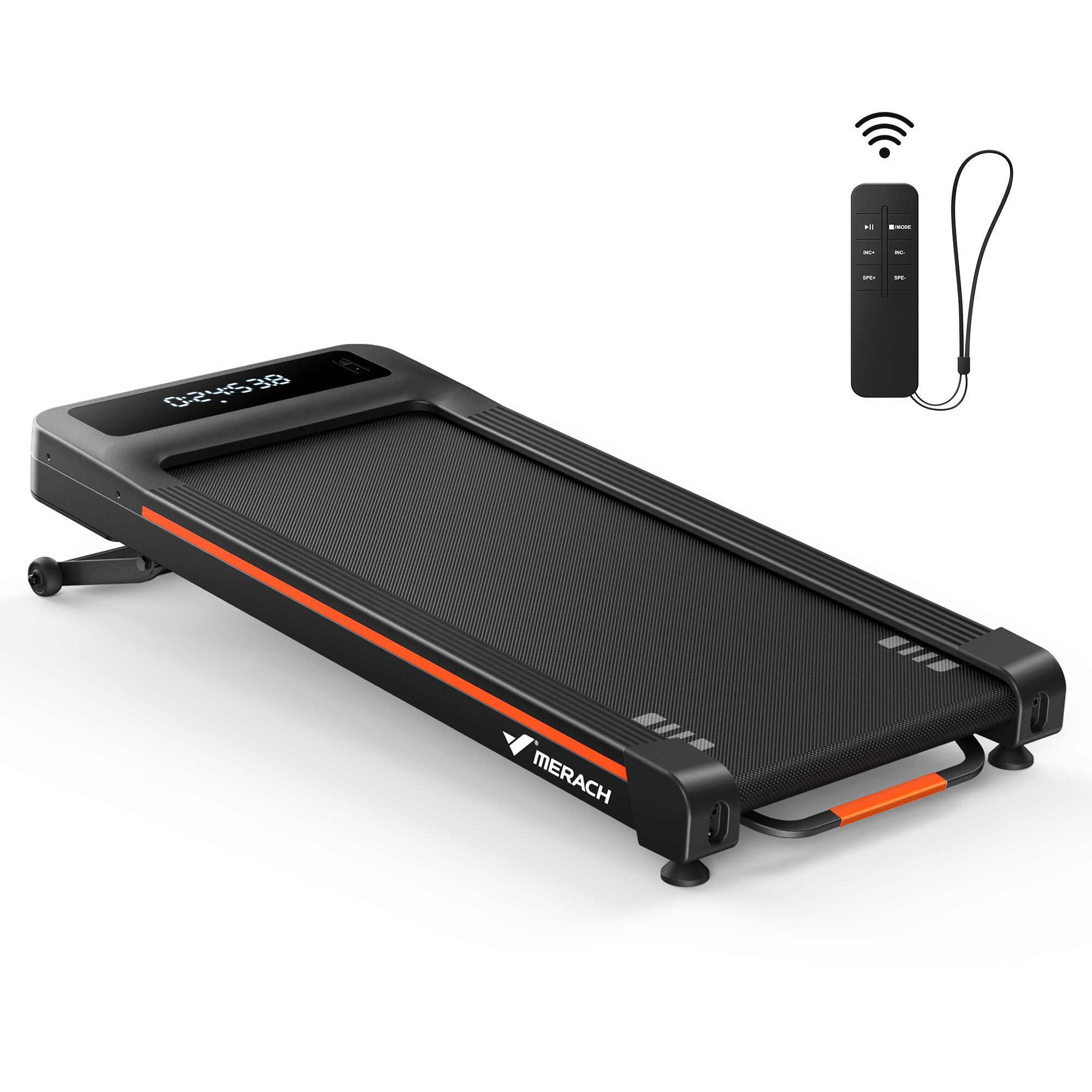
For home workouts, the Merach W60 Walking Pad is a convenient option. Its 0.6–4.0 mph speed range supports everything from easy walking and brisk walking to light jogging, while the 12% auto incline lets you increase workout intensity without necessarily increasing your speed. It is a quiet walking pad, especially suitable for home offices, apartments, or shared living spaces.
Jogging typically raises your heart rate to around 125–155 BPM, mainly in the aerobic zone. At this intensity, your body can rely on a combination of fat and carbohydrates for energy. This balanced fuel use enables you to burn more calories. Throughout a 30-minute jogging session, you can burn 240 to 350 calories. That's why jogging can be a useful middle ground: more calorie burn than walking without the intensity of running.
In contrast, running creates the highest calorie expenditure. It can push your heart rate to around 145–175+ BPM for the example above. This places you in a vigorous aerobic zone, while harder efforts or sprint intervals can push you into the anaerobic zone. In vigorous running, your body depends more heavily on carbohydrates. So, the individual can burn 350–500 calories in 30 minutes. However, hill running and higher-intensity sessions can increase calorie burn. This makes running one of the most effective cardio exercises and enhances energy burn. But the trade-off is that it's harder to sustain and creates more impact than walking.
3. Which Is Better for Muscle Building?
If you're comparing these workouts for muscle building, the focus changes. For calorie burn and cardiovascular fitness, factors like heart rate, duration, and workout intensity matter most. But muscle growth depends more on resistance, mechanical tension, and progressive overload. So, the workout that burns the most calories may not necessarily be the one that's best for building muscle.
You can activate calves, quadriceps, hip flexors, and glute muscles during walking. It engages 25–30% of the body's muscles at one time. So, it's less demanding than jogging or running. But regular flat walking usually isn't challenging enough to build much muscle. Walking uphill makes your glutes, thighs, and calves work harder than walking on a flat surface.
Jogging engages 35% to 40% of your body's muscles. Mainly, your legs generate more force with every stride. Furthermore, the calves, quadriceps, hamstrings, glutes, and hip flexors work harder. However, because the resistance comes mainly from your body weight, jogging is still not as effective for building muscle as exercises where you can gradually add more resistance.
Running puts even more demand on your quads, hamstrings, glutes, and calves. In every stride, your core also engages. This helps you maintain body balance. So, running can help develop lower-body strength and endurance, especially when you're running uphill or adding short sprints.

For more flexibility, a treadmill with incline can take this workout a step further. You don't have to wait for good weather, find a suitable hill, or change your route. Just adjust the incline and speed and start walking. You can also switch between flat walking, incline walking, jogging, and running in the same workout as your fitness improves.
If building muscle is your main goal, none of these should be your only workout. Adding strength exercises such as squats, lunges, step-ups, and resistance training will give your muscles a much stronger reason to grow.
4. How to Choose Between Walking, Jogging, and Running?
As you have already explored the details of calories burned running vs walking vs jogging. Here are key details that provide you with information to choose a workout based on personal preference.
Consider Your Fitness Level
As a newbie, you have to start with walking exercise. Once your muscle endurance improves, you can progress to jogging. If your body handles the high-impact workout, then running is the best choice. However, make sure to assess your body fitness level before making a final choice.
Define Your Primary Goal
If you have a goal to stay active at a comfortable pace, then walking is the best exercise to achieve that. Usually, jogging is ideal to improve endurance. You can choose running to maximize calorie burn and improve overall fitness.
Consider Your Schedule
Do you have a limited time for a workout and want to burn more calories? You have to choose running. In just a short period, you can see a significant result. However, it demands dedicated time for exercise and consistency.
5. FAQs about Walking vs. Jogging vs. Running
By now, you can see that walking, jogging, and running aren't simply different speeds of the same workout. The right choice also depends on your fitness level, how much impact you can comfortably handle, and how easy the workout is to maintain. Here are some of the most common questions to help you choose a workout that fits you.
Q1: Should beginners walk, jog, or run first?
For most beginners, walking is the simplest place to start. Once you can comfortably maintain regular walking sessions, you can increase the pace, add incline walking, or introduce short jogging intervals.
Q2: Is it better to walk 1 km or run 1 km?
Usually, running 1Km burns more calories in less time. This exercise requires greater energy consumption. On the other hand, walking covers the same distance in a longer time. However, it is ideal for the joints and more sustainable for beginners. Both exercises have their own benefits and limitations.
Q3: Which is the most low-impact for seniors?
Walking is generally the best choice for seniors. Compared with jogging and running, walking puts less impact on the knees, hips, ankles, and lower back, making it easier to maintain for longer sessions. If regular walking feels comfortable, incline walking can add more intensity without requiring you to start jogging or running. The key is to choose a pace and incline that feel manageable and increase the challenge gradually.
6. Conclusion
To sum up, walking vs jogging vs running: which workout burns more calories? Running provides the highest calorie expenditure. It also improves cardiovascular health over time. Due to its high-intensity workout nature, running increases your heart rate and breathing. It increases the demand for oxygen supply and gradually improves fitness.
However, you need to assess your physical condition. A person with an ankle strain or knee injury cannot pursue running. If you have some serious health issues, always consult with your doctor. They will provide you with good advice by keeping your health condition in mind. Furthermore, it will save you from workouts that eventually lead to discomfort.
Make sure to share your clear fitness goal with a healthcare expert. They will provide you with information and recommend workouts that match your health condition.