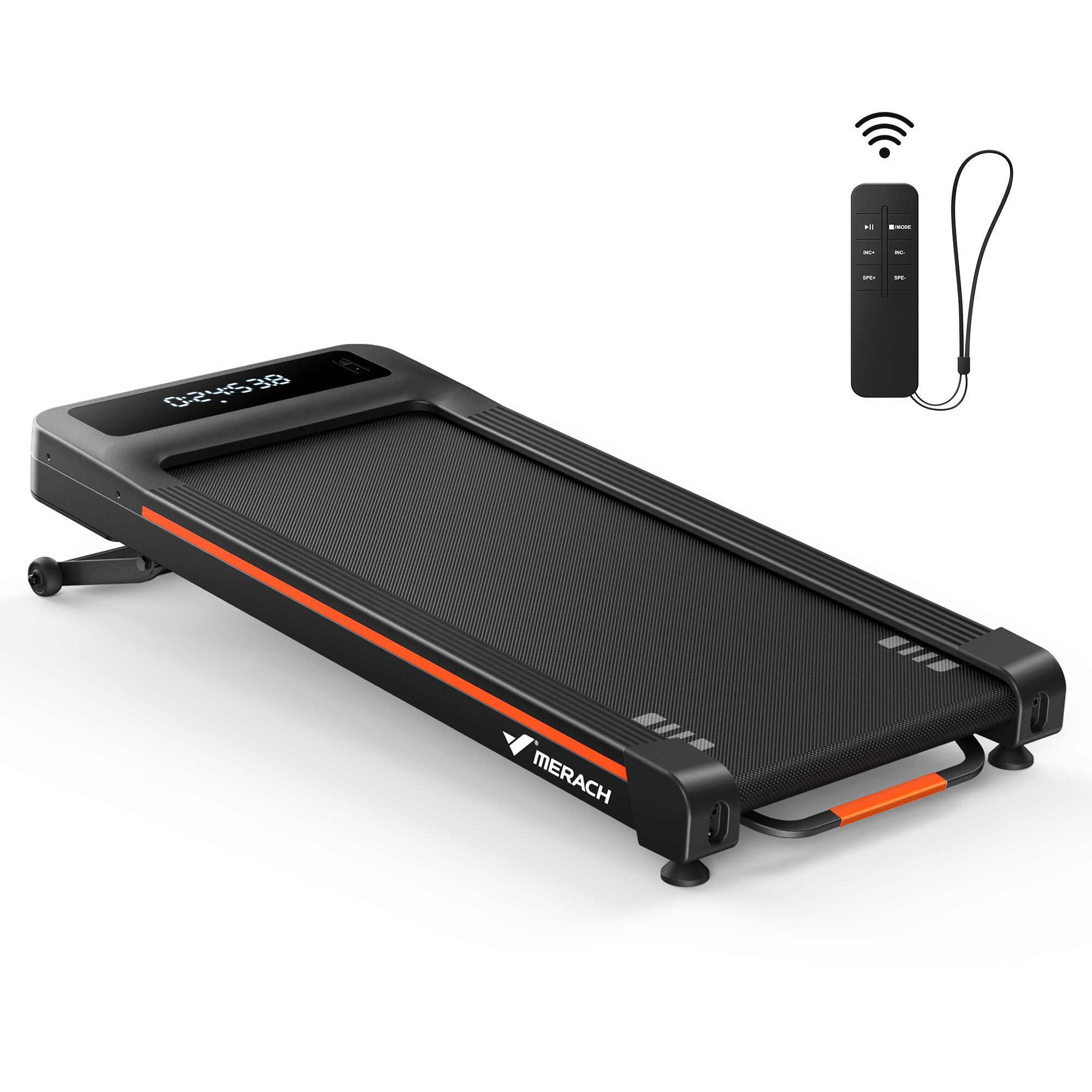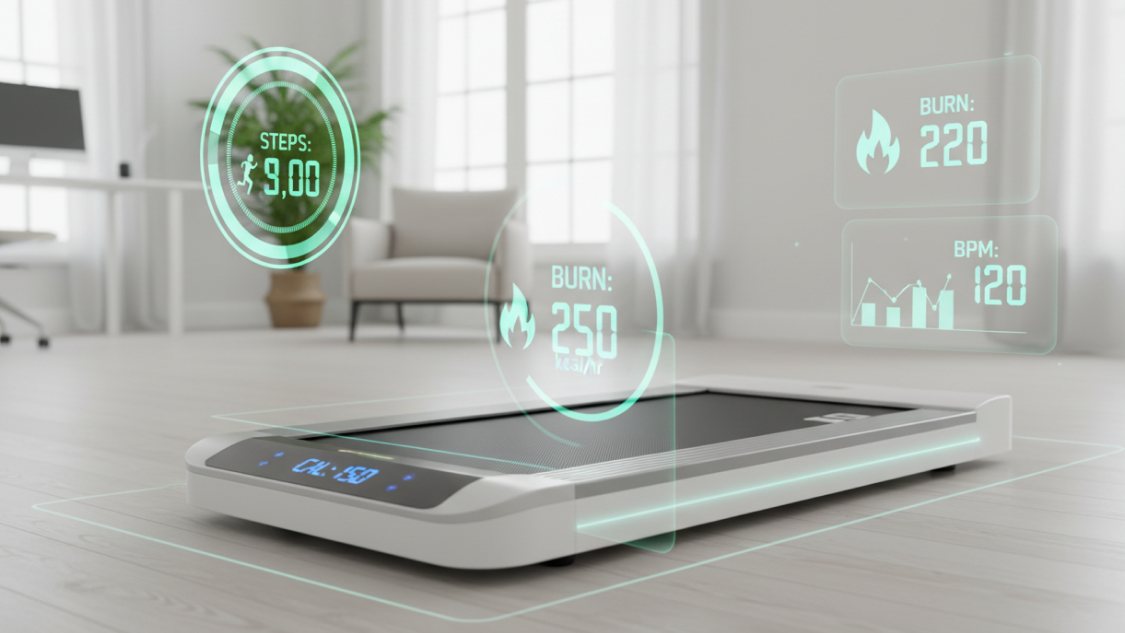
A walking pad has become a popular choice among people because of its size and professional results. They are compact, portable, and a convenient option for small apartments and gym corners, which is why they have become a go-to choice for many looking to stay active and move.
Although walking pads offer a convenient way to stay active indoors, many users wonder just how effective they are for calorie burning. In this guide, you will learn how many calories are burned on a walking pad, tips and tricks, and the factors that contribute to your calorie-burning process.
1. How Many Calories Are Burned on a Walking Pad?
Many people who are using a walking pad at home fall between 2 and 3 mph, which is a comfortable pace for multitasking, whether you are working at home, watching TV, or taking a walking break. A walking pad is designed for low-impact, steady movement, not high-intensity cardio.
However, when used consistently, it can burn a meaningful number of calories. The average person burns 90 to 210 calories per hour on a walking pad, depending on a few factors. Here is a simple breakdown to help you understand calorie burn.
| Weight | 2 mph (light pace) | 3 mph (moderate pace) | 4 mph (fast pace) |
|---|---|---|---|
| 120 lbs. (54 kg) | 135 calories/hr. | 195 calories/hr. | 255 calories/hr. |
| 150 lbs. (68 kg) | 170 calories/hr. | 240 calories/hr. | 320 calories/hr. |
| 180 lbs. (82 kg) | 200 calories/hr. | 280 calories/hr. | 380 calories/hr. |
| 210 lbs. (95 kg) | 240 calories/hr. | 340 calories/hr. | 430 calories/hr. |
To truly achieve the results you are aiming for, it is essential to understand that calorie burn is not random. A few factors quietly shape how much energy your body uses while you are walking.
2. Factors That Influence Calorie Burn on a Walking Pad
Including the intensity of physical activity and environmental factors. With a better understanding, they can help you adjust your walking sessions to better align with your fitness goals.
Body Weight & Fitness Level
One key factor is your body type and weight, which can significantly affect how many calories you burn. For a heavy frame, you will need more energy. This means that if you are a 200 lb. person, you can burn far more calories at the same speed as a 120 lb. person and notice a noticeable change in calorie burn. Age, muscle mass, hormones, and daily activity levels further influence your metabolism.
Your fitness level determines how many calories your body burns while walking. A beginner walker burns more calories, whereas an intermediate walker sheds them moderately. The advanced walker burns fewer calories for the same effort due to an efficient movement pattern. This is normal physiology. As you get fitter, you will walk more comfortably, you will get adapted to it, and your calorie burn per minute may slightly decline.
Speed, Duration & Incline
The next key factors are your walking speed and time. A fast pace increases your heart rate and oxygen use, and activates your muscles. And a long walking session, even at a slow pace, will burn more calories than walking for an hour or two. Your speed impacts your burn rate, which will work as
- 90–130 calories per hour at a slow pace (1.5–2 mph)
- 140–180 calories per hour at a moderate pace (2.5–3 mph)
- 190–230 calories per hour at a fast walking pace (3.5–4 mph)
The incline feature is not available in every model, but if your walking pad with incline, it would be a calorie-burning gift. This is because even a slight incline feature increases the workload on your calves, hamstrings, and glutes. For instance, if your walking pad offers a 2% incline, it will burn 8 to 10% more calories; a 5% incline will burn 20 to 25% more calories, and a 10% incline can nearly double calorie burn.

If your walking pad does not offer this feature, you can use an incline block to slightly raise it. This simple addition makes a big difference without a high-intensity workout.
Walking Style & Muscle Engagement
Every person has a different, unique walking style and walking movements, which also contribute to their calorie burn. For instance,
- A long stride length with natural steps activates more muscles
- Your arm movement, like swinging or using light dumbbells, increases calorie burn
- Your posture, when you are walking upright, you engage more core muscles
- The foot placement while walking flat and steady minimizes your unnecessary energy loss
Good posture, natural stride length, active arm swing, and light core engagement all increase muscle activation. Walking upright with relaxed shoulders allows your body to move efficiently and burn more calories. Short steps, slouching, or holding onto a desk for balance reduce muscle involvement and lower calorie burn.
Walking Pad Type & Environment
The walking pad itself also influences calorie output. A stable belt, wider deck, and powerful motor allow longer strides and consistent speed without interruption. Noisy or underpowered machines often force users to slow down or stop early.
If your goal is weight loss rather than just daily movement, choosing a quiet, stable, and well-built model makes a bigger difference than you expect. If you plan to burn calories on a walking pad through long, consistent sessions, choosing a quiet, stable, and well-built model makes a bigger difference than you expect. At its core, the W50 Walking Pad is built for reliability and comfort over extended use. It is powered by a 3.5HP brushless motor, designed to run smoothly for up to 10 hours continuously, which is significantly longer than most walking pads on the market. This means no sudden shutdowns mid-walk.

The reinforced, thickened deck supports up to 400 lbs, offering long-term stability and confidence even for heavier users and an expanded walking surface for safer, more natural strides. Furthermore, it is combined with an auto-incline feature, which subtly increases calorie burn.
The environment around you affects how many calories you burn while walking. For instance, if you are typing, the speed is slow. While watching videos or listening to music makes you walk faster. When you are using it on a standing desk, it improves your posture and helps you burn more calories.
3. 7 Practical Tips to Burn More Fat on a Walking Pad
A walking pad helps you to stay active by breaking up the same old sitting routine, especially when your job is demanding and keeps you glued to your chair for hours. If you want to make the most out of it and burn a few extra calories without putting much effort, here are a few simple tips that can be really helpful.
1) Increase Your Speed Gradually
There is no need to jump directly to the maximum level; even a small increase with time helps. The best recommendation is to start at 2 mph and gradually increase to 2.4 after a few minutes, then push it to 3 mph or the maximum level for the last 5 minutes.
This way, you can maximize your calorie burn without exhausting your body.
2) Use Incline Blocks or Feature
The incline feature helps you get a climbing feel and make your workout a little more challenging, helping you burn more calories. If your pad does not have an incline feature, you can use incline blocks, as a 3% incline can increase your calorie burn by around 12% and activate your calves and glutes.
3) Use Your Arms
Walking on a walking pad, you don't have to hold the handles, which means your arms are free, and you can burn more calories. While walking, we suggest a light arm swing. You can hold a 1 to 3-pound weight, or use wrist weights for hands-free movement. This movement will help to activate your upper body muscles.
4) Walk Longer Instead of Harder
Walking longer can burn calories more efficiently than short, intense sessions.
5) Walk with Intervals
Take short breaks during your walking sessions. For example,
- In a 2.0 mph take 3-minute interval
- At 2.8 mph, take 2 2-minute intervals
- Repeat this for 20 to 40 minutes
These intervals can burn 20-30% more calories.
6) Improve Your Posture
Maintaining an upright posture is beneficial because it improves oxygen flow and engages your core muscles, helping you burn more calories. For that, focus more on
- Shoulder back
- Slightly tightened core
- Natural stride
- Eyes looking forward instead of down.
7) Add Multiple Sessions
Instead of running for a long time on the walking pad, try multiple short sessions. For instance,
- 20 minutes in the morning
- 30 minutes mid-day
- 20 minutes in the evening
This will make you feel more energized, burn more calories overall, and activate your metabolism.
4. FAQs about using the Walking Pad
Before wrapping things up, here are a few questions people ask related to walking pads and calorie burn.
Q1: Is it safe to use a walking pad every day?
Yes, using a walking pad is safe for many people, but it is essential to keep your body to avoid exertion. It is recommended to start with shorter sessions and gradually increase your time.
Q2: Is a walking pad suitable for people with joint issues?
A walking pad is a low-impact exercise that is suitable for people with joint issues. However, it is recommended to consult your physician before starting your exercise session.
Q3: How fast should I walk on a walking pad to burn more calories?
To boost your calorie burn, aim to walk briskly at 3 to 4 miles per hour. This will help you burn more calories than a slow-paced walk. However, it is necessary to find a speed that is comfortable and suitable without causing any stress on your body.
Q4: Do walking pads burn as many calories as a treadmill?
Yes, if you walk at the same speed, you can burn calories like on a treadmill, but the only difference between walking pad and the treadmill is that it has no handrails.
Q5: Can you lose belly fat using a walking pad?
Yes, a walking pad helps reduce belly fat, but not by spot-burning. However, you can reduce your belly fat by staying consistent and taking better nutrition; it will go away over time.
5. Conclusion
If you are looking to lose weight, but don't have much time to hit the gym, a walking pad like the Novawalk W50 Trekpad is the best solution. A compact under-desk walking pad helps you stay active and lets you burn an average of 90 to 120 calories per hour with minimal effort.
The real advantage of a walking pad isn't high-intensity workouts. It's a sustainable movement. And in the long run, consistency beats intensity every time, which is where real calorie burn happens.