You probably have been told walking can be one of the best exercises in general. But there is another option, which is called rebounding, or jumping on a mini trampoline. It has been used by physical therapists, fitness professionals, and even NASA researchers, and we all find that there are some great benefits to it.
So, the question is, what's better? Walking for exercise or using a rebounder? And you're going to learn everything you need to know, and you can get the answer to this question by the end of this article.
1. Rebounding vs Walking: What’s the Difference?
Both walking and rebounding exercises use different movement patterns to activate your body and build muscles. Here is detail on how each exercise works and its core principles.
Rebounding
This is a low-impact exercise. You can easily perform it on a small trampoline called a rebounder. On a trampoline, you can stand on the flexible surface and use repeated bouncing movements to keep your body moving. Furthermore, you have the flexibility to perform gentle bouncing.
In the entire workout, each bounce requires your legs to push against the trampoline surface. It easily controls your body as you move up and down. At any point, this machine changes the workout intensity by adjusting bounce height and speed. This makes rebounding useful for lower-body endurance.
Walking
Comparatively, walking is a natural form of movement. There, you can repeatedly shift your body weight from one leg to the other. Well, this workout is performed outdoors, on a treadmill, or in another suitable space. Its speed range can vary from a relaxed walk to a brisk pace.
Furthermore, its basic principle is continuous forward movement. During exercise, your every step involves coordinated movement. The ankles, knees, and hip muscles support and move your body. However, walking requires little equipment. Overall, it can be adjusted to different fitness levels.
2. Rebounding vs Walking: Side-By-Side Comparison
Mini trampolines vs walking exercise support an active lifestyle. Here are the key elements that differ from one exercise to another. This can help you decide which workout fits your daily routine.
Calorie Burn
Practically, rebounding can burn calories at a faster rate. Its repeated bouncing keeps your legs and core working continuously. With a mini-trampoline workout, you can burn an average of 6.9 calories per minute. It will increase to 317 calories during a 46-minute session. But the actual number can change based on bounce intensity.
Generally, walking burns fewer calories per minute. You can still provide meaningful energy expenditure when performed regularly. A 154-pound person may burn around 140–176 calories during 30 minutes of walking. These are stats for moderate-to-brisk walking. Well, walking may have a lower calorie demand than vigorous rebounding. Here are stats on calories burned rebounding vs walking.
| Calorie Burn Comparison | Rebounding | Walking |
|---|---|---|
| 15 minutes | 95–104 calories | 70–88 calories |
| 30 minutes | 207 calories | 140–176 calories |
| 45 minutes | 311 calories | 210–264 calories |
Cardiovascular Fitness
Chiefly, rebounding can provide a strong cardiovascular workout. During exercise, you can continuously bounce, stabilize your body, and control movement. One study has found that mini-trampoline exercise can reach a vigorous level of intensity. This makes it useful when you want to raise your heart rate.
Mainly, walking is also a more gradual way to improve cardiovascular fitness. At every step, you can start at a comfortable pace. Then, slowly increase your walking time and speed. It's ideal to dedicate 150 minutes of moderate-intensity aerobic activity per week. On the whole, rebounding vs. walking can help you reach that target.
Weight Loss Potential
Fundamentally, rebounding may be useful for weight loss. This exercise provides a higher-intensity workout in a shorter period. With every repeated bounce, it can increase energy expenditure quickly. In just a few sessions, you can create a larger calorie deficit. To get better results, it is ideal to combine it with an appropriate diet.
On the flip side, walking has a different advantage. You can add this exercise to your routine almost every day. You may experience it; it can increase your total weekly activity. So, a 30-minute walk, 5 days per week, gives you 150 minutes of movement. For weight management, consistency is more valuable.
Muscle Engagement
Normally, rebounding keeps your lower body active. During a workout, your calves, quadriceps, hamstrings, glutes, and core work together. So, they produce movement and keep your body balanced. At every point, your position is controlled on the trampoline. Therefore, this exercise also requires continuous muscular adjustments. Over time, it can improve lower-body strength.
Usually, walking uses the same major lower-body muscles. However, the amount of muscle work changes with your pace. With normal-level walking, it engages the gluteus maximus, quadriceps, and hamstring muscles. So, this exercise is suitable for everyday activity and gradual conditioning.
Here is a comparison table of walking vs rebounding.
| Muscle Engagement | Rebounding | Walking |
|---|---|---|
| Main muscles | Calves, quads, hamstrings, glutes, core | Calves, quads, hamstrings, glutes |
| Movement demand | Repeated bouncing and landing | Repeated forward steps |
| Balance demand | Higher | Lower |
Joint Impact & Bone Health
Usually, rebounding is performed on a flexible surface. It absorbs some of the force created during each landing. This can make it feel gentler than exercising on a hard surface. However, it still involves repeated loading. So, this exercise may not be appropriate for everyone with joint problems.
Broadly, walking is also a relatively low-impact activity. Additionally, it is easier to control. You can reduce the pace if your body feels tired. At any point, you can increase it when you become fitter. This exercise can support bone and muscle health. Overall, this makes it a practical long-term option for many adults.
Convenience & Cost
Roughly, rebounding requires an upfront investment in a mini trampoline. Furthermore, you need enough space to use it safely. Once you buy the equipment, you can exercise at home. There is no need to visit a gym or worry about outdoor weather. This makes it attractive for people who want privacy in workouts.
Typically, walking is much simpler than rebounding. It needs only comfortable footwear and a safe place to move. It's too easy; you can walk outside, at work, and on a treadmill. There is no equipment to assemble, and no purchase is required. You just need suitable and durable shoes. This makes walking the more accessible option for most people.
3. Which Is Better Overall: Rebounding or Walking?
The right rebounder vs walking exercise depends on what you need from your routine. Usually, rebounding can offer a more active home workout in less time. On the other hand, walking is easier to start and simpler to repeat.
For Weight Management
Do you want to start rebounding vs walking exercise with the goal of weight loss in a shorter period? Ideally, the repeated bouncing can increase energy expenditure. This workout keeps your lower body active throughout the session. Within your busy schedule, it can be useful when you have only 20–30 minutes for exercise. However, weight management depends on your overall balanced diet and activity level. You should do regular physical activity. It supports a healthier body weight and body composition.
For Low-Equipment Exercise
As a beginner, you want a walking vs rebounding exercise that requires almost no machines or tools. At this stage, you can choose walking. You can walk indoors on a treadmill, around your home, or at work. There is no rebounder to buy and set up. This makes walking a practical option. You can even increase your daily movement without adding another piece of equipment.
For Indoor Workouts
Some fitness enthusiasts prefer to exercise at home. Usually, the rebounder gives you a dedicated surface for bouncing. The machine is easy to set up. You can adjust your pace and movement without depending on outdoor weather. This can make it easier to fit a short workout into a busy day. Therefore, home-based exercise can also help people establish regular exercise routines.
For Long-Term Consistency

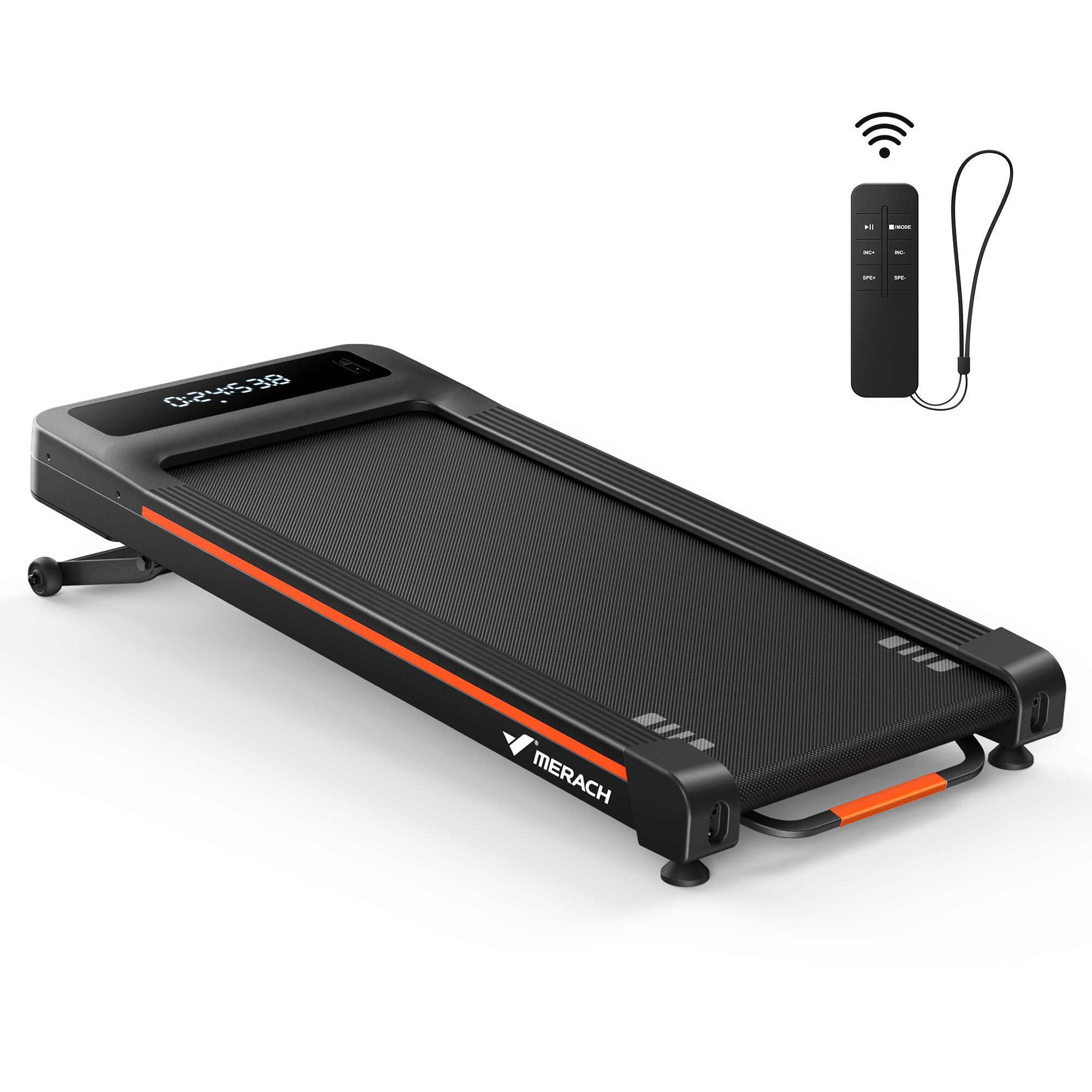
If your biggest priority is to build a routine and develop discipline, then walking is a better choice. You can begin with 10–20 minutes. Then, gradually increase your duration. If you want to start indoor walking, the Merach W60 makes it easier to add more movement throughout the day. This under-desk walking pad works well for walking while working or during other low-intensity activities, while the 12-level auto incline gives you a simple way to increase workout intensity when flat walking starts to feel too easy. The 33% wider deck also gives you more walking room without taking away from its storage-friendly design.
5. FAQs about Rebounding & Walking
Still not sure which workout will actually help you build endurance? If you’re also short on time or trying to make exercise easier to fit into your daily routine, these questions can help you choose an approach that works for your fitness level and schedule.
Q1: How much rebounding is equivalent to walking?
Generally, there is no exact one-to-one conversion. The workout intensity can change with your bounce height, pace, body weight, and walking speed. However, one study found that a 46-minute rebounding session burned about 317 calories. Additionally, 20–30 minutes of moderate rebounding can provide a similar general cardio workout.
Q2: Can beginners use a rebounder for endurance training?
Yes, but beginners should start with a comfortable bounce and shorter sessions. Focus on maintaining control and a steady rhythm before increasing the intensity or adding more demanding movements. As your fitness improves, you can gradually increase workout duration and intensity.
Q3: Is incline walking a good alternative to higher-impact cardio?
Incline walking can be a useful way to increase workout intensity while keeping the movement pattern simple. Raising the incline makes each step more demanding, so you can challenge your cardiovascular system without having to increase your walking speed as much.
6. Conclusion
To sum up, you need to evaluate your body condition, comfort, and goal. This helps you choose workouts that meet your demand. Generally, rebounding can give you a more active workout. On the flip side, walking is simple and easy to fit into your day.
If you choose rebounding, make sure to start with gentle bouncing. This step makes sure the rebounder is stable with enough space around it. Furthermore, avoid jumping too high. During exercise, never increase the pace too quickly. If you prefer to start a walking workout, wear comfortable shoes. Additionally, increase your walking time and speed gradually. If a person with joint issues feels joint pain becoming worse, they should stop working out immediately.